BlackRock DSU Nears $9.32 as Leverage Falls
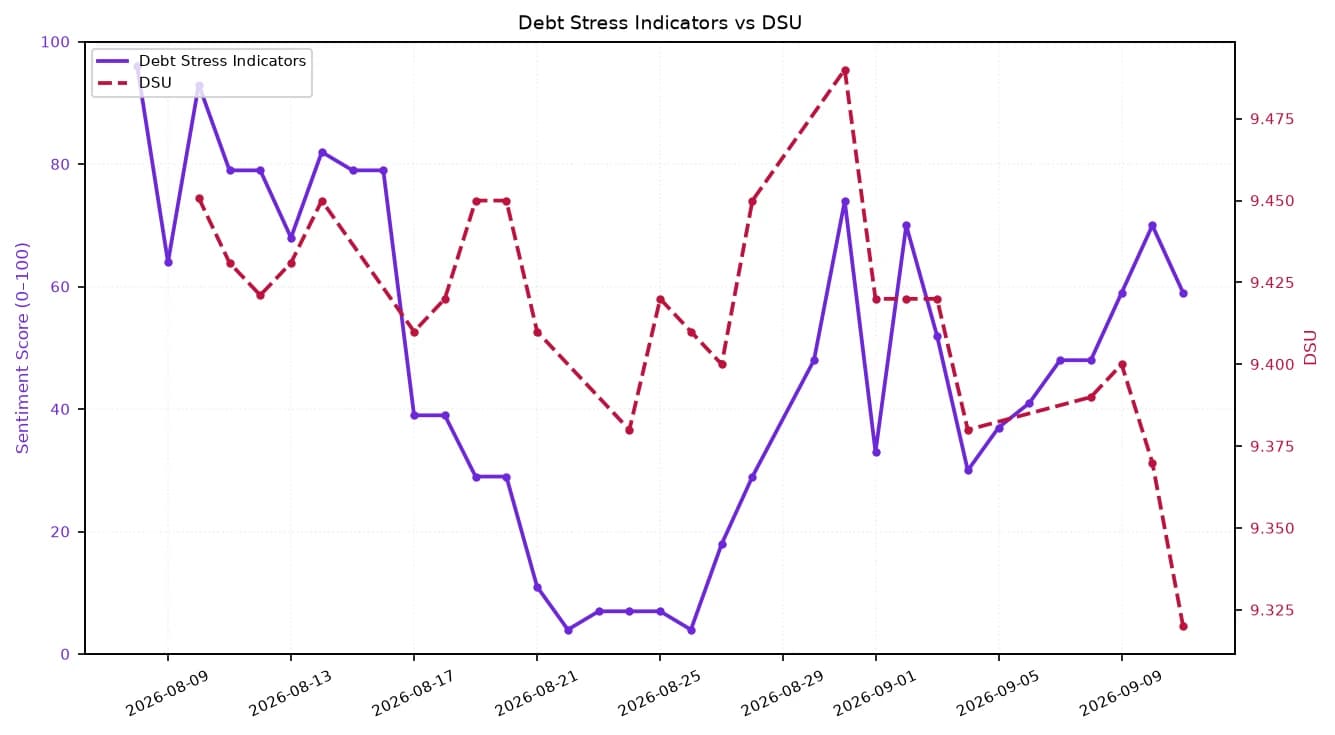
BlackRock Debt Strategies Fund is trading close to $9.32 a share, but the bigger investment question is whether the fund can keep shrinking leverage while preserving the income stream that supports the stock’s appeal.
For closed-end credit funds, the market usually rewards a cleaner balance sheet only if it comes with stable net investment income and a defensible distribution. That is the tension around DSU now: revenue growth may help, but debt reduction is the critical variable because a heavily levered portfolio can quickly give back gains if borrowing costs stay elevated or credit spreads widen.
The stock has been stuck in a tight range around $9.30 to $9.40 over the past several sessions, with Friday’s close of $9.32 leaving it essentially unchanged from the prior day. Technical indicators point to a muted setup rather than a breakout: the shares sit near the 50-day moving average of $9.41 and the 200-day moving average of $9.40, while the relative strength index around 38.5 suggests weak momentum, not capitulation. That kind of trading pattern often reflects a market waiting for a fundamental catalyst rather than re-rating the fund on sentiment alone.
The seed thesis around a $14 fair value implies meaningful upside, but that gap will only close if management can show that higher earnings are durable and that leverage is falling enough to reduce financial risk. For a debt-focused fund, valuation depends on both the asset base and the liability structure. A richer multiple may be justified if portfolio income improves and leverage is reduced without forcing asset sales at weak prices. The bear case is the opposite: debt remains a drag, margins compress, and the fund’s net asset value or distribution power fails to catch up with the optimism embedded in the valuation target.

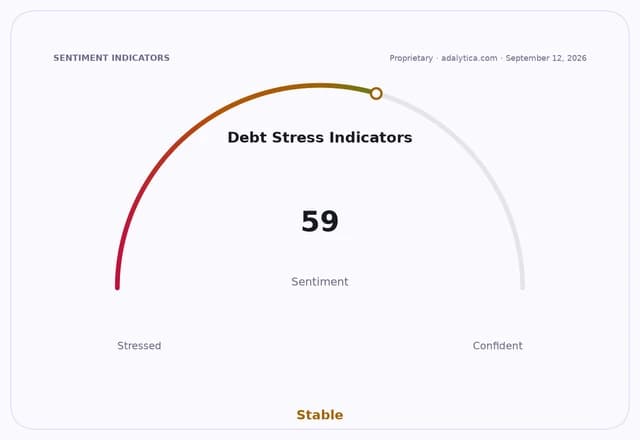
That makes the biggest risk to the thesis straightforward: credit conditions and funding costs can reverse quickly. If household or corporate debt stress rises, defaults and refinancing pressure can weaken loan performance and limit the fund’s ability to produce the cash flow needed to accelerate debt reduction. Adalytica’s household debt stress gauge is currently neutral at 59, but awareness remains in the fear zone, underscoring that balance-sheet risk is still part of the macro backdrop rather than a solved problem.
Investors will be watching for three things next: whether leverage falls quarter by quarter, whether margins continue to improve, and whether the fund can sustain its payout without stretching the portfolio. If those pieces line up, the valuation case becomes more credible. If not, the shares are likely to remain range-bound, with income buyers supporting the stock while valuation-driven buyers stay on the sidelines.
| Entity | Gains | Losses |
|---|---|---|
| DSU shareholders | ▲Higher fair value if deleveraging continues | ▼Stuck with balance-sheet risk |
| Income buyers | ▲Potentially attractive yield | ▼Distribution cuts if cash flow weakens |
| Credit lenders | ▲Lower default risk if debt falls | ▼Less spread income if leverage shrinks |
| Bears/shorts | ▲Limited if fundamentals improve | ▼Suffer if valuation re-rates |