BlackRock cuts Ethereum ETF fees as ETH holds $1,900
BlackRock has cut the cost of trading its roughly $5 billion spot Ethereum ETF, a move that could sharpen the battle for inflows just as ether hovers around the closely watched $1,900 level.
The fee reduction matters because in crypto ETFs, where the underlying asset is volatile and performance is often driven by flows rather than fundamentals, expense ratios can quickly determine which fund captures new money. Lowering the cost of access improves BlackRock’s odds of defending market share against rivals and can help sustain secondary-market liquidity if investors decide Ethereum’s recent stabilization is the start of a more durable recovery.

Ethereum itself is showing a modest technical rebound, but not yet a convincing breakout. The token last traded near $1,905, just above the psychologically important $1,900 threshold, after falling to $1,821 earlier this week. The 50-day moving average is still below the 200-day average, a sign the broader trend remains weak despite the recent bounce. RSI has improved from oversold territory to 53.5, while MACD is edging higher, suggesting momentum has turned less negative. Still, ether remains below the upper Bollinger Band near $1,951, leaving room for near-term volatility.
For investors, the fee cut is a signal that the ETF market for digital assets is shifting from launch-driven enthusiasm to a more mature fee-and-flow competition. BlackRock’s move should help its product remain the default institutional wrapper for ether exposure, particularly for allocators who want regulated access without directly holding tokens. That may pressure smaller issuers, whose higher fees are harder to justify when trading volumes normalize.
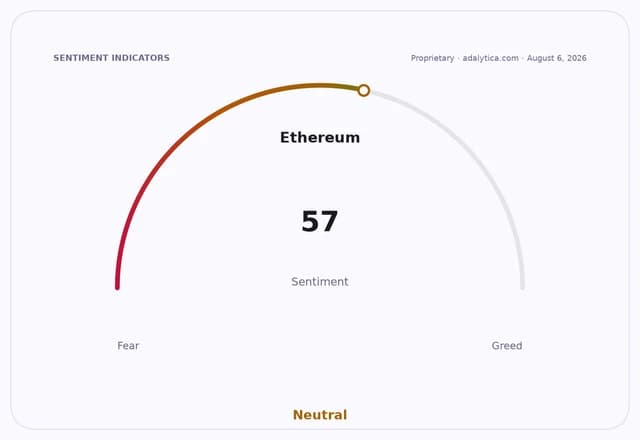
The timing also intersects with broader crypto sentiment. Adalytica’s Ethereum Fear & Greed Index shows sentiment at 57, neutral, while awareness remains at an extreme level, indicating that interest in the asset is still high even after a sharp drawdown from earlier in the year. Bitcoin, meanwhile, is stuck in extreme fear, underscoring that the market is still fragile and highly selective. In that environment, lower ETF fees can matter more than they would in a strong bull market, because investors are more sensitive to every basis point of drag.
The bull case is that cheaper access attracts fresh money into the ether ETF complex and reinforces the view that $1,900 could hold as a base. The bear case is that fee cuts alone cannot overcome weak spot demand if macro conditions and crypto risk appetite stay soft. If ether fails to reclaim the low-$2,000s, the ETF fee move may prove defensive rather than catalytic.
| Entity | Gains | Losses |
|---|---|---|
| BlackRock ETHA | ▲Better inflows, stronger market share | ▼Lower fee revenue per dollar |
| Ethereum holders | ▲Easier institutional access | ▼No guarantee of sustained demand |
| Smaller ETH ETF rivals | ▲— | ▼Harder to compete on price |
| Investors using ETFs | ▲Lower trading costs | ▼Less room for fee-rich alternatives |