Bluey Ice Cream Tie-Up Boosts Unilever Strategy
Bluey’s move into the freezer aisle underscores how licensing has become one of the few reliable ways packaged-food groups can win attention, premium pricing and repeat purchases in a saturated grocery market.
The latest tie-up between the Australian children’s franchise and Streets, the ice-cream brand owned by Unilever, is more than a novelty product. It reflects a broader consumer-goods strategy: use recognisable intellectual property to cut through supermarket clutter, lift basket sizes and defend share at a time when shoppers remain selective and competitors are leaning harder on branding, promotions and limited-edition launches.
For Unilever, which trades in New York under UL, the appeal is straightforward. Branded collaborations can support volume without relying only on discounting, and they give incumbents an edge against private label and smaller challengers. That matters in categories where switching costs are low and shelf space is scarce. The strategy also fits with a wider industry push to extract more value from existing brand estates, whether through co-branded food, character licensing or seasonal launches.
Investors have treated that mix cautiously but not dismissively. Unilever shares have recovered from an April slump, with the stock recently at $63.73, above its 50-day moving average of $62.78 and close to its 200-day average of $61.99. The technical setup suggests the market is giving the company some credit for stabilising momentum, even if recent gains remain modest. PepsiCo rival Kraft Heinz, which has also leaned on brand equity and portfolio management, has likewise seen its shares recover from earlier weakness, though at $24.53 they remain below the 50-day average of $25.10, showing how uneven the consumer staples trade remains.
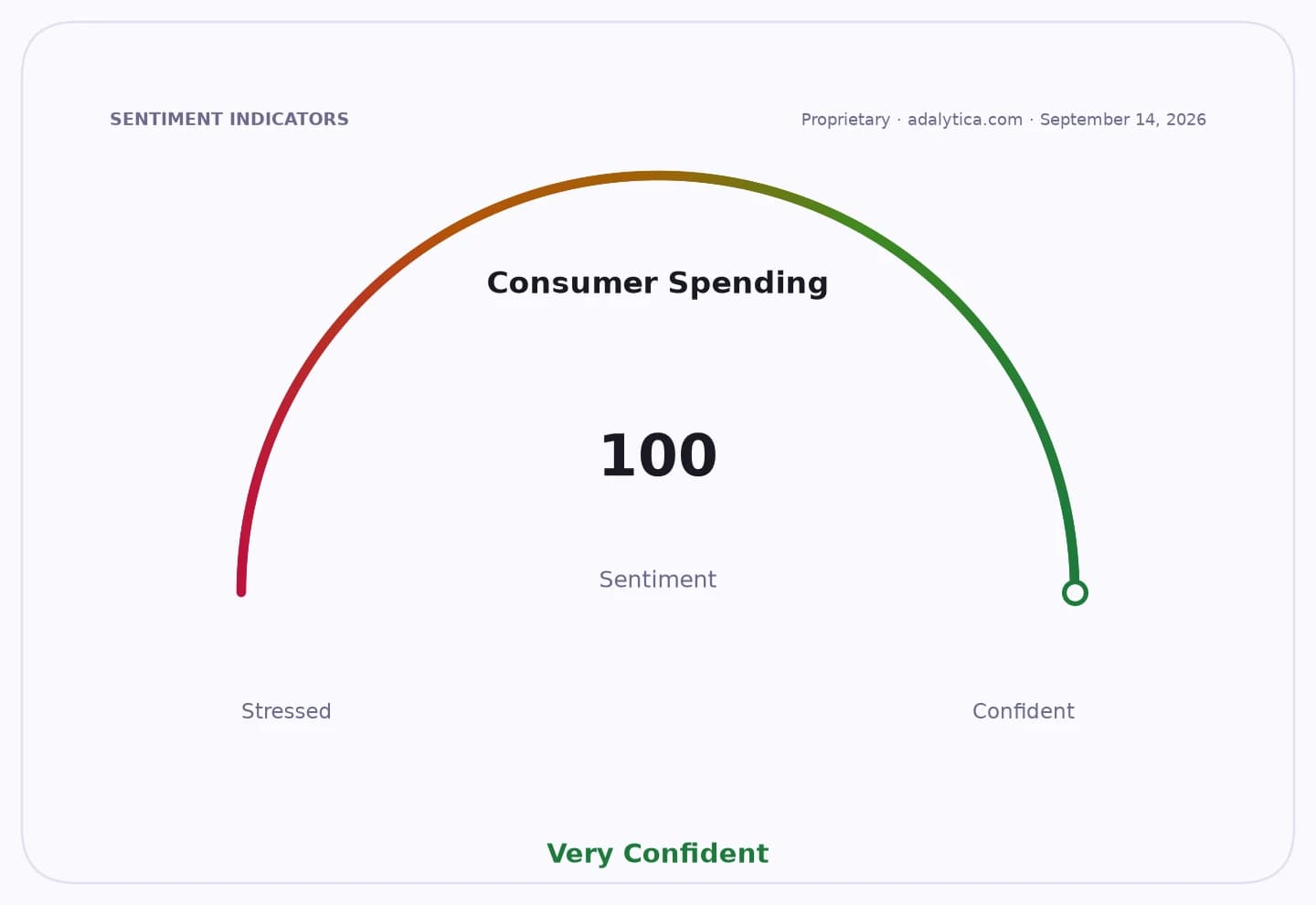
The licensing push also speaks to the state of consumer demand. Adalytica’s consumer-spending sentiment gauge is at “Extreme Greed,” while retail-sales sentiment sits at “Neutral” after a sharp one-day drop, a combination that suggests shoppers are still willing to spend selectively but are not doing so uniformly. In that environment, familiar characters and family-friendly brands can help companies justify premium items, especially in treats and impulse categories where emotional appeal matters more than commodity pricing.
The bull case is that Bluey gives Streets a built-in audience, lowers launch risk and creates incremental sales without a large permanent capital commitment. The bear case is that licensing can be expensive, short-lived and prone to crowding out the underlying brand if novelty fades or supermarket buyers push back on margin demands. For investors, the key question is whether collaborations like this can add enough pricing power and volume resilience to offset slower category growth.
If the Bluey launch sells through strongly, it will reinforce a larger thesis across packaged food: in a low-growth, promotion-heavy market, the companies with the strongest characters, franchises and distribution relationships are gaining the best chance to keep shelf space and protect margins.
| Entity | Gains | Losses |
|---|---|---|
| Streets / Unilever | ▲Higher shelf appeal | ▼Licensing costs |
| Bluey franchise | ▲Broader brand monetisation | ▼Risk of overexposure |
| Retailers | ▲More traffic and impulse sales | ▼More shelf competition |
| Smaller ice cream brands | ▲Pressure from branded launches | ▼Share loss |