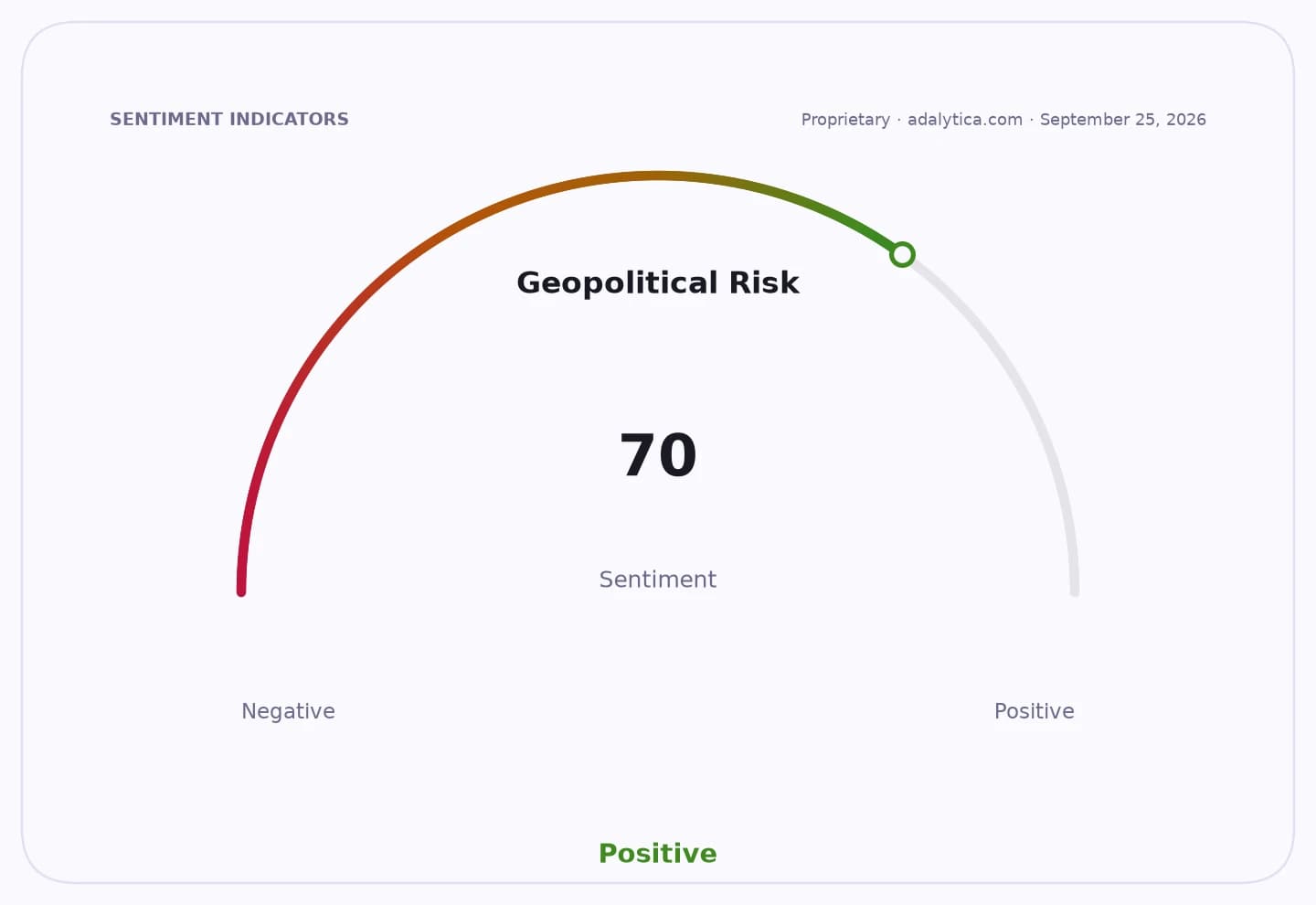
BMW’s stock is holding up even as the company’s latest sales figures show the real pressure point for German premium automakers: China. That matters because China is not just another market for BMW — it is one of the profit engines that has historically supported the company’s margins, scale and investor case. When demand weakens there, the impact can ripple through earnings, pricing power and the entire luxury-car sector.
BMW Pressure Mounts as China Weakens

For long-term investors, the key question is not whether BMW can sell cars in Europe or the U.S. so much as whether it can defend its position in the world’s most competitive auto market. The answer still looks uncertain. BMW delivered 590,962 vehicles globally in the second quarter, but the headline number masks a more important trend: the company is losing ground in China, where local manufacturers are moving faster on electric vehicles and increasingly setting the pace on technology, software and price.
Sentiment IndicatorsⓘProprietary · adalytica.com · July 14, 2026
This is a snapshot — live sentiment, awareness and momentum for 130+ markets update continuously in the dashboard.Open AlphaPulse
That is why the share price deserves attention even when the market seems willing to look past the weak sales print. BMW.DE has fallen to 57.32 euros, far below its 50-day moving average of 67.7 and its 200-day average of 77.59, a sign that sentiment has clearly deteriorated. The stock’s RSI reading of 34.3 suggests it is nearing oversold territory, but technical bounces do not change the fundamental story: investors are still waiting for evidence that BMW can stabilize China and protect its premium brand in the EV transition.
The broader backdrop is not helping. Adalytica’s China economic growth target sentiment gauge sits in “Extreme Fear,” reflecting how quickly optimism about Chinese demand has faded. That matters for BMW because weak consumer confidence in China tends to hit premium purchases harder than mass-market sales. It also reinforces the challenge facing Volkswagen and other European automakers, which are competing not only against each other but against domestic Chinese rivals with lower costs and faster product cycles.
Economic Growth Targets — 30-day sentimentadalytica.com
Explore this data interactively — full history, time series and cross-market comparisons.Open AlphaPulse
BMW’s longer-term bull case still rests on its ability to use product refreshes and the Neue Klasse lineup to regain relevance in electric vehicles. That is the right strategic ambition, but investors should be honest about the timing. In autos, the market usually rewards execution, not promises. If BMW can prove it is rebuilding share in China while preserving cash flow in Europe and North America, the stock could eventually re-rate. If not, the company risks being viewed as a high-quality incumbent fighting a structural loss of power in its most important growth market.
For now, BMW looks like a classic long-term turnaround story: a strong franchise under pressure, a cheap-looking share price that may be telling the truth, and a China market that still decides whether the next decade belongs to the old guard or the local challengers. Worth watching, but only for investors willing to wait years, not quarters.
| Entity | Gains | Losses |
|---|---|---|
| Chinese EV rivals | ▲Market share | ▼BMW sales |
| BMW long-term turnaround bulls | ▲Valuation reset opportunity | ▼Near-term earnings visibility |
| BMW management | ▲Chance to prove strategy | ▼Pressure from China weakness |
| German auto peers | ▲Industry focus on pricing power | ▼Confidence in premium demand |