Brazil Foundation Launches AI Clinical Research Registry
A Brazilian foundation said it has launched what it calls the world’s first artificial-intelligence registration platform for clinical research, a niche but potentially important step in speeding drug trials in one of Latin America’s biggest healthcare markets.
The move matters economically because clinical research is a costly bottleneck for drugmakers, hospitals and contract research organizations, particularly in emerging markets where patient recruitment, data handling and site coordination can slow development timelines. If AI can streamline registry management, it could lower administrative friction, improve trial matching and make Brazil a more attractive venue for global pharmaceutical studies.
That commercial promise comes as the broader AI trade is under pressure. Microsoft shares have fallen to $494.44 from a recent high near $513.53, while Nvidia closed at $227.33 after trading above $235 in May, with both stocks still elevated but vulnerable to valuation resets. Technical indicators point to a more cautious tone: Microsoft’s 50-day moving average remains above the current price, while its RSI has drifted back to 49, and Nvidia’s RSI has also cooled to 51.5 after a strong run. At the index level, the S&P 500 is holding near 765, but the market’s appetite for AI exposure has become more selective.
For investors, the Brazil development is less about immediate earnings impact than about the expanding use case for AI beyond the cloud and chip cycle. Healthcare, life sciences and public-sector data infrastructure are increasingly where AI vendors will try to prove practical return on investment. That helps explain why the narrative around AI is shifting from abstract enthusiasm to deployment economics: software companies want durable, regulated workflows, while investors are demanding evidence that those workflows can become recurring revenue.
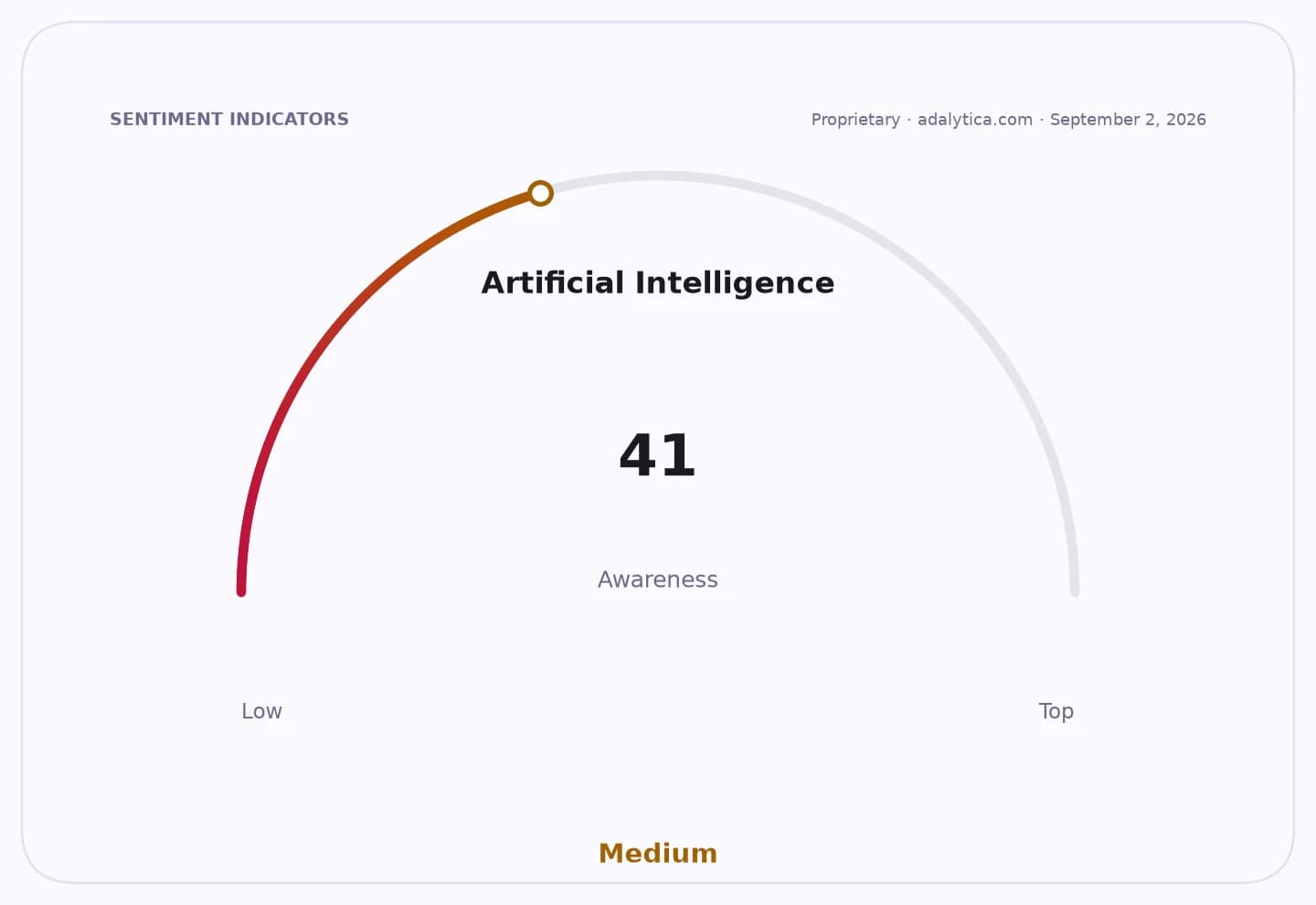
The bull case is that clinical research is exactly the sort of process where AI can generate measurable productivity gains, with clear beneficiaries in trial sponsors, research institutions and health platforms. The bear case is that regulation, data quality and validation requirements can limit adoption, especially in a field where errors are costly and trust is paramount. Recent Adalytica sentiment gauges also show AI and Microsoft both in “Extreme Fear,” underscoring how quickly the market has turned skeptical even as real-world applications keep multiplying.
The next catalyst is whether the Brazilian registry can demonstrate faster enrollment, better data integrity and lower operating costs. If it does, the model could be replicated across other emerging markets and healthcare systems. If it doesn’t, the episode will reinforce the market’s view that AI remains easier to announce than to monetize.
| Entity | Gains | Losses |
|---|---|---|
| Brazilian foundation | ▲Visibility, credibility | ▼Execution risk |
| Drugmakers and researchers | ▲Faster trial workflows | ▼Higher validation burden |
| AI vendors | ▲New regulated use case | ▼Longer sales cycles |
| Microsoft/Nvidia bulls | ▲Broader AI adoption story | ▼Near-term sentiment pressure |