Brazil Congress Considers Supreme Court Reform

Brazil’s Supreme Court is facing its most serious political backlash in years, and the fallout is now pushing judicial reform to the top of the congressional agenda.
The immediate significance is not just institutional drama. It is the growing likelihood that Brazil will finally move on long-delayed changes to how Supreme Federal Tribunal ministers are appointed, disciplined and limited in office. That matters for the rule of law, for the balance of power in Brasília and for markets that price Brazil’s political risk alongside fiscal and macro fundamentals.
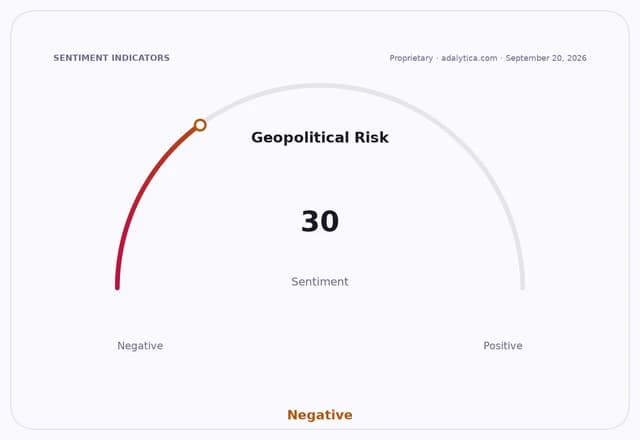
Polls cited by Datafolha and Quaest show the depth of the discontent: 76% of Brazilians say Supreme Court justices have too much power, 68% want new criteria for appointments, 56% do not trust the court and 77% think confidence has fallen. In a country where the court has become central to everything from corruption probes to election disputes and the conviction of Jair Bolsonaro over the 2023 coup attempt, that erosion of legitimacy is economically relevant. The more politicized the court becomes, the harder it is for investors to assess legal stability, regulatory continuity and the durability of policy decisions.
Congress is already responding. Lawmakers in the Senate and Chamber of Deputies are sitting on more than 200 constitutional amendment proposals aimed at the Supreme Court, including term limits, ethics rules, tighter limits on single-judge decisions and changes to the nomination process. A Senate human rights committee this week approved a move to create a working group to consolidate those proposals into a unified text within 60 days. That is not yet reform, but it is a sign that the Overton window in Brasília has shifted.
The trigger is a court under visible strain. The current conflict has sharpened criticism of Justice Alexandre de Moraes, who faces nearly 70 impeachment requests in the Senate, while the court itself still lacks a dedicated ethics code and remains largely self-policing. That combination is precisely what reform advocates say is unsustainable in a modern democracy: broad powers, weak external oversight and virtually no clear rules for punishment.
Investor implications go beyond the Supreme Court. If Congress advances even a partial overhaul, it could reduce one of Brazil’s most persistent institutional risk premiums. A system with fixed terms, clearer ethics rules and fewer monocratic rulings would likely be viewed as more predictable by domestic capital and foreign investors alike. It would also narrow the scope for court-driven political shocks, which can swing asset prices, delay corporate decisions and complicate M&A, infrastructure and regulatory approvals.
That is why the next phase matters. President Edson Fachin has already called for a code of ethics, an end to the fake-news inquiry and broader judicial reform. The São Paulo chapter of the OAB is also weighing proposals that would strip the Supreme Court of criminal jurisdiction, shifting more cases to lower courts and easing the political burden on the tribunal. If those ideas gain traction, Brazil’s legal architecture could move closer to European-style constitutional courts and away from a Supreme Court that has become both arbiter and political actor.
The market is missing the second-order effect here: judicial reform is no longer just a legal debate, it is a credibility trade. A court seen as less politicized and more accountable can support a lower risk premium over time. Until then, investors should expect volatility around Brasília to stay elevated — and should favor Brazilian assets and companies best insulated from legal and regulatory whiplash.
| Entity | Gains | Losses |
|---|---|---|
| Congress reform bloc | ▲Political leverage | ▼Institutional stasis |
| Court critics / public | ▲More accountability | ▼Status quo power |
| Supreme Court hardline faction | ▲Short-term authority | ▼Public trust |
| Brazilian assets with lower legal risk | ▲Lower risk premium | ▼Judicial uncertainty |