Brazil Defense Industry Plans Under Lula
Brazil President Luiz Inácio Lula da Silva is again promising to revive the country’s defense industry, a pitch that matters less as wartime rhetoric than as a signal that military procurement, domestic manufacturing and sovereignty projects could stay high on the policy agenda.
For investors, the key question is whether the rhetoric turns into orders, financing and export support. Brazil has been leaning harder into security cooperation abroad, tightening domestic enforcement at home and responding to trade friction with the U.S., all of which points to a government intent on strengthening state capacity without embracing outright militarization.
That matters economically because defense production in Brazil can spill into a wider industrial chain, from shipbuilding and aerospace to electronics and metals. Any sustained push would also compete with other budget demands, making the size and timing of actual spending more important than the headline promise.
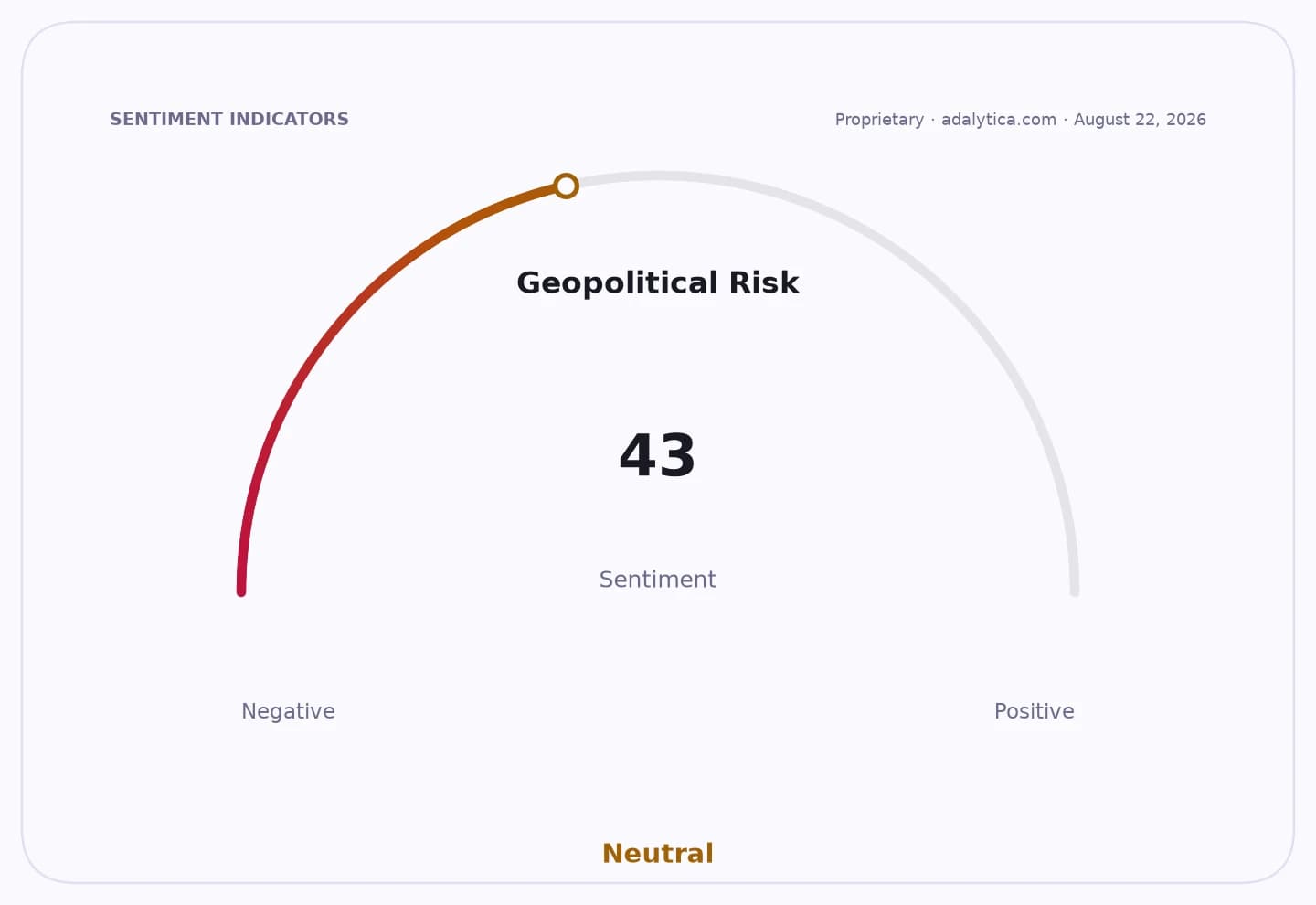
Markets have already been receptive to Brazil exposure. The iShares MSCI Brazil ETF, EWZ, has risen from $34.14 on Aug. 20 to $35.06 on Aug. 21, with the fund still trading above its 50-day moving average even after a sharp pullback from February highs near $39. The move comes as the broader risk backdrop has steadied, with Adalytica’s Global Stability Sentiment improving to 43 from 25 a day earlier, while U.S. equity sentiment remains neutral.
The message from Lula is politically simple: Brazil wants stronger defense capacity, but not a war economy. The investor takeaway is more nuanced — defense names, industrial suppliers and exporters could benefit if the government converts that stance into procurement and export policy, while fiscal hawks will focus on whether the plan can be funded without squeezing the rest of the budget.
That tension will stay in focus as Brazil advances trade retaliation steps, deepens security ties with Bolivia and the European Union and weighs further domestic law-and-order measures. The next catalyst for the sector is whether Brasília translates the recovery pledge into contracts, budget lines or private-sector incentives rather than another broad strategic promise.
| Entity | Gains | Losses |
|---|---|---|
| Brazilian defense contractors | ▲More procurement talk | ▼Policy delays |
| Industrial suppliers | ▲Higher order flow | ▼Budget uncertainty |
| Lula government | ▲Sovereignty narrative | ▼Fiscal scrutiny |
| Taxpayers / budget hawks | ▲— | ▼Higher spending pressure |