Brazil Growth Brightens as Inflation Keeps Markets Cautious
Brazil’s economy is set to stay in the spotlight this week as investors weigh a healthier growth outlook against stubborn inflation, while the U.S. prepares another inflation reading that could keep the Federal Reserve on hold for longer than markets would like.
That combination matters because it pulls capital in two different directions at once: toward Brazil’s improving growth story and away from rate-sensitive assets globally if U.S. price pressures refuse to cool. In other words, this is not just a data-heavy week — it is a test of whether the market can keep betting on a softer landing, lower rates and stronger emerging-market performance all at the same time.
The macro backdrop is improving for Brazil, at least on growth. The International Monetary Fund lifted its 2026 GDP forecast for the country to 2.4%, up from a 2.16% pace expected in 2025, even as it flagged a global slowdown and Brazil’s own headwinds from inflation and high interest rates. That is a meaningful signal for investors because it suggests Brazil is emerging as a relative bright spot in a weaker world economy, supported by domestic demand and the prospect of better trade access.
The market is already starting to price that in. The EWZ Brazil ETF has climbed from 33.23 in early December to 35.93 in recent trading, and its 50-day moving average near 35.69 now sits just below the latest close, a sign the trend has improved even after a volatile spring. The move has not been linear — EWZ still trades well above its 200-day moving average, a reminder that sentiment remains constructive but fragile — yet the broader message is clear: investors are willing to pay for Brazil exposure when growth expectations firm.
What keeps that trade from becoming a clean breakout is inflation. Brazil’s own economic releases later in the week will matter because they will help determine whether policymakers can ease off the brake or must keep rates restrictive for longer. That tension is central to the investment case. A stronger economy without enough disinflation means higher-for-longer borrowing costs, which caps the upside for banks, retailers and consumer names. But if growth holds while price pressures cool, Brazil becomes one of the more attractive macro trades in emerging markets.
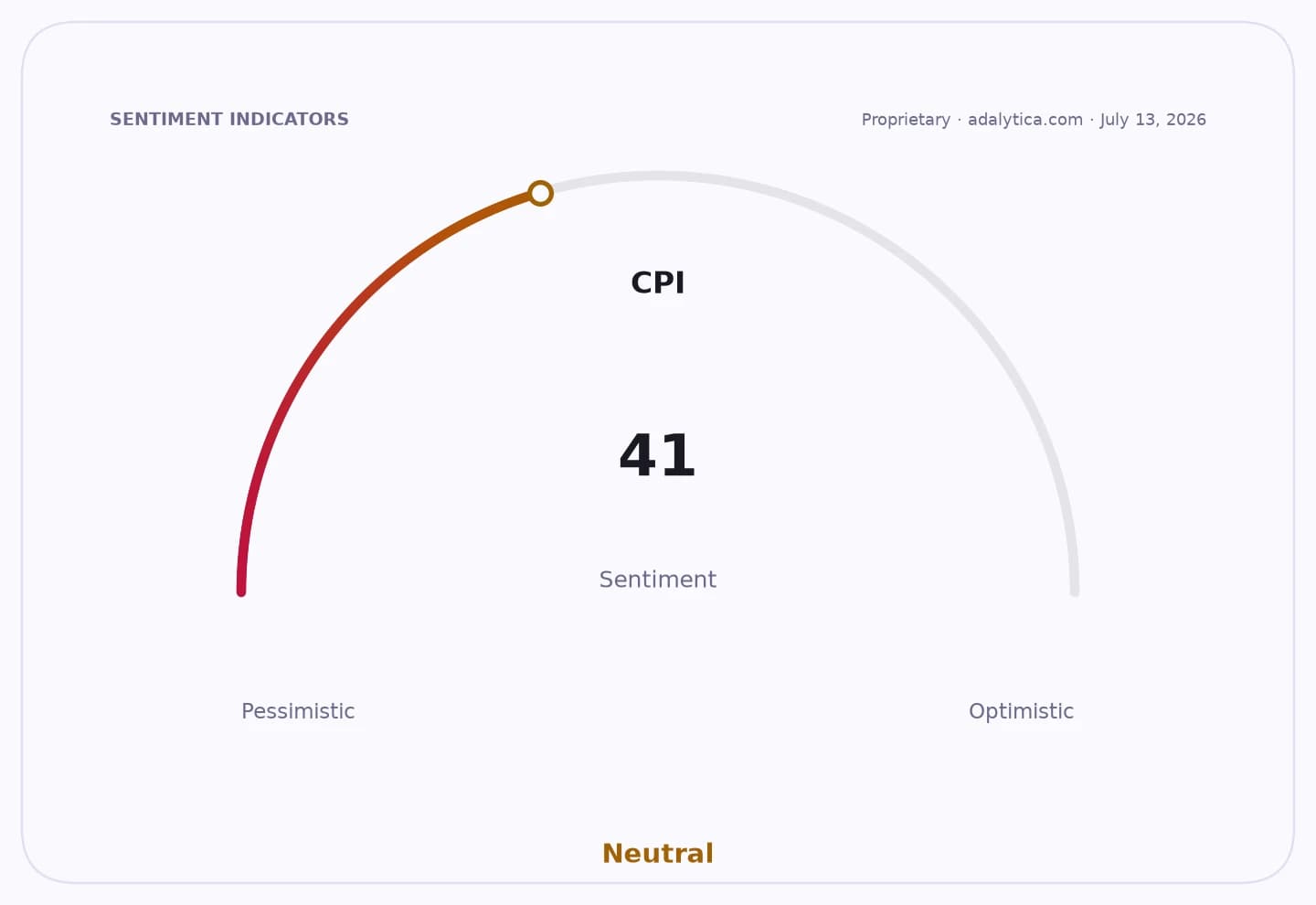
The U.S. side of the calendar is just as important, and arguably more dangerous for global risk appetite. The CPI backdrop in the U.S. remains sticky enough to keep confidence in the Fed’s 2% target under strain, with Adalytica’s inflation-target gauge showing “Extreme Fear” and only 4.0 sentiment. Fed funds are effectively frozen around 3.63%, and the next move is expected to be marginal at best, underscoring how little room the central bank has to pivot if inflation proves stubborn.
That matters because the U.S. still anchors global discount rates. If inflation runs hot, the consequence is higher real yields, a firmer dollar and less room for the Fed to cut — a setup that typically hits emerging-market assets, consumer cyclicals and long-duration growth sectors. The recent resilience in the S&P 500, reflected in SPY’s neutral-to-firm trading signals, suggests equity investors are still hoping for benign inflation. But that optimism is vulnerable to disappointment.
The investable implication is straightforward: this week is less about one data point than about confirming which macro regime dominates into the second half of the year. If Brazil’s GDP and activity data hold up while inflation stays manageable, local assets and the Brazil ETF complex can continue to outperform on a relative basis. If U.S. inflation surprises higher, that upside may be muted by tighter global financial conditions. The same logic applies across equity sectors: consumer discretionary names and rate-sensitive assets benefit most from falling inflation, while exporters, commodity-linked plays and financials can better absorb a world of slower, stickier growth.
For investors, the asymmetric opportunity is to position for Brazil’s relative improvement without assuming a clean global risk-on backdrop. That means favoring selective Brazil exposure, especially through broad ETFs like EWZ on pullbacks, while remaining cautious on anything that depends on an immediate Fed easing cycle. The market underestimates how much of 2026’s cross-asset performance may be driven by this tug-of-war between localized growth optimism and persistent inflation anxiety.
| Entity | Gains | Losses |
|---|---|---|
| Brazil ETFs like EWZ | ▲Better growth re-rating | ▼Sticky inflation risk |
| Brazilian exporters | ▲Stronger demand outlook | ▼Higher domestic rates |
| U.S. rate-sensitive stocks | ▲Softer CPI prints | ▼Hot inflation prints |
| Fed doves | ▲Cooler price data | ▼Stubborn inflation data |