Brazil inflation forecast cut to 5% for 2026

Brazil’s financial market has trimmed its inflation forecast for 2026 to 5%, a modest but important shift that keeps price pressures above the central bank’s target and leaves monetary policy restrictive for longer than investors would like.
That matters because the number still sits well above the 3% goal that anchors Brazil’s inflation regime. Even with the outlook improving, the market is not yet pricing a clean return to target, which means the Selic rate may stay elevated and real borrowing costs remain a drag on growth, credit demand and corporate valuations.
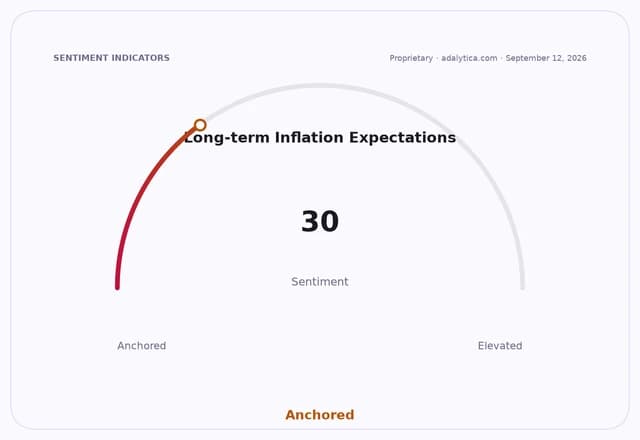
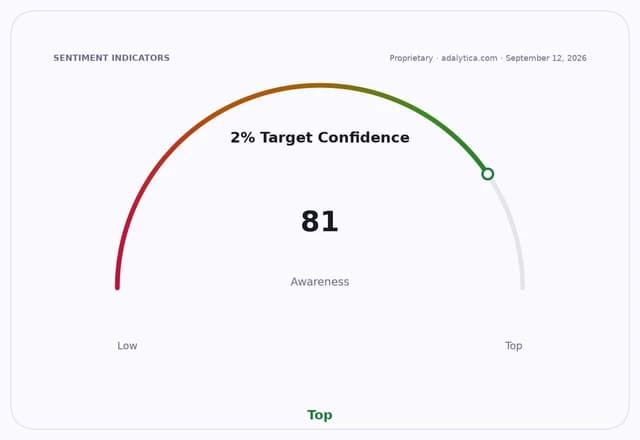
The latest forecast also underscores a broader macro pattern: disinflation is happening, but slowly. The market’s estimate for the consumer price index points to 5.0% this year, while core inflation expectations remain sticky at about 5.0% as well. That combination leaves little room for the central bank to ease aggressively, even as inflation sentiment indicators have softened and long-term confidence in the 2% target remains subdued. In other words, Brazil is still fighting inflation on both the headline and underlying fronts.
For investors, the message is less about one forecast change than about the investment regime it preserves. A higher-for-longer rate backdrop supports carry in local debt, but it also keeps pressure on rate-sensitive equities, leveraged corporates and domestic cyclicals that need cheaper funding to re-rate. The real traded around 5.13 per dollar, with the 50-day moving average near 5.13 and the 200-day at 5.18, suggesting a market that is stable but not yet convinced of a powerful currency breakout.
Brazilian assets have already responded to the idea that inflation is cooling enough to keep policy from tightening further. EWZ, the iShares MSCI Brazil ETF, has rallied sharply in recent sessions and remains above both its 50-day and 200-day moving averages, while the RSI has climbed into overbought territory. That tells you the trade is crowded, but it does not erase the underlying thesis: if inflation keeps grinding lower, Brazilian equities tied to domestic demand, financials and dividend-heavy sectors can still benefit from a gradual multiple reset.
The biggest opportunity may be in the second-order winners. Lower inflation forecasts improve the odds that real rates peak, which would ease pressure on credit growth, housing and small business financing. At the same time, exporters and commodity-linked names can keep benefiting from a still-weak currency, giving investors a rare combination of macro protection and growth optionality.
The risk is that this remains an inflation story without a clean victory. If expectations stop improving, the central bank will have little incentive to accelerate cuts, and that would keep a lid on a broader rally in Brazilian risk assets. For now, though, the market is moving in the right direction — just not fast enough to declare inflation beaten.
| Entity | Gains | Losses |
|---|---|---|
| Brazilian consumers | ▲Slightly lower price pressure | ▼Real incomes still squeezed |
| Central bank | ▲More room to avoid tightening | ▼Still constrained on cuts |
| EWZ / Brazilian equities | ▲Rate-cut optionality | ▼Crowded trade risk |
| Brazil exporters | ▲Weak real supports revenues | ▼Domestic borrowers face high funding costs |