Brazil Reciprocity Law on US Tariffs

Brazil is considering activating its Reciprocity Law against US tariffs after renewed talks with Washington failed to erase the economic damage already hitting exporters, raising the risk that a trade dispute with the Trump administration widens into a broader bilateral standoff.
The move matters because the tariffs are no longer just a diplomatic irritant. They are feeding through to Brazilian industry, with reports that as much as 70% of São Paulo’s export sector to the US has lost orders, forcing companies to cut production, rethink pricing and lean on government support. For Brazil’s economy, that means weaker export volumes, thinner margins and another headwind at a time when policymakers are trying to preserve growth without letting imported inflation or fiscal stress worsen.

President Luiz Inácio Lula da Silva and President Donald Trump have spoken, and Brazil says it still wants a mutually beneficial deal. But officials have publicly criticized the US measures as unfair and discriminatory, and the threat to invoke reciprocity suggests Brasília is preparing a harder response if negotiations stall. That would give Brazil leverage, but it also raises the cost of the dispute for both sides by making tariff retaliation more likely and complicating supply chains for firms that depend on cross-border trade.
Markets are already treating the issue as more than rhetoric. The Brazilian real has traded around 5.13 per dollar, stronger than the 5.19 area seen at the end of August, while the EWZ Brazil ETF has climbed to $37.59 from $36.03 on Aug. 31. That move suggests investors are willing to look through the tariff shock for now, though the ETF’s rapid rise has pushed its 14-day RSI to 87.2, a reading that typically indicates an overextended market on conventional technical measures. The 50-day moving average for EWZ is about $35.24, below the latest close, showing the rally has already run well ahead of the recent trend.
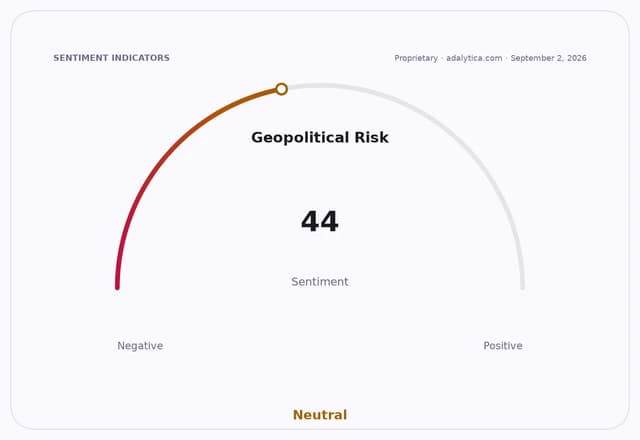
The macro backdrop is mixed. Adalytica’s Global Stability Sentiment gauge is still neutral at 44, but has fallen sharply over the past week, reflecting worsening geopolitical risk appetite. The dollar’s own trade signal has strengthened in the short term, which could keep pressure on emerging-market currencies if tariff tensions escalate and investors seek safety. For Brazil, that combination is uncomfortable: a weaker external trade position and a firmer dollar tend to tighten financial conditions just as exporters need relief.
The bull case is that a negotiated settlement limits the damage, preserves trade flows and reduces the chance that the dispute spills into other sectors. The bear case is that reciprocity becomes the start of an escalating exchange that hits manufacturers, agricultural exporters and logistics chains on both sides while muddying the outlook for Brazilian earnings and the real.
For investors, the key question is whether the current strength in EWZ and the real reflects confidence in a deal or complacency about a conflict that could become a larger earnings and growth drag. The next catalyst is whether Brazil and the US can turn their leaders’ conversation into an enforceable tariff truce — or whether Brasília decides that matching Washington tariff for tariff is now the least costly option.
| Entity | Gains | Losses |
|---|---|---|
| Brazilian exporters | ▲Possible retaliation leverage | ▼Lost US orders |
| US exporters to Brazil | ▲Status quo if talks succeed | ▼Tariff retaliation risk |
| EWZ investors | ▲Deal hopes and stronger real | ▼Sharp volatility if talks fail |
| Brazilian government | ▲Negotiating leverage | ▼Growth and political pressure |