Brazil’s retail sales eked out a 0.1% rise in May, a sign the country’s consumer engine is still running, but only just, even as households face softer confidence and a labor market that is no longer improving fast enough to power a broad-based shopping boom.
Brazil Retail Sales Stall as Confidence Weakens
That matters because retail spending is one of the clearest read-throughs on Brazil’s domestic demand, and the latest IBGE data suggests growth is becoming more fragile at a time when policymakers and investors need evidence that the economy can keep expanding without leaning too heavily on exports or credit. A gain that small is not a collapse, but it is the kind of number that tells you momentum is fading rather than accelerating.
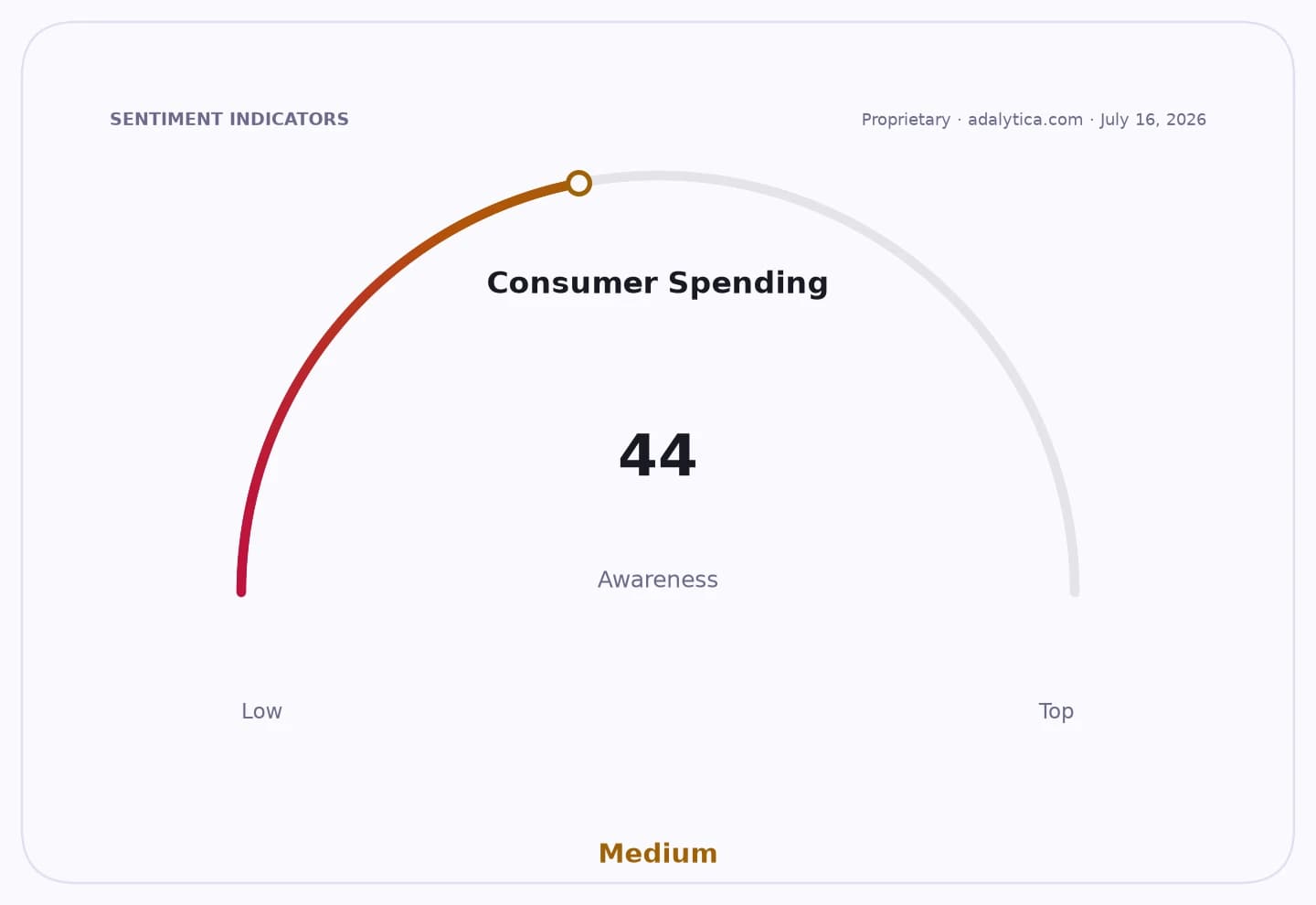
Sentiment IndicatorsⓘProprietary · adalytica.com · July 16, 2026
This is a snapshot — live sentiment, awareness and momentum for 130+ markets update continuously in the dashboard.Open AlphaPulse
The bigger picture is that Brazil’s labor market has improved enough to keep consumption afloat. Unemployment fell to 4.2% in June from 4.3% in May, according to the latest data, which should help support wage income and spending power. But consumer confidence is sliding sharply. A widely watched gauge of recession sentiment from Adalytica showed awareness in “extreme fear” territory and has fallen steeply over the past month, a warning that households may be more cautious going into the second half of the year.
For investors, that mix is important because it changes the earnings setup for Brazil-focused retailers, consumer lenders and discretionary brands. Companies with pricing power and strong balance sheets can still do fine in a slow-growth environment, but businesses that depend on heavy traffic growth or loose credit conditions may find it harder to deliver upside. The iShares MSCI Brazil ETF, EWZ, has been trading well above its 200-day moving average, but the recent pullback and mixed technical signals show the market is already asking whether the easy part of the rally is over.
Consumer Spending — 30-day sentimentadalytica.com
Explore this data interactively — full history, time series and cross-market comparisons.Open AlphaPulse
Individual stocks tell the same story. Lojas Renner and Amazon are not direct comparables, but both illustrate what investors want now: durable demand, margin control and enough scale to weather noise. In Brazil, that favors the stronger retailers and the consumer names with recurring cash flow, while smaller or more indebted players are more exposed if spending cools further.
The trade backdrop adds another layer of caution. The United States has said it will impose 25% tariffs on certain Brazilian imports starting July 22, which could pressure parts of Brazil’s export base and feed back into business confidence if tensions escalate. That is not the main driver of retail sales, but it does matter at the margin because weaker trade flows can eventually spill into hiring, investment and household sentiment.
For long-term investors, the takeaway is straightforward: Brazil’s consumer story is still intact, but it is no longer effortless. Retail sales are growing, unemployment is low, and that supports a case for patience. But the soft confidence backdrop means investors should favor quality over speculation, keep diversification in mind, and watch whether domestic demand can reaccelerate over the next few quarters. If you are building exposure to Brazil, this is a market to hold for years, not chase for weeks.
| Entity | Gains | Losses |
|---|---|---|
| Brazilian consumers | ▲modest spending support | ▼weaker confidence |
| Retailers with pricing power | ▲steadier demand | ▼margin pressure from soft traffic |
| Brazil-focused ETFs like EWZ | ▲long-term domestic exposure | ▼near-term growth doubts |
| Exporters hit by US tariffs | ▲— | ▼higher trade risk |