Brazil Senate Tightens Rare Earth Mineral Control

Brazil’s Senate has moved to tighten control over rare earth minerals, a strategically important shift that could reshape how the country monetizes one of the world’s most contested resources and where investors put capital in Brazil’s mining and broader commodity complex.
The legislation matters because rare earths sit at the center of the clean-energy, electronics and defense supply chains that governments are increasingly treating as matters of industrial policy rather than open-market trade. By strengthening executive oversight, Brazil is signaling that it wants a larger share of the value created from exploration and processing rather than remaining a passive exporter of raw materials.
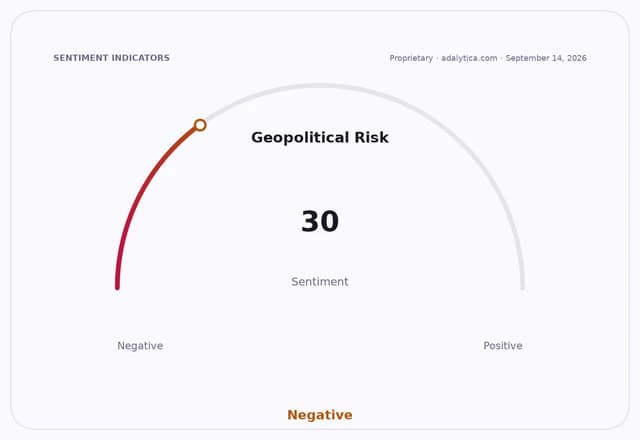
That makes the law economically important well beyond the mining sector. Brazil has spent years trying to diversify away from reliance on traditional commodity exports and attract higher-quality foreign investment. A clearer regulatory framework can accelerate permitting, de-risk projects and pull in capital for exploration, but it can also increase state influence over who gets access to assets, how quickly projects advance and how much profit is retained locally.
For investors, the immediate question is whether Brazil can turn geological potential into commercially viable production before the global rare-earth market shifts again. The bull case is straightforward: tighter rules and a more predictable framework can create the conditions for long-duration investment, especially if the government couples regulation with infrastructure, export logistics and processing incentives. The bear case is that stronger executive control could slow decision-making, raise compliance risk and reinforce the very dependence the law is meant to reduce if capital remains wary.
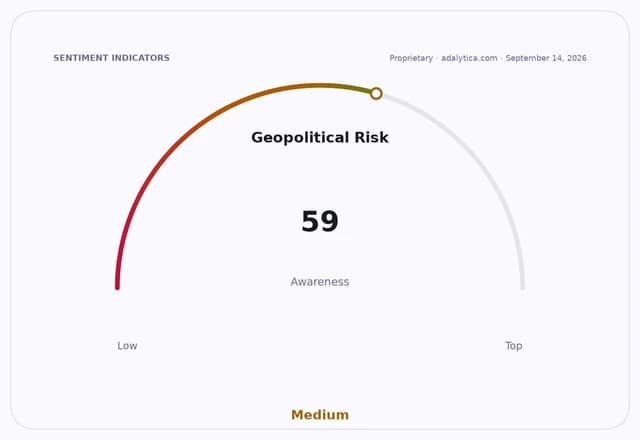
The move comes against a broader backdrop of geopolitical stress around strategic minerals. Adalytica’s Global Stability Sentiment gauge sits in “Fear,” reflecting a more fragile external environment, while the U.S. dollar trade signal remains elevated, underscoring how quickly financial conditions can tighten for emerging-market resource projects. In that setting, Brazil’s rare-earth push is not just a mining story but part of a larger contest over sovereignty, industrial capacity and the ability to capture value from global scarcity.
Brazilian mining names could benefit if the law unlocks new project pipelines, but the market will likely reward only those firms that can prove permitting, financing and offtake visibility. The next catalyst is execution: whether the Senate’s framework turns into faster licenses, clearer rules and real investment, or whether it becomes another layer of state oversight in a sector that depends on speed, scale and foreign capital.
| Entity | Gains | Losses |
|---|---|---|
| Brazilian government | ▲Greater control over strategic minerals | ▼Pressure to deliver faster approvals |
| Rare earth developers in Brazil | ▲Clearer investment framework | ▼Higher regulatory scrutiny |
| Foreign buyers of rare earths | ▲New supply diversification | ▼Less certainty on access |
| Competing suppliers abroad | ▲ | ▼Risk of a stronger Brazil export base |