BRICS Marks 20 Years as India Highlights Influence
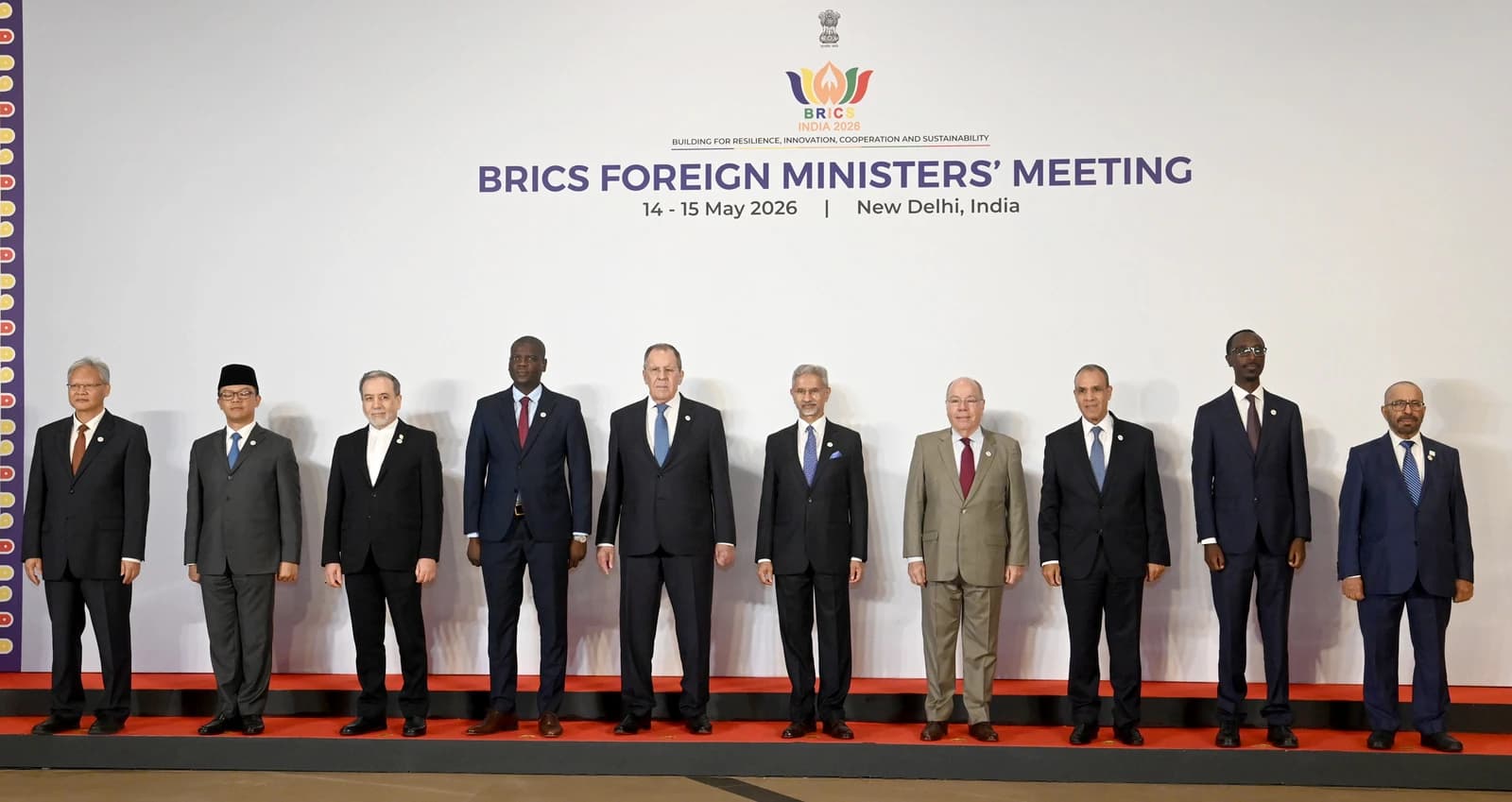
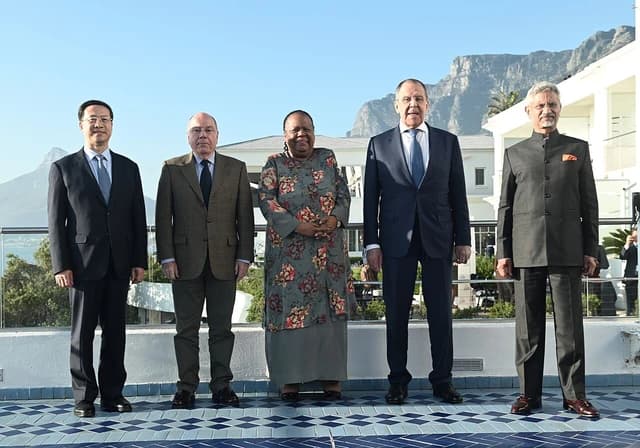
India’s top diplomat is underscoring BRICS’ growing weight as the bloc marks 20 years, at a moment when investors are increasingly pricing a world split by shifting alliances, trade frictions and weaker global stability. The message from New Delhi is that the group is no longer just a political forum, but a vehicle for countries trying to hedge against US-led financial and security dominance.
That matters economically because BRICS has become a shorthand for the rise of non-Western coordination in trade, commodities, finance and diplomacy — themes that affect everything from capital flows and sanctions risk to supply chains and currency demand. A more multipolar order also tends to support demand for alternative payment channels, local-currency trade and diversified reserve holdings, even if the bloc remains too fragmented to act as a single economic force.
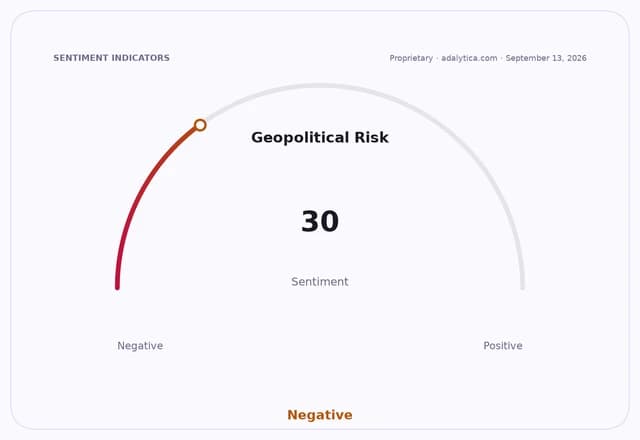
The backdrop is a world in churn. Adalytica’s Global Stability Sentiment is at 30, in “Fear,” down 42 points over 30 days, while US dollar trade signals remain neutral but still show a 60-point rise in the 30-day trend, reflecting persistent uncertainty in global markets. That kind of risk backdrop tends to favor countries and companies that can navigate multiple power centers rather than depend on one.
For investors, the BRICS narrative matters most in emerging markets, commodities and currencies. The iShares China Large-Cap ETF, FXI, was little changed at $34.49 on Friday, but still sat below its 200-day moving average of $36.40, while its RSI reading of 31.4 pointed to a technically weak setup. The iShares MSCI Emerging Markets ETF, EEM, closed at $67.84, near the top of its recent range and above both its 50-day and 200-day averages, suggesting stronger sentiment toward broader emerging-market exposure.
Brazilian assets are also in focus as the country remains one of BRICS’ core political and commodity anchors. The iShares MSCI Brazil ETF, EWZ, closed at $38.19 after a strong run that lifted its RSI to 75.1, signaling stretched momentum even as it held above both its 50-day and 200-day moving averages. That leaves commodity exporters and EM funds more sensitive to any further shift in global geopolitics, trade policy or China demand.
The strategic narrative is straightforward: BRICS is being recast by its members as a hedge against a more fragmented international order, not as an ideological bloc. For markets, that means more attention on policy coordination, sanctions exposure and cross-border financing — and on whether the bloc’s political symbolism can translate into durable economic alignment.
| Entity | Gains | Losses |
|---|---|---|
| BRICS members | ▲more policy leverage | ▼reliance on Western institutions |
| Emerging-market investors | ▲diversification themes | ▼higher geopolitical volatility |
| Commodity exporters | ▲broader demand for alternatives | ▼dollar and sanctions pressure |
| US-led financial order | ▲— | ▼exclusivity and influence |