British Pound, FXB at 129.25 as U.S. Yields Rise
The British pound’s carry advantage over the dollar may be narrowing as U.S. interest-rate expectations harden and Treasury yields push higher, a shift that could leave sterling vulnerable even after a strong recent run.
That matters because currency markets are being driven less by the Bank of England’s policy stance in isolation and more by the relative direction of global yields. The two-year U.S. Treasury yield is forecast at 4.26%, while the 10-year is seen at 4.76%, both above the latest readings and well clear of the Fed funds rate at 3.63%. That combination points to a market that is still willing to pay up for dollar assets, even as the BoE has kept rates comparatively restrictive.
For sterling, the key issue is not simply whether the pound is cheap or expensive, but whether its policy premium can survive if the U.S. leg of the trade becomes more attractive. FXB, the Invesco British Pound ETF, closed at 129.25 on Aug. 4, close to its recent range and above both its 50-day and 200-day moving averages. Technicals still show the fund holding up, with RSI at 43.1 after a recent overbought stretch, suggesting the rally has cooled but not broken down.
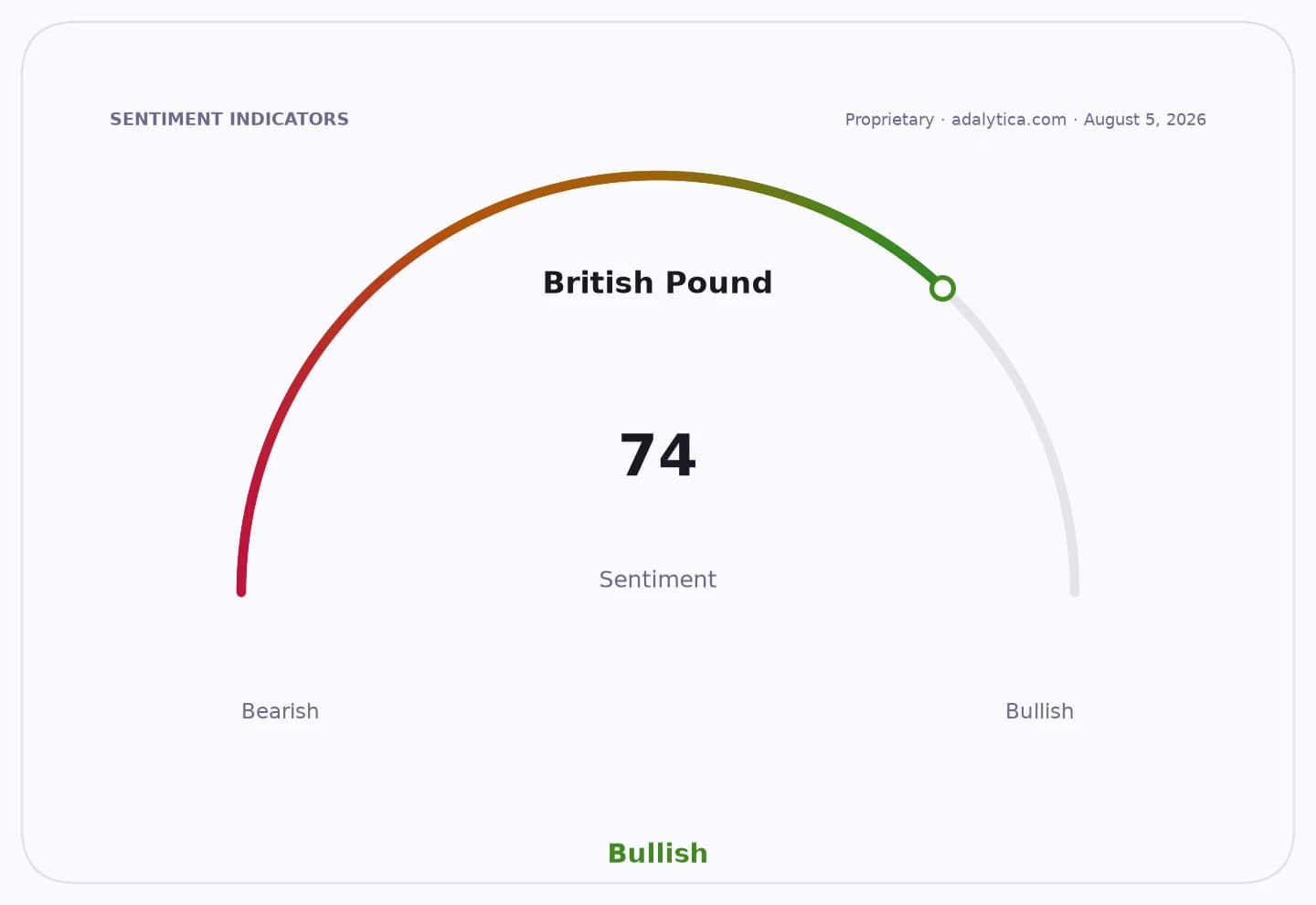
The market backdrop, however, looks less supportive than it did a few weeks ago. Adalytica’s British pound trade signals show sentiment at 74, or “Greed,” with awareness at 100 and a 7-day change of 57 points, while the U.S. dollar sits at 100 sentiment and 95 awareness, both in “Extreme Greed.” That divergence matters for positioning: crowded bullish sterling trades are more exposed if the dollar’s momentum persists and investors begin to question how long the pound can outperform on rate expectations alone.
The economic narrative is straightforward. A pound supported by comparatively higher UK rates can only stay elevated if the market believes that yield gap will remain durable and inflation will justify it. If U.S. yields keep rising, or if the Fed is slower to ease than the market has assumed, the dollar’s funding advantage improves and sterling’s interest-rate cushion narrows. That would pressure imported inflation in the UK, but it would also complicate the BoE’s task by keeping financial conditions tighter than policymakers would like.
For investors, the risk is that the pound’s recent resilience may be based on a story that is already maturing. Bullish case: UK rates stay elevated longer, the pound keeps drawing carry demand, and FXB can extend above recent highs. Bear case: the U.S. yield backdrop reasserts itself, the dollar regains leadership, and sterling loses ground even without any new UK-specific shock. In that scenario, the trade is not about a collapse in UK fundamentals; it is about relative returns in a market where rate differentials still do most of the work.
The next catalyst will be whether the bond market continues to price a firmer U.S. path while the BoE holds steady. If that spread keeps moving in Washington’s favor, the pound’s rate advantage may prove temporary rather than structural.
| Entity | Gains | Losses |
|---|---|---|
| U.S. dollar | ▲Higher yield support | ▼Sterling longs |
| British pound | ▲Carry demand | ▼If U.S. rates reprice higher |
| FXB holders | ▲Stable pound trend | ▼A weaker GBP move |
| UK importers | ▲Lower sterling would raise costs | ▼Consumers facing pricier imports |