Buenos Aires Palermo luxury housing prices rise
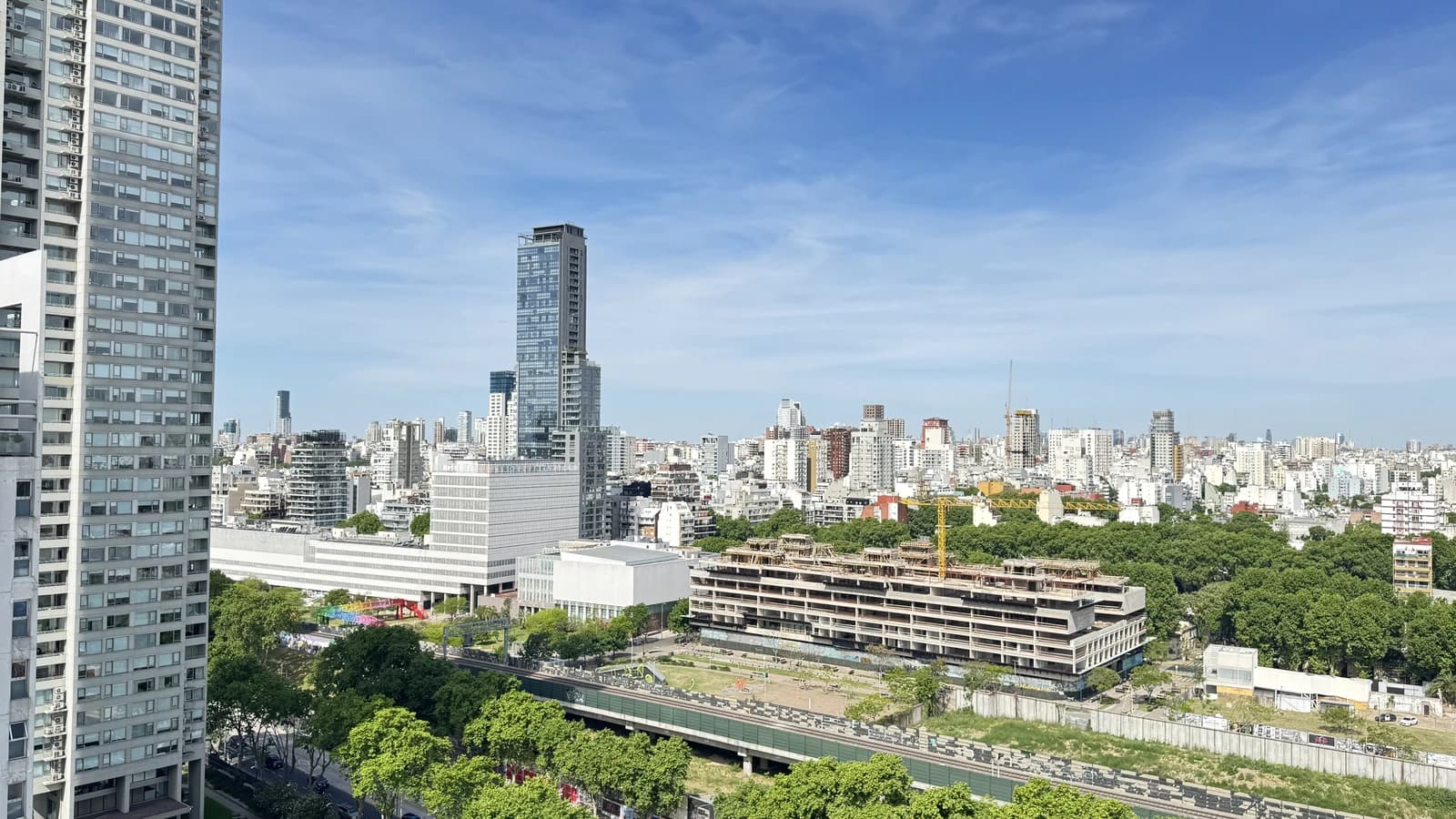
A former transit bottleneck in Buenos Aires’ Palermo is turning into one of the city’s hottest luxury housing markets, with new projects pushing launch prices as high as US$8,000 per square meter and lifting values across the surrounding stock.
The shift matters because it is changing both the economics of the neighborhood and the investment case for developers. What used to be a place people crossed on the way to somewhere else is becoming a destination, helped by the San Martín viaduct, public land sales and zoning changes that opened the door to large private projects.
Developers and brokers are already using a new label — “Palermo Pacífico” — to describe the area around Puente Pacífico, where strong transport links, nearby parks and proximity to Palermo Hollywood are drawing buyers. The corridor already has the Metrobus, the San Martín railway and the D line, and is set to add the electric Trambus T1, with future plans also including a Line F subway extension.
That infrastructure backdrop is showing up in pricing. In Palermo’s used market, apartments generally sell for between US$2,800 and US$3,500 per square meter, but specific streets are much higher: Cerviño reaches US$5,431 and Avenida del Libertador US$6,723. In new developments, early-stage units are typically priced from US$3,200 to US$4,200 per square meter, with premium projects going well beyond that.
Decó Polo, facing the Campo Argentino de Polo, launched at US$4,000 per square meter and some units climbed to US$8,000. Nómada Palermo starts at US$4,400 per square meter, while Consultatio is building another large project in the area whose pricing has not yet been disclosed.
For investors, the key point is that fresh supply is resetting the market. Baigun Realty’s Matías Chirom said completed units can fetch 25% to 40% more than the same apartment bought off-plan, while existing owners are also benefiting from the new benchmark: one property valued at about US$2,200 per square meter four years ago can now be worth more than US$3,000 without any renovation.
The new projects are also changing what is being bought and built. Rather than purely residential towers, the area is moving toward mixed-use schemes that combine homes, offices, hotels and dining, which developers say increases foot traffic and supports higher prices. Nómada Palermo, for example, includes residences, a hotel, boutique offices and a gastronomic base, while Consultatio is pitching a design that treats park space as the organizing principle of the project.
The buyer base has broadened as prices rose. Brokers say early investors were followed by Argentines living abroad, then buyers from the interior of the country, and now Palermo residents looking to upgrade without leaving the neighborhood. Demand is coming from investors seeking capital preservation and rental income, as well as younger professionals looking for smaller units with amenities, coworking and security.
But the boom is also raising friction. Local brokers and industry executives warn that private investment is moving faster than public infrastructure, with traffic, noise, service capacity and rising rents emerging as pressure points. Some also fear that rising costs could push out traditional shops and leave the district increasingly concentrated at the top end of the market.
That leaves Palermo Pacífico at a familiar urban inflection point: the land is being repriced by infrastructure and amenities, but the durability of the rally will depend on whether public works keep pace with the private buildout.
| Entity | Gains | Losses |
|---|---|---|
| Developers | ▲Higher launch prices | ▼More scrutiny on infrastructure |
| Existing homeowners | ▲Rising property values | ▼Higher neighborhood costs |
| Luxury buyers | ▲New premium stock | ▼Entry prices near US$8,000/m² |
| Small merchants | ▲More foot traffic | ▼Risk of rent increases |