Bulgaria Consumer Credit Bill Tightens Lending Rules
Bulgaria is moving to overhaul its consumer credit regime, a shift that could curb the most aggressive lending practices, raise compliance costs for lenders and give overextended households more room to breathe.
The parliamentary economy committee has approved on first reading a new consumer credit bill that expands the scope of regulation, tightens advertising rules and forces lenders to check borrowers’ repayment capacity before extending loans. The changes are meant to align Bulgaria with an EU directive and come after the European Commission launched infringement proceedings over Sofia’s delay in transposing the rules.
Economically, the bill is aimed at a familiar pressure point: too much short-term borrowing at too high a cost. By imposing a clearer cap on total costs for short-term loans and requiring lenders to offer deferrals, refinancing or contract changes to distressed borrowers, lawmakers are trying to reduce the kind of debt spiral that can quickly turn a temporary cash shortfall into a broader consumption and social problem.
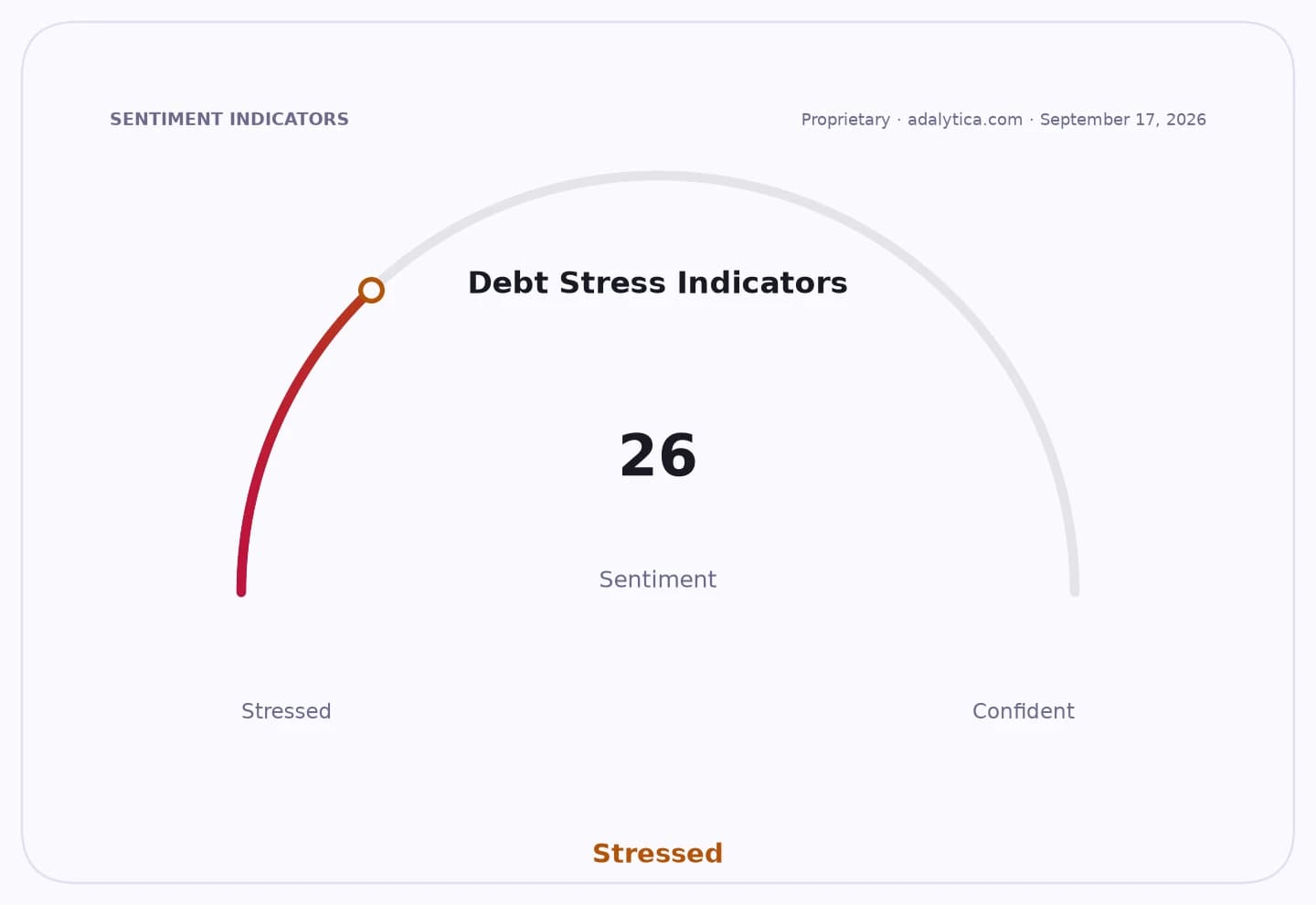
That matters beyond consumer protection. In an economy where household debt stress has been high and confidence has weakened, tighter rules can alter credit growth, repayment behavior and the quality of new lending. Adalytica’s Household Debt Stress Sentiment gauge is in “Fear” at 26, while its Household Savings Rate Sentiment sits at just 7, in “Extreme Fear,” underscoring how fragile household finances remain even as unemployment expectations and other macro gauges have eased from earlier extremes.
For borrowers, the upside is obvious: more transparent pricing, fewer hidden fees and stronger safeguards against unaffordable credit. For lenders, the impact is more mixed. Banks and non-bank finance companies that rely on fast approvals, high effective interest rates and aggressive online marketing may face slower originations and lower margins, especially in the short-term lending segment that the bill targets most directly.
The new framework also broadens oversight of the market itself. Creditors and intermediaries would face mandatory registration, the Consumer Protection Commission would gain wider powers and penalties would rise for violations. The law also reflects the shift to digital distribution by setting rules for online contract formation and internet-based lending, which should reduce regulatory arbitrage between brick-and-mortar and platform-based providers.
Investors will read the bill as a modestly negative development for consumer-finance specialists that depend on fee-rich unsecured lending, but a potentially positive one for long-term asset quality across the financial system. Standard technical readings on some U.S. consumer lenders already show how markets can punish perceived credit deterioration: Capital One shares have been trading below both the 50-day and 200-day moving averages, while Synchrony Financial has also softened after a recent rally, reflecting how sensitive valuations remain to delinquency trends and underwriting risk.
For Bulgaria, the bigger issue is that the country is no longer choosing whether to tighten consumer credit rules; it is responding to an EU enforcement clock. Parliament still has to approve the text in plenary and may refine it between readings, but the direction is clear: a more supervised market with less room for excessive indebtedness, higher disclosure standards and tougher discipline on lenders. If implemented cleanly, the reform could improve lending standards and borrower resilience, even if it trims the speed and profitability of consumer credit expansion.
| Entity | Gains | Losses |
|---|---|---|
| Households | ▲clearer pricing, fewer traps | ▼easier access to fast credit |
| Regulated banks | ▲better loan quality | ▼slower consumer lending growth |
| Non-bank lenders | ▲level playing field | ▼higher compliance costs |
| Bulgarian state/EU | ▲legal compliance | ▼fewer market loopholes |