BYD export mix raises Tesla EV competition
BYD’s latest export mix is a clear reminder that the Chinese carmaker is no longer playing solely for domestic share — it is building a global challenge to Tesla in electric vehicles, and the investor implications are getting bigger.
With 35.4% of exports now part of its sales profile, BYD is leaning harder on overseas markets to sustain growth as China’s EV competition stays intense and pricing remains under pressure. That matters because export expansion is one of the few levers left to protect volumes and margins when the home market is crowded, and it gives BYD a chance to translate its scale advantage into brand recognition and dealer depth outside China.
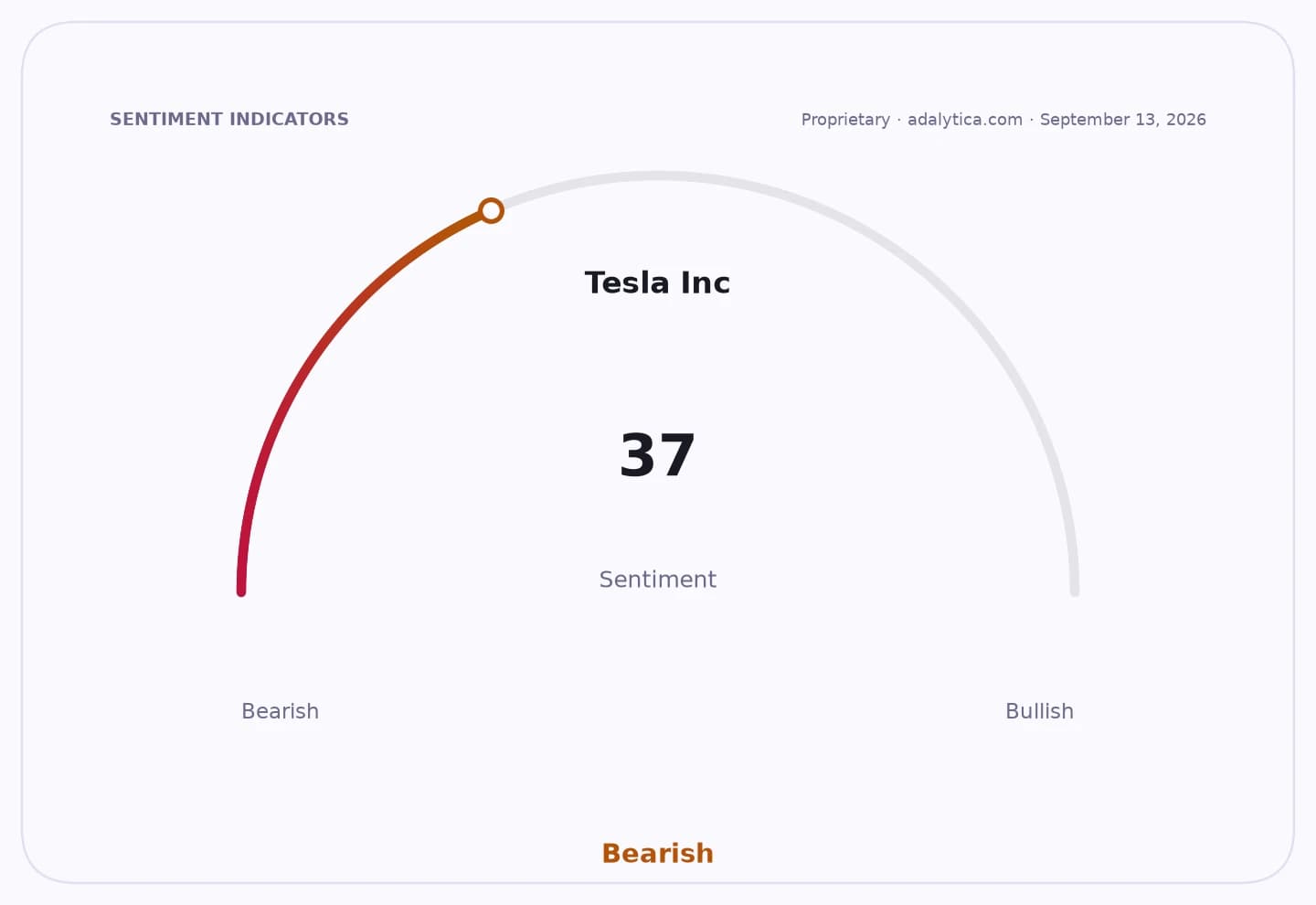
For Tesla, the message is uncomfortable. BYD is not just a low-cost rival in China; it is becoming a cross-border competitor in markets where Tesla has relied on premium positioning and software-led differentiation. That raises the stakes for Tesla’s pricing power and unit growth, particularly as the company works through softer momentum in its own shares. Tesla traded at $365.44 in the latest data, well below its 50-day moving average of $354.5 after a sharp drawdown earlier this year, while Tesla sentiment on Adalytica remained neutral at 37, suggesting investors are not yet fully re-rating the stock but are also not embracing a new growth inflection.
BYD’s own stock has been under pressure, with the U.S.-listed shares at $10.13 and the stock still below both its 50-day and 200-day moving averages. The technical setup points to a market that is cautious on the near-term earnings outlook despite the export narrative. RSI readings for BYD’s shares were deep in oversold territory at 20.4, and the MACD remained negative, indicating the recent selloff has been sharp. That can create a tactical bounce, but it does not erase the underlying question: can overseas sales grow fast enough to offset margin pressure from competition, tariffs and logistics costs?
The broader investment story is that BYD and Tesla are now competing on different strengths. Tesla remains the higher-margin, brand-led player with a global premium franchise, but BYD has scale, manufacturing breadth and a cost structure that may travel better in lower- and mid-priced segments. If BYD can sustain export growth, it could pressure not only Tesla but also legacy automakers still trying to defend EV market share. If it cannot, the company risks trading volume growth for profitability.
For investors, the key catalyst is whether BYD’s export momentum is durable enough to support earnings and valuation after the recent share weakness. The market will be watching pricing discipline, regional mix, and any sign that export growth is being bought at the expense of margins. Tesla holders, meanwhile, will focus on whether the company can defend share without another round of aggressive discounting. The contest is no longer about who sells the most EVs at home; it is about who can convert manufacturing scale into sustainable global profit.
| Entity | Gains | Losses |
|---|---|---|
| BYD | ▲Export-led growth | ▼Margin pressure |
| Tesla | ▲Premium positioning | ▼Share pressure |
| Global EV buyers | ▲More choice | ▼Potential price wars |
| Legacy automakers | ▲Faster EV adoption | ▼Harder competition |