Canada household debt-to-income ratio rises to 175.1%

Canada’s household debt burden climbed further in the second quarter, underlining how fragile consumer finances remain even as interest rates start to ease.
The household debt-to-income ratio widened to 175.1% in Q2, meaning Canadians owed about $1.75 for every dollar of disposable income, a reminder that years of borrowing for mortgages and consumer spending have left households exposed to slower income growth, high refinancing costs and any renewed labor-market weakness. The ratio matters because household balance sheets are a major transmission channel for monetary policy in Canada: when debt is this elevated, even modest changes in borrowing costs can have an outsized effect on consumption, arrears and housing demand.
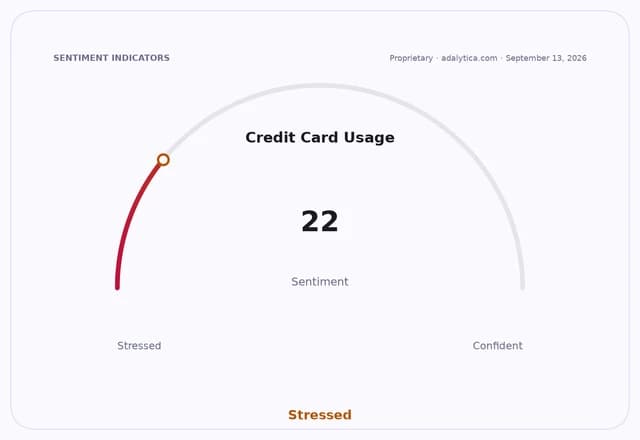
That vulnerability is especially relevant now because the labor market is cooling rather than weakening outright. The unemployment rate was 4.1% in August, little changed from July, but still off the post-pandemic lows and enough to keep policymakers focused on downside risks to spending. At the same time, private consumption remains heavily leveraged to credit conditions, and any deterioration in job security could force households to cut back sharply.
The headline also lands in a market where investors are already weighing how long Canadian consumers can keep supporting bank earnings, retail sales and housing activity. Royal Bank of Canada and other lenders have benefited from resilient credit performance and still-solid mortgage books, but a higher debt-to-income ratio raises the odds of slower loan growth, more pressure on unsecured lending and a gradual normalization in credit quality. For rate-sensitive exchange-traded funds such as the iShares MSCI Canada ETF, the data reinforces the case that the domestic economy is still more exposed to household stress than to outright inflation overheating.
The broader narrative is that Canada’s economic soft landing remains constrained by balance-sheet repair. Lower policy rates may help at the margin, but they do not quickly undo years of borrowing. If wage growth keeps lagging debt service costs, households will likely remain cautious, limiting the rebound in consumer demand and housing turnover. For investors, that means watching not just the Bank of Canada’s next move, but whether debt burdens begin to ease through income gains, deleveraging or a more pronounced slowdown in credit demand.
| Entity | Gains | Losses |
|---|---|---|
| Households with variable-rate debt | ▲Lower rates ease payments | ▼High leverage keeps finances stretched |
| Canadian banks | ▲Stable loan books in near term | ▼Rising credit risk ahead |
| Consumers with low debt | ▲Relatively stronger spending power | ▼Slower economy if households retrench |
| Bank of Canada | ▲More room to support growth | ▼Limited ability to fix leverage quickly |