Canadian dollar rises on oil gains and weaker dollar

The Canadian dollar is gaining ground as rising oil prices and a fading U.S. dollar give the loonie fresh support ahead of a key U.S. inflation report that could decide whether the Federal Reserve keeps its tightening bias next week.
The move matters because Canada’s currency is one of the developed market’s most oil-sensitive exchange rates, and the latest climb in crude is reinforcing the country’s terms-of-trade advantage just as the greenback loses momentum. Higher energy prices also feed directly into Canada’s inflation picture, which complicates the policy outlook for the Bank of Canada even as it supports export revenues and corporate cash flow in the energy sector.

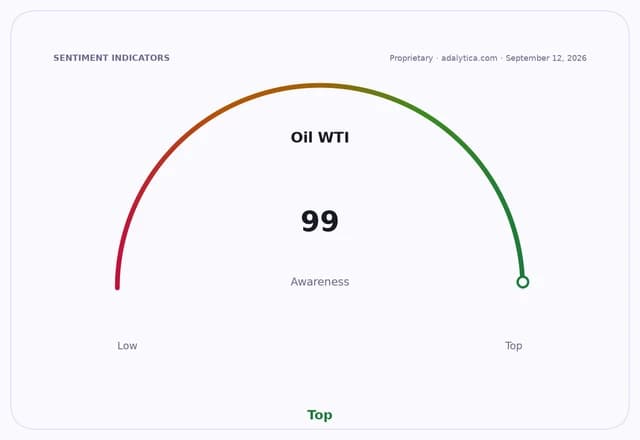
U.S. benchmark West Texas Intermediate rose to around $97.3 a barrel, extending a sharp rally from earlier in the week and keeping pressure on oil-importing currencies while boosting commodity exporters. At the same time, the dollar has been unable to sustain its recent advance, with Adalytica’s U.S. Dollar Trade Signals showing sentiment at 63 — neutral — after a 5% drop over the past week. That combination has helped USD/CAD pull back from its intraday highs.
For investors, the immediate question is whether the loonie’s strength has room to continue or whether it is being driven by a narrow set of catalysts. The answer depends heavily on Friday’s U.S. consumer price index. A hotter-than-expected reading would likely revive bets on another Fed rate increase, lifting Treasury yields and giving the dollar a new bid. U.S. 10-year yields were already near 4.95%, underscoring how sensitive the currency market remains to incoming inflation data.
The oil rally is doing most of the heavy lifting for Canada. Energy-linked revenues tend to support the currency, and the effect is visible in the Canadian dollar ETF FXC, which has climbed to 70.52 from 69.38 less than a month ago. The fund’s 50-day moving average remains below the latest price, while RSI readings have eased from overbought levels, suggesting the move is constructive but not yet stretched by technical standards.
Still, the macro backdrop is not uniformly supportive. The same oil surge that helps Canada’s external balance can worsen inflation and keep policymakers cautious about easing. That creates a tension for rate-sensitive assets: a stronger loonie can help contain imported price pressure, but a sustained commodity spike may also limit how far Canadian interest-rate cuts can go if growth slows.
For currency traders, the near-term trade is still dominated by the U.S. inflation print and the next move in crude. If oil holds near current levels and U.S. data disappoints, USD/CAD could remain under pressure. If CPI comes in hot and Treasury yields extend higher, the dollar may regain enough momentum to reverse at least part of the loonie’s advance.
| Entity | Gains | Losses |
|---|---|---|
| Canadian dollar | ▲Oil-linked support | ▼If U.S. CPI runs hot |
| Oil producers | ▲Higher realized prices | ▼Importers and refiners |
| U.S. dollar | ▲Fed-hike expectations if CPI surprises | ▼When momentum fades |
| Canadian consumers | ▲Stronger currency cushions imports | ▼Higher fuel costs from oil rally |