Canadian dollar falls as WTI slips to $79.88

The Canadian dollar slipped to a six-day low as crude’s retreat undercut one of the loonie’s most important supports, reinforcing the market’s view that Canada’s currency remains highly exposed to energy prices even as U.S. yields stay elevated.
That matters because Canada is one of the most oil-sensitive major currencies in the G10 complex. When WTI weakens, export revenues, corporate cash flow and the country’s terms of trade all lose momentum, while the Bank of Canada gets less help from commodity-linked inflation pressure. The result is a familiar but powerful macro transmission: lower oil often means a weaker loonie, and a weaker loonie can import more inflation or keep policy tighter for longer than otherwise expected.

WTI has fallen to about $79.88 a barrel from recent highs, with Brent easing to $83.77, after a sharp pullback driven by softer Middle East risk and talk of renewed U.S.-Iran diplomacy. That has taken some of the speculative heat out of the market and trimmed the premium embedded in energy prices over the past several weeks. The slide is enough to matter for FX even before the next Bank of Canada decision, because currency traders typically respond first to changes in commodity momentum, not just the absolute level of oil.
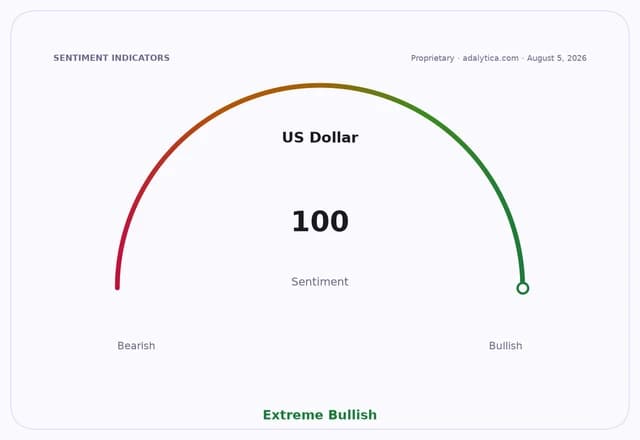
The loonie’s weakness is also happening against a backdrop of firmer U.S. rates. The 10-year Treasury yield is around 4.75%, keeping the dollar supported and limiting room for commodity currencies to recover. In that kind of cross-current, Canada’s exchange rate often trades less like a pure risk asset and more like a leveraged expression of oil and rate differentials. That makes it especially vulnerable when both forces move against it at once.
For investors, the message is straightforward: this is not just a currency headline, it is a signal that the market is repricing Canada’s macro advantage. A softer Canadian dollar can help exporters in the short run, but it also raises the cost of imported goods and can pressure domestic bondholders if inflation proves sticky. Equity investors should expect relative strength to favor Canadian energy producers over rate-sensitive domestic sectors, while currency hedgers may see renewed demand if oil fails to stabilize quickly.
Technically, FXC, the Canadian dollar ETF, has drifted below its 200-day moving average and is testing the lower end of its recent range, while USDCAD has edged back toward 1.41. Those are not dramatic breakdown levels, but they confirm that momentum has turned against the loonie. If oil holds near the low $80s or slips further, the next leg in Canadian dollar weakness could come fast.
The bigger investing takeaway is that Canada remains a clean macro expression of the oil trade. If crude is entering a more fragile phase on easing geopolitical risk and rising supply, the loonie is likely to stay under pressure — and that creates opportunity for investors positioned in exporters, hedges and energy producers, while underweighting domestic Canada exposure that depends on a firmer currency.
| Entity | Gains | Losses |
|---|---|---|
| Canadian exporters | ▲Better foreign-currency revenue | ▼Higher hedging uncertainty |
| U.S. dollar | ▲Safe-haven support | ▼— |
| Canadian oil producers | ▲Competitively priced output | ▼Lower realized crude prices |
| Import-heavy Canadian consumers | ▲— | ▼Higher import costs |