Capital One, Synchrony fall as card stress rises
Household payment stress is emerging as a direct risk for US consumer lenders, with sentiment around debt distress worsening even as credit-card usage remains weak and stocks such as Capital One and Synchrony drift lower from recent peaks.
The problem matters economically because delinquent households cut back spending first on discretionary goods and services, then on new borrowing, creating a drag on consumer demand just as rates and living costs have already squeezed budgets. That makes late payment trends an important early warning signal for the wider credit cycle, particularly in unsecured lending where losses can escalate quickly once borrowers fall behind.
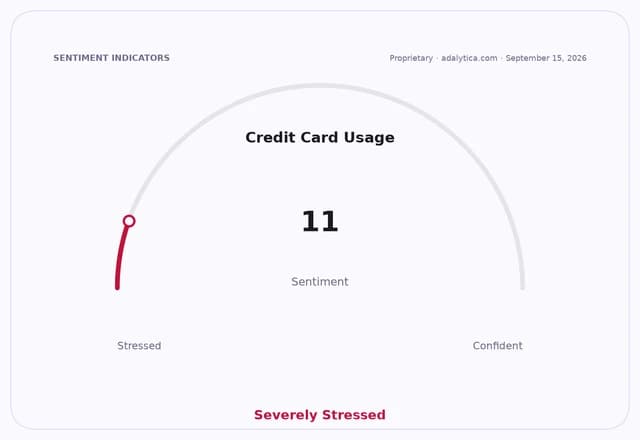
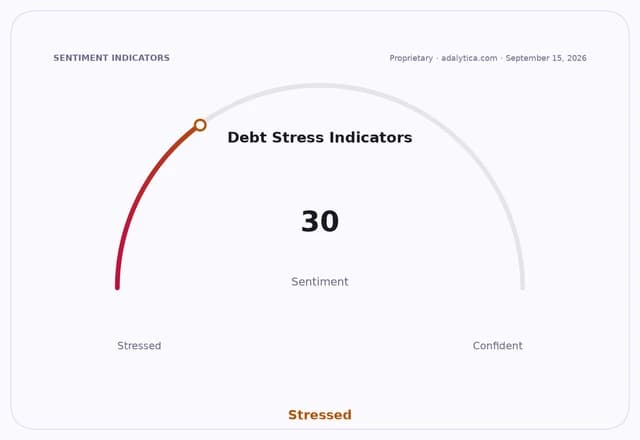
Adalytica’s Household Debt Stress Sentiment stood at 30, or “Fear,” on Sept. 15, after dropping 19 points in a day and 33 points over a week, while its Credit Card Usage Sentiment was stuck at 11, or “Extreme Fear.” Those readings suggest consumers are under strain even before any broader acceleration in charge-offs shows up in published earnings. Wage Inflation Sentiment, meanwhile, was just 4, a sign that households are not seeing income gains keep pace with debt burdens.
The market has begun to reflect that backdrop. Capital One Financial, which had briefly traded above $254 in early January, closed at $206.85 on Sept. 15, down about 19% from that peak and just above its 200-day moving average. The stock’s RSI reading of 35.5 points to weakening momentum, while its MACD remained below signal, indicating the rebound has lost force. Synchrony Financial was more stable at $76.06, but it too sat only marginally above its 200-day average with an RSI of 32, a level that typically reflects oversold conditions rather than conviction.
For investors, the key question is whether late payments are a temporary normalization after years of pandemic-era support or the start of a more durable deterioration in consumer credit quality. Bulls will argue that near-term weakness in card usage and stock prices already discounts a softer backdrop, and that lenders have spent the past two years tightening underwriting and building reserves. Bears will counter that a low-income, high-balance cohort remains exposed to higher borrowing costs and that unsecured credit can turn quickly once household cash flow cracks.
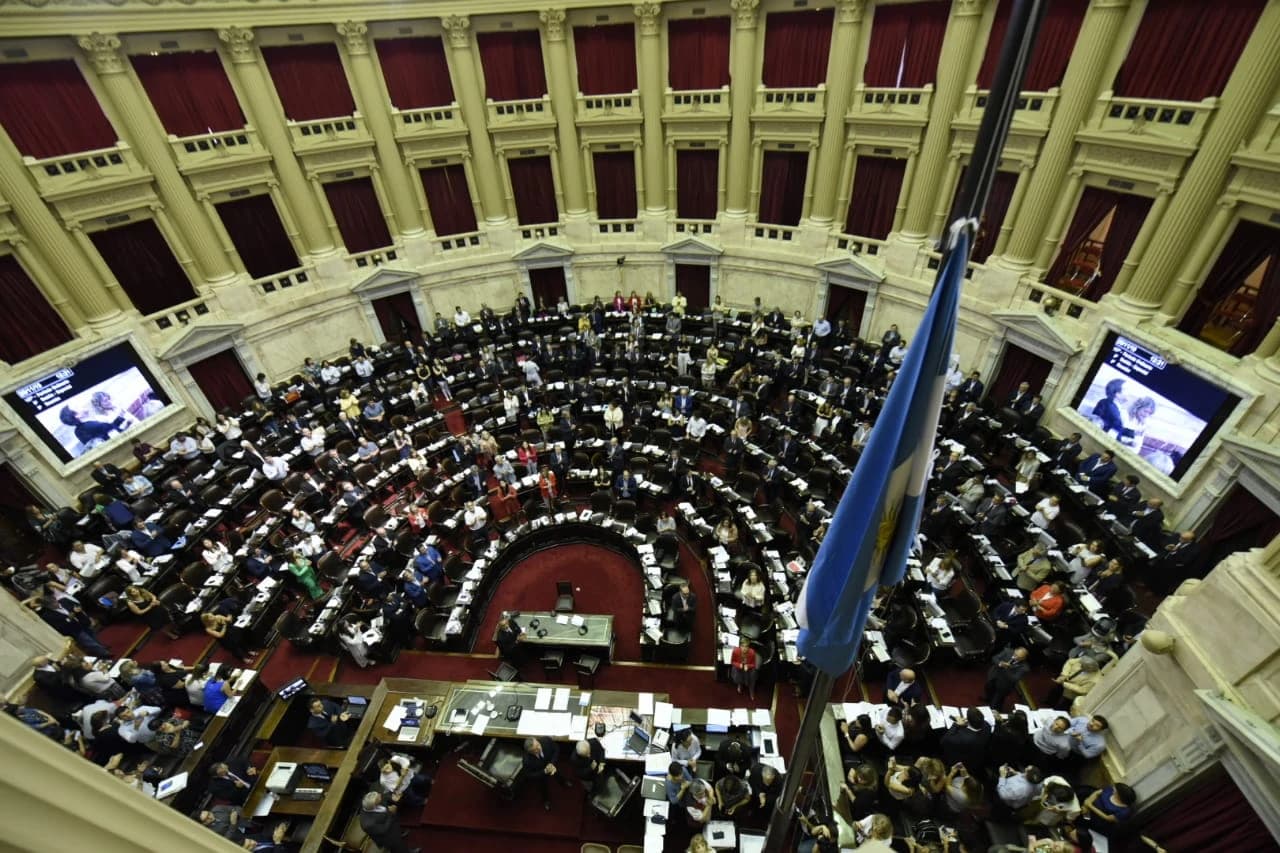
That is why the congressional focus on household late payment is important beyond politics: it feeds directly into consumer credit availability, bank earnings and the cost of funding for lenders that rely on revolving balances. Any sustained rise in arrears would pressure net charge-offs, force higher provisions and could eventually tighten credit standards further, reinforcing the slowdown.
The next catalyst is whether lenders’ upcoming disclosures confirm the stress visible in sentiment data and market pricing. If delinquency trends keep worsening, card issuers and consumer finance names could face another leg down; if they stabilize, the recent selloff in names like Capital One and Synchrony may prove to have been an overreaction to what is still an uneven, but not yet broken, consumer.
| Entity | Gains | Losses |
|---|---|---|
| Large banks | ▲Safer underwriting | ▼Higher loss provisions |
| Card borrowers | ▲More scrutiny | ▼Tighter credit access |
| Capital One, Synchrony | ▲Potential rebound if delinquencies peak | ▼Weak price momentum |
| Retailers | ▲Stable spend if arrears ease | ▼Slower discretionary demand |