Caterpillar, Deere and Freeport Gain From Labor Squeeze
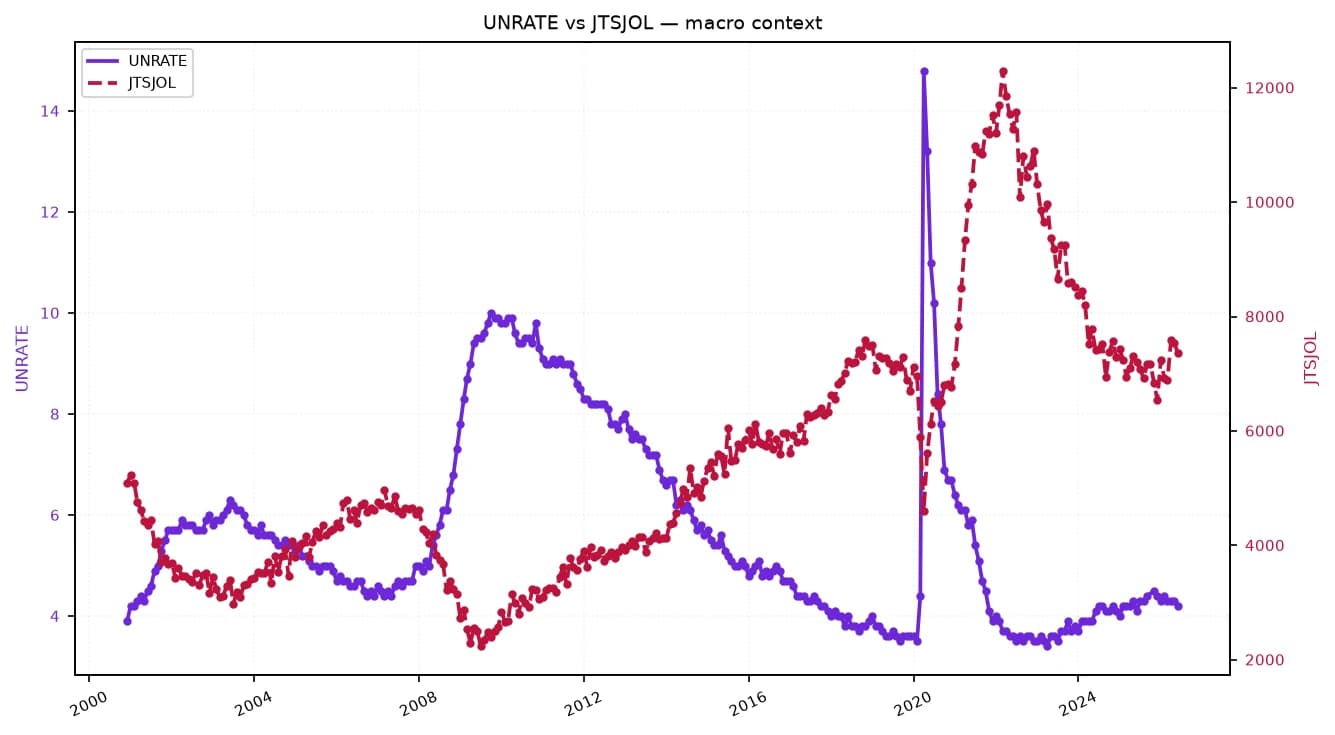
What investors are missing is that the biggest beneficiaries of the AI-and-infrastructure capex wave may be constrained less by demand than by labor, which means many of the projects already funded cannot be built at full speed.
That is the real economic bottleneck behind the tape in Caterpillar, Deere and Freeport-McMoRan. Capital is flowing into data centers, heavy construction, mining and power systems, but a tightening labor market is limiting how quickly contractors, suppliers and miners can turn committed spending into completed projects. In other words, the market is still pricing this as a straight-line investment cycle, while the supply side is saying something much more valuable: execution capacity is scarce.
The backdrop remains supportive. U.S. unemployment is forecast around 4.09% in August, close to the 4.1% pace seen in July, hardly the kind of slack that would release a flood of available workers. At the same time, industrial production is still rising, pointing to an economy that has not rolled over. But jobs-openings data show a more important tension: openings at 7.36 million in June are down sharply from the post-pandemic peak above 12 million, yet they remain historically elevated. That is enough demand for labor to keep wages sticky and project timelines stretched.
That matters because the companies tied to the buildout are already signaling the scale of the opportunity. Caterpillar has ripped higher this year and sits well above its 200-day moving average, reflecting investor confidence that power, earthmoving and data-center infrastructure demand can stay strong. Deere has also pushed to record territory, while Freeport-McMoRan has surged on the expectation that electrification, grid buildout and copper demand will stay structurally tight. These are not just cyclical trades; they are toll booths on a multi-year capital supercycle.
The market may be underestimating the second-order effect of labor scarcity. If firms cannot deploy even 25% of committed capital on schedule, the near-term winners are not the end users of that capital, but the companies selling the scarce tools, machines, materials and energy inputs that do get deployed. That means pricing power can hold longer than consensus expects, even if some projects slip from one quarter to the next.
Adalytica’s wage-inflation reading remains elevated, underscoring the same point from a different angle: labor is not abundant enough to let this wave of spending translate cleanly into output. For investors, that is bullish for the picks-and-shovels names and less friendly to the more execution-dependent parts of the industrial and construction chain. It also explains why the rally has broadened beyond pure AI software into copper, heavy equipment and infrastructure suppliers.
If the next leg of growth comes from physical buildout rather than just financial enthusiasm, the winners will be the firms that can monetize scarcity. I believe the best trade is still the infrastructure and electrification layer — Caterpillar, Deere and Freeport-McMoRan first, with the broader industrials and materials complex as the follow-on opportunity.
| Entity | Gains | Losses |
|---|---|---|
| Caterpillar | ▲Data-center and heavy-equipment demand | ▼Contractors facing labor bottlenecks |
| Deere | ▲Construction and fleet replacement cycle | ▼Buyers delayed by project delays |
| Freeport-McMoRan | ▲Copper and electrification spending | ▼Consumers of capital spending |
| Labor market | ▲Wage leverage | ▼Project execution speed |