CBRE and Rocket Companies Face Mixed Real Estate Conditions
Women’s leadership in mortgage and real estate is gaining visibility just as the sector wrestles with high borrowing costs, uneven transaction activity and volatile investor sentiment.
That makes the latest focus on women executives more than a ceremonial milestone. In an industry tied to housing affordability, capital markets and commercial property values, who is making decisions at the top matters for how firms navigate slower deal flow, tighter lending standards and the push for growth in a still-fragile market.
The backdrop is mixed. CBRE Group, the world’s largest commercial real estate services firm, has seen its shares swing sharply this year, falling to $136.28 on Feb. 12 before recovering to $150.82 by Aug. 28. The stock remains below its 200-day moving average of $147.36 only slightly above it, while RSI readings near 60 suggest momentum has stabilized after earlier weakness. For investors, that reflects a market still looking for clearer evidence that commercial real estate activity is firming rather than just bouncing.
Rocket Companies, a key mortgage lender and home-loan platform, tells a tougher story. Shares closed at $13.77 on Aug. 28, well below the 200-day moving average of $16.25, after a steep run-down from above $20 late last year. Mortgage lenders remain highly exposed to interest-rate swings and housing turnover, and Rocket’s trading pattern underscores how hard it has been to sustain origination growth in a high-rate environment.
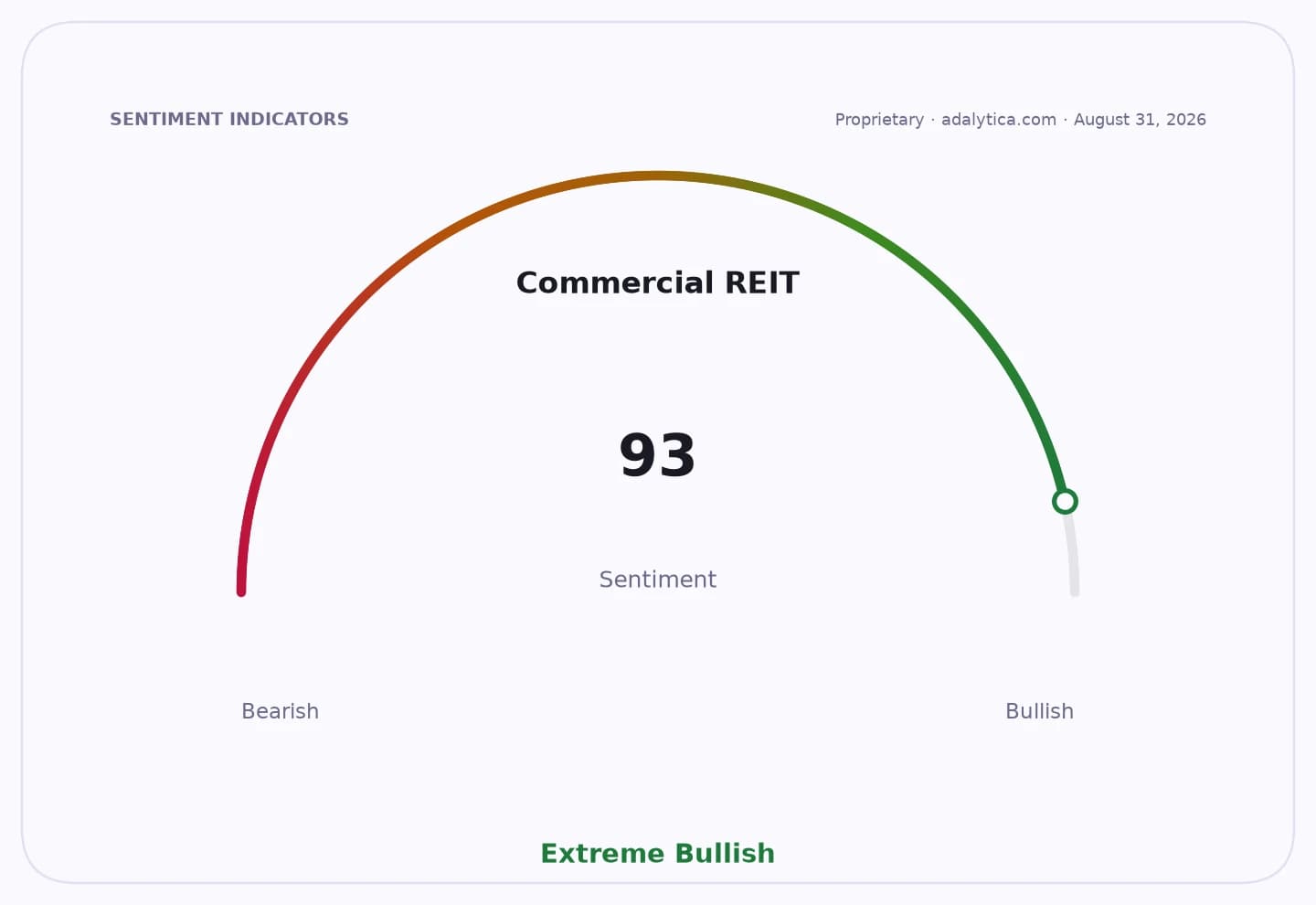
Commercial property sentiment, meanwhile, has improved sharply in the Adalytica.com gauge for VNQ, with the REIT benchmark showing “Extreme Greed” at 93 despite “Fear” on awareness. The S&P 500 gauge is even hotter at 98, suggesting investors are broadly embracing risk even as some real estate and mortgage names remain under pressure.
The women-leadership theme fits into a broader policy and social narrative outside the market data as well. The Supreme Council for Women recently marked its 25th anniversary, highlighting a national push to expand female leadership in entrepreneurship, science and climate resilience. That kind of institutional support matters economically because real estate and mortgage finance are relationship-driven businesses that depend on talent, deal access and long-term trust.
For investors, the key question is whether stronger leadership diversity can translate into better execution during a difficult cycle. In commercial real estate, that means managing refinancing risk, transaction volumes and capital allocation. In mortgage lending, it means surviving a period of weak affordability and still finding ways to capture market share when rates eventually ease.
The next catalyst is whether lower-rate expectations and any improvement in housing turnover finally feed through to home lenders and commercial brokers. Until then, the sector remains split between firms with resilient fee streams and those still waiting for the market to thaw.
| Entity | Gains | Losses |
|---|---|---|
| Women executives | ▲Visibility, influence, pipeline | ▼Slow-moving industry bias |
| CBRE | ▲Better sentiment if deal flow improves | ▼Rate-driven transaction weakness |
| Rocket Companies | ▲Lower rates, refinance volume | ▼High mortgage-rate pressure |
| REIT investors | ▲Repricing upside, yield appeal | ▼Volatility in property valuations |