Central Africa corridors get road and tracking funding
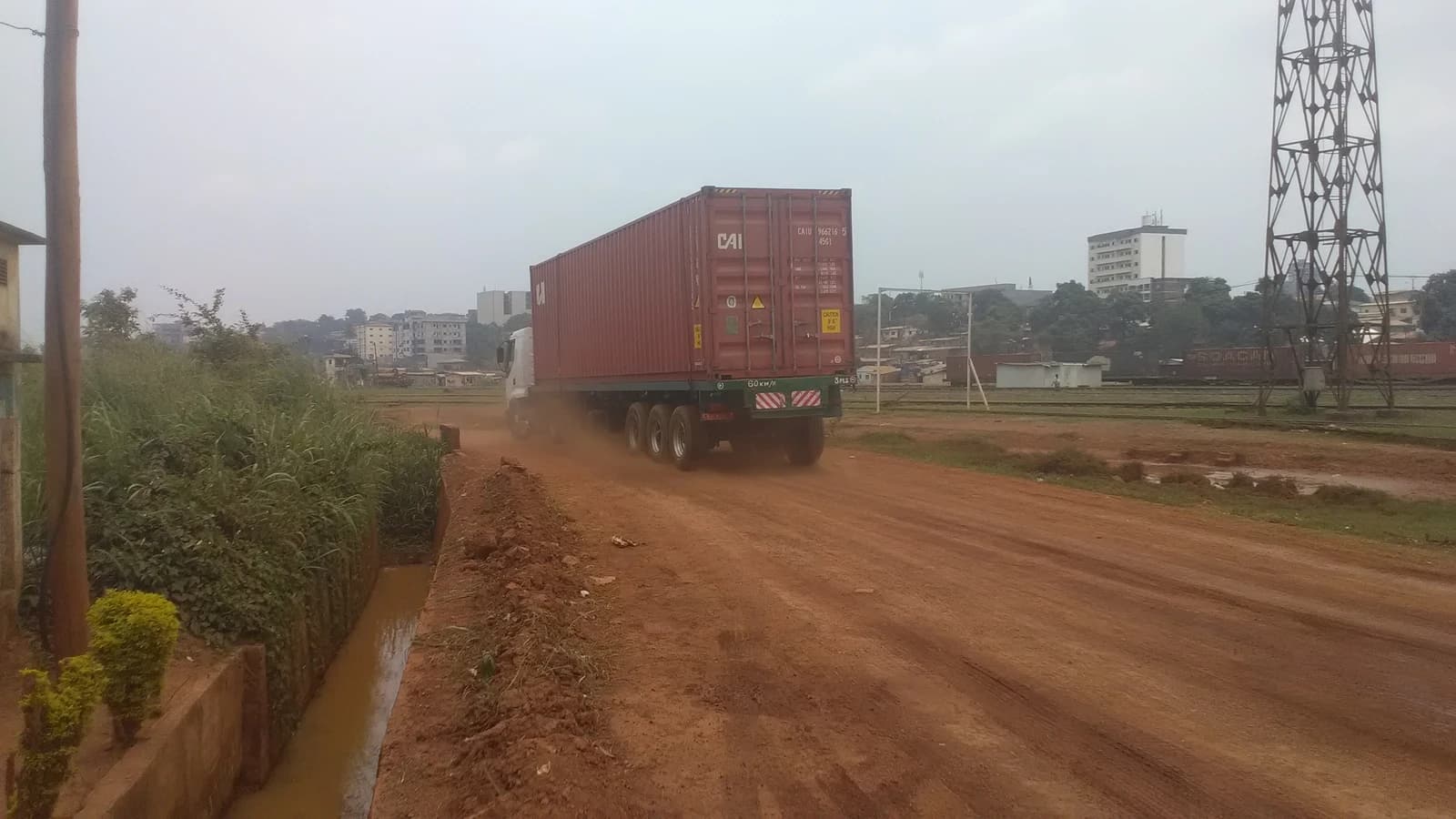
Truckers on the Douala-N'Djamena and Douala-Bangui corridors are still losing cargo in transit, and the bigger economic problem is that shippers, insurers and authorities often cannot say exactly where the losses happen. That opacity is now colliding with a new round of public investment in roads, tracking and transit digitization, raising the stakes for a logistics network that carries a large share of Central Africa’s trade but still operates with weak visibility.
The evidence from the ground is stark. On a 1,392-kilometer survey of the Douala-N'Djamena axis in January, the land freight agency counted 64 forced stops for heavy trucks, or one obstacle every 21.75 kilometers. Along the Douala-Bangui route, freight operators say cargo is stolen on night runs, seals are broken and some drivers have stopped moving after dark because of armed robberies and unsafe rest areas.
That matters because these corridors are the economic arteries linking the Port of Douala to Chad, Central African Republic and, increasingly, Niger. Douala handled 501,367 tonnes of transit cargo in the first quarter of 2026, up from 456,805 tonnes a year earlier, while total transit last year was close to 2 million tonnes. Yet less than 10% of Cameroon’s road network is paved, and studies cited in the sector say transport can account for about 60% of the cost of goods on degraded roads, versus less than 40% on rehabilitated routes.
The result is a logistics system that is expensive, fragile and hard to audit. Without systematic geolocation of transit fleets, no one can reliably measure how much freight reaches its destination, how much is lost to theft or delay, or how much time trucks spend sitting at checkpoints. For governments, that weakens customs control and road-maintenance financing. For shippers, it raises shrinkage, fuel and insurance costs. For operators, it undermines scheduling and asset utilization.
The technology is available, but adoption is lagging where it would matter most. The global GPS tracking device market was estimated at about $4.2 billion in 2025 and is expected to top $4.7 billion in 2026, yet the corridor economy in Central Africa has been slow to absorb tracking hardware, digital waybills and real-time fleet monitoring. In February, freight agents in Douala publicly complained about the shortage of GPS devices and beacons at the port, underscoring the gap between logistics demand and operational traceability.
That gap is now becoming a policy issue. The World Bank approved $525 million on June 12 for the first phase of the Douala-Bangui corridor reconstruction program, including systems to equip 3,000 heavy trucks with intelligent driver-assistance tools and two fully digital weigh stations. The African Development Bank had already approved a 330 million euro loan in December 2024 for reconstruction on the Douala-N'Djamena corridor, while Cameroon’s transport ministry received a 973 million-euro public works envelope in 2025, the largest item in the state budget for a fourth straight year.
Investors should read that as both a risk and an opportunity. Better roads, digital tolling and fleet telemetry could lift throughput, reduce fuel burn by 15% to 20% and improve safety metrics by 30% to 40%, according to sector data cited in the context. But execution risk remains high: GPS devices do little if mobile coverage is patchy between key nodes, or if drivers are not trained to use onboard systems. In other words, the corridor may be getting financed faster than it is becoming measurable.
For logistics groups, the immediate beneficiaries are truckers, telematics providers, port operators and contractors tied to corridor rehabilitation. The losers are cargo thieves, checkpoint rent-seekers, and any operator whose margins depend on opaque transit. For investors watching freight efficiency, the key question is whether Central Africa’s new spending cycle produces a modern, trackable corridor network or simply more roads whose economic return cannot be verified in real time.
| Entity | Gains | Losses |
|---|---|---|
| Telemetry providers | ▲More fleet demand | ▼Slower adoption risk |
| Shippers and insurers | ▲Better visibility | ▼Losses from theft |
| Road contractors and port operators | ▲Public spending | ▼Execution bottlenecks |
| Cargo thieves / rent-seekers | ▲— | ▼Digitized oversight |