Cheniere, Kinder Morgan, Williams Gain on LNG Push
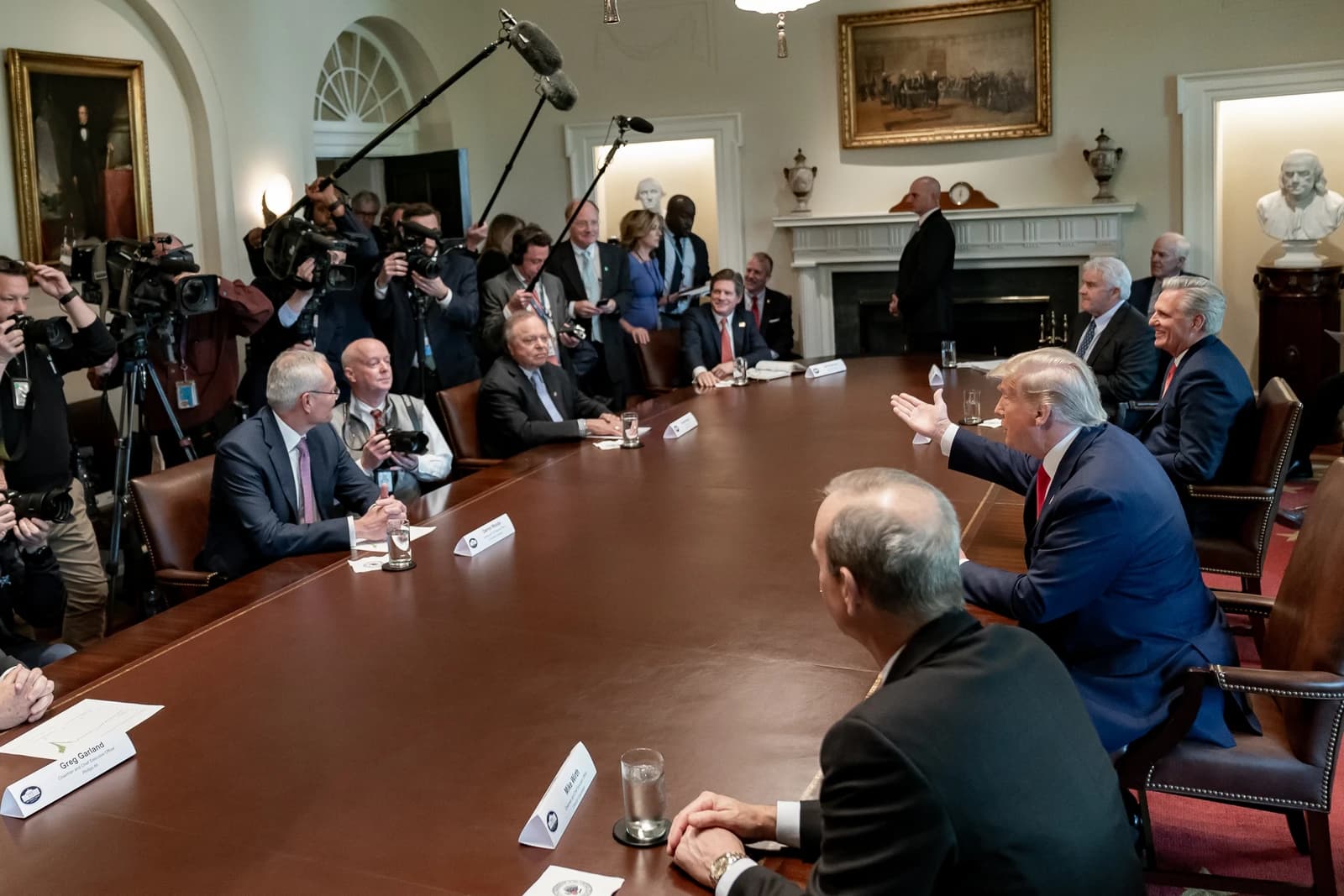
A White House energy emergency helped Donald Trump fast-track LNG facility construction, sharpening the investment case for a U.S. gas export boom just as oil prices climb, natural gas trade signals turn greedier and the market rewards the companies that move molecules from shale basins to the coast.
That matters because LNG is no longer just an energy story — it is a capital-allocation story. If permitting and construction timelines shorten, U.S. exporters can convert abundant gas into a more durable global pricing outlet faster, pulling in more feed gas demand, tightening the domestic market over time and reinforcing America’s role as the swing supplier in a volatile world. In an environment where West Texas Intermediate is forecast at $87.05 a barrel and the 10-year Treasury sits near 4.73%, investors are being pushed toward assets with visible cash flows, infrastructure bottlenecks and geopolitical leverage.
The market is already voting with its money. Cheniere Energy, the dominant pure-play LNG name, has surged to $268.11 from $205.23 in January, while its 50-day moving average has stayed above its 200-day average, a sign the trend remains intact despite recent consolidation. The stock’s July and August pullback looks more like digestion than exhaustion. Williams Cos. and Kinder Morgan have also held up well, with Williams at $73.70 and Kinder Morgan at $31.73, both close to their recent ranges and above their longer-term moving averages. That’s exactly where investors want to look when policy accelerates an infrastructure cycle: not at the most crowded headline names, but at the toll collectors.
The bigger point is that LNG buildout is becoming a second-order beneficiary of the broader energy emergency narrative. Faster construction means more orders for pipes, processing equipment, storage, compressors, engineering and contract logistics. It also raises the strategic value of operators with existing terminals, takeaway capacity and export expertise. The market underestimates how quickly a permissive regulatory regime can translate into revenue visibility for the infrastructure layer, especially when Europe and Asia still need reliable non-Russian supply and when disruptions continue to ripple through global LNG routes.
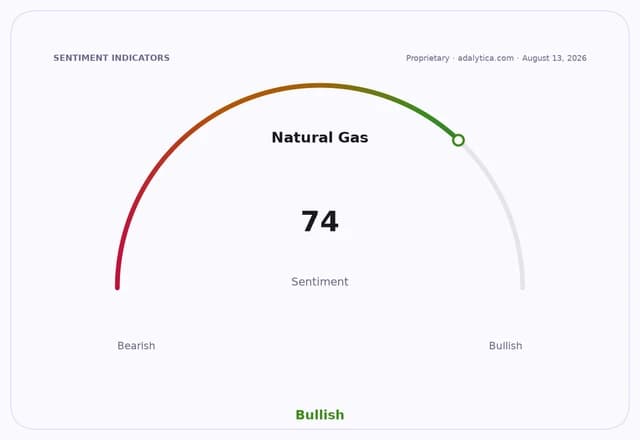
Natural gas sentiment is also firming. Adalytica’s Natural Gas Market Trade Signals show sentiment at 74 and awareness at 85, both in greed territory, while the 7-day change jumped 37 points. That does not guarantee a straight-line move, but it does tell you capital is beginning to chase the theme again. If LNG exports expand faster, upstream producers with dry gas exposure and midstream operators with direct export linkage should benefit next, especially if domestic gas demand rises enough to support higher prices without breaking industrial consumption.
For investors, the opportunity is to own the picks-and-shovels, not just the headline exporter. Cheniere remains the clearest leveraged beneficiary of faster LNG approvals and stronger export volumes. Kinder Morgan and Williams offer a steadier midstream way to play the same thesis through pipelines and takeaway infrastructure. The asymmetry is straightforward: policy speed-up boosts throughput, throughput boosts fee-based cash flow, and fee-based cash flow supports multiple expansion in a market still hungry for durable yield and secular growth.
The next catalyst is whether faster permitting and emergency-driven approvals start to show up in actual project timelines, contract awards and shipping commitments. If they do, the LNG trade can move from a policy headline to a multi-year infrastructure cycle. The market is still early.
| Entity | Gains | Losses |
|---|---|---|
| Cheniere Energy (LNG) | ▲Faster export growth | ▼Permit delays |
| Kinder Morgan (KMI) | ▲More pipeline throughput | ▼Idle capacity |
| Williams (WMB) | ▲Higher LNG-linked volumes | ▼Weak gas flows |
| Domestic gas buyers | ▲Lower policy risk | ▼Tighter supply |