Chile inflation target and neutral rate debate
Chile’s central bank is being forced into the market’s most uncomfortable debate: whether a 3% inflation target still makes sense when the economy’s average inflation over rolling 20-year periods has never fallen below 4%.
That is the economically important issue behind the next monthly CPI reading due Tuesday, expected to rise 0.3% in August, leaving annual inflation at about 3.5% and still outside the central bank’s target band. The real story, though, is not the monthly print. It is that Chile’s inflation history — even after the sharp post-pandemic disinflation — keeps clustering well above the official target, raising questions about whether policymakers are underestimating the neutral rate, overstating how restrictive policy is, or both.
For investors, that matters because it changes the entire interest-rate path. If the neutral policy rate is higher than the central bank assumes, then today’s 4.5% benchmark may be less restrictive than it looks, and borrowing costs across the economy could stay elevated for longer. That would support the peso in the near term, but it also raises the risk that credit-sensitive sectors, retailers, construction and rate-dependent small caps face a longer squeeze before inflation is fully anchored at target.
The numbers are hard to ignore. According to central bank data, the rolling average inflation rate over the past two years is 4%, the same as over three years. At four years it rises to 5.8%, and at five years it reaches 6.3%. Even 10 years back, the average was 4.5%; 20 years back, it was 4%. The pattern points to a persistent inflation floor, not a one-off post-pandemic distortion.
That is why the debate is shifting away from changing the target itself and toward revisiting the neutral rate, or TPMN. Economists quoted in the local report say much of the inflation pressure has come from supply shocks — the pandemic, supply-chain disruptions, fuel prices, pension withdrawals and emergency transfers — rather than overheating demand. But if those shocks keep pushing inflation above target, the central bank may need to recognize that the rate it considers “neutral” is too low.
Hermann González of Clapes UC argues that the current neutral rate range of 3.75% to 4.75%, with a midpoint of 4.25%, may be understated. In plain terms, that would mean Chile needs a higher policy rate, on average, to reliably get inflation back to 3%. The central bank’s last update in December 2025 already lifted the neutral rate by 75 basis points over three years, showing policymakers themselves have acknowledged that structural rates may have risen.
This is the kind of macro re-rating investors should take seriously. A higher neutral rate is not just a technical adjustment; it is a signal that the cost of capital in Chile may remain structurally higher than markets built for the old regime expect. That supports a more selective stance on domestically focused equities and longer-duration assets, while favoring banks, exporters and firms with pricing power or dollar-linked revenues.
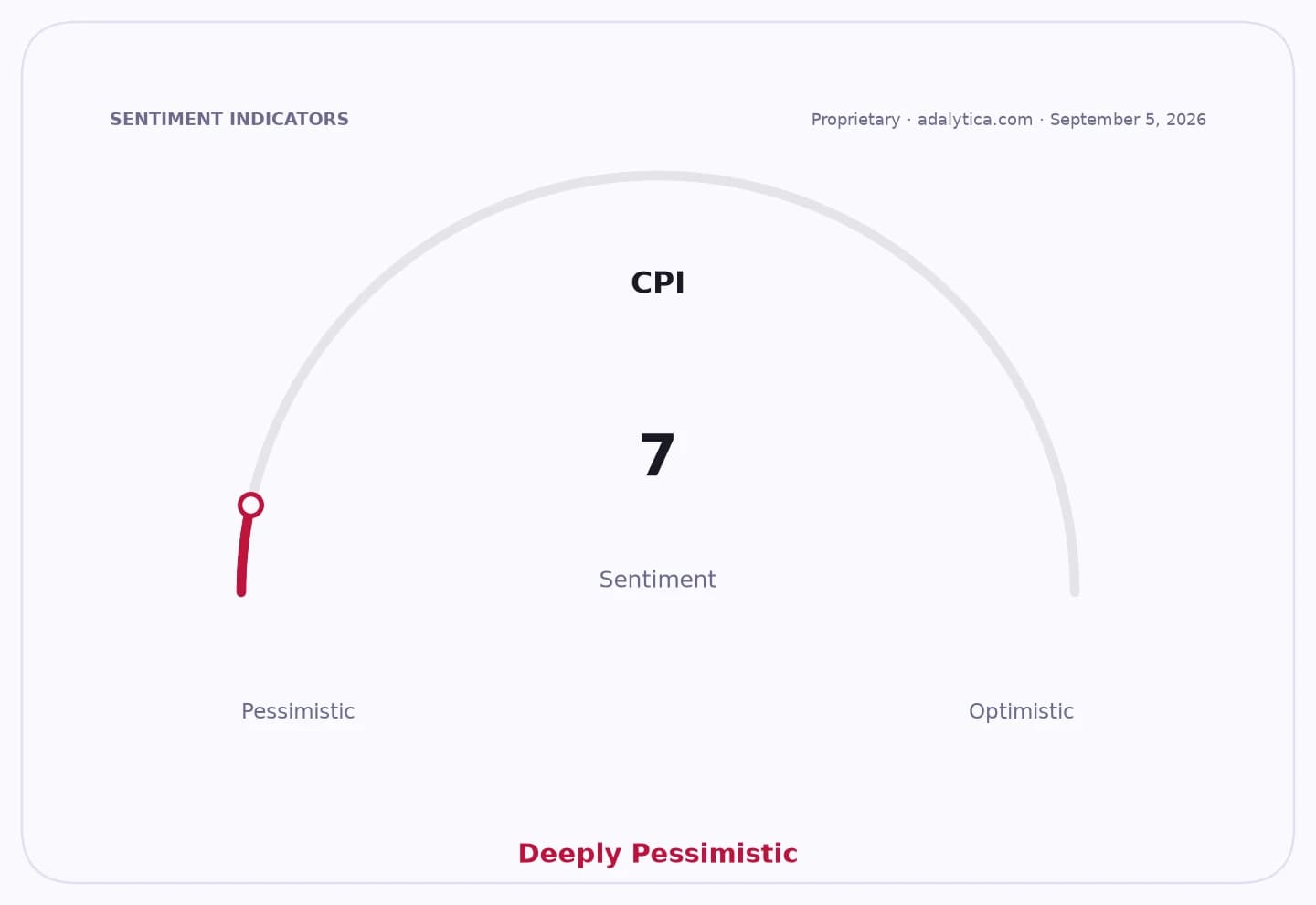
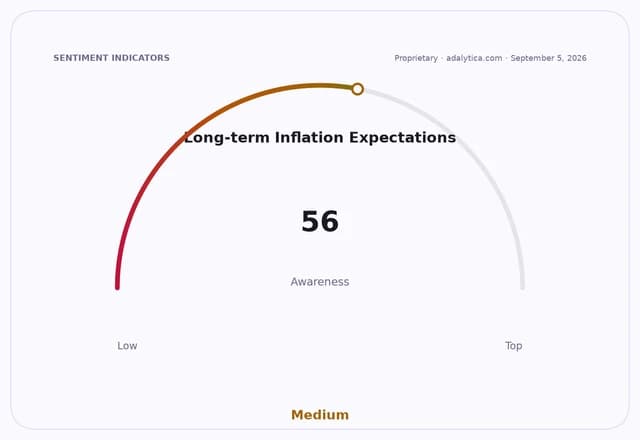
The market’s broader message is consistent with that caution. Adalytica’s CPI sentiment gauge sits at “Extreme Fear,” while long-term inflation expectations and 5-year and 10-year breakeven sentiment readings are neutral but still fragile after recent swings. In other words, inflation credibility is not broken, but it is being tested. As long as expectations stay anchored around 3% for the two- and three-year horizon, the central bank can avoid a credibility crisis. But if inflation keeps averaging above target, the pressure to either admit a higher neutral rate or tolerate a more persistent overshoot will only grow.
The investment takeaway is clear: the market is underpricing the possibility that Chile’s rate-setting framework has shifted upward permanently. That makes the neutral-rate debate more important than the next CPI release, and it is exactly the kind of inflection point that can create asymmetric opportunities in exporters, banks and rate-sensitive valuations before consensus catches up.
| Entity | Gains | Losses |
|---|---|---|
| Chilean banks | ▲Wider rate support | ▼Slower loan growth |
| Exporters | ▲Stronger peso backdrop | ▼Imported cost pressure eases |
| Domestic retailers | ▲Pricing power if inflation sticks | ▼Higher borrowing costs |
| Rate-sensitive small caps | ▲Higher neutral-rate clarity | ▼Valuation compression |