Chile peso, rates pressured by higher Treasury yields

Treasury bond markets have surged to record levels, sharpening pressure on Chile’s interest-rate outlook, currency and credit conditions at a time when global funding markets are already showing signs of strain.
The move matters because Chile is unusually exposed to shifts in U.S. rates and dollar liquidity. A persistent rise in Treasury yields lifts the benchmark for global borrowing costs, weakens risk appetite and makes it harder for emerging-market borrowers, including Chilean banks and corporates, to fund themselves cheaply in dollars. In Chile, that can feed directly into local rates, peso weakness and tighter credit conditions for households and companies.
The 10-year U.S. Treasury yield was at 4.97% on Sept. 14 and is forecast to rise to 5.043% on Sept. 15, while the 2-year stood at 4.65% and is seen climbing to 4.748%. Those levels are well above the lows of the pandemic era and point to a market that is still pricing a restrictive rates environment rather than an imminent easing cycle.
For Chilean assets, the impact is already visible in the peso. The dollar traded at 955.37 pesos on Sept. 15, after reaching 935.83 pesos a day earlier, with technical indicators showing renewed upward momentum: the currency is above both its 50-day and 200-day moving averages, and the RSI has risen to 75.2, a level often associated with an overheated trend. That combination suggests investors are demanding more compensation to hold local assets even before any fresh domestic policy shock.
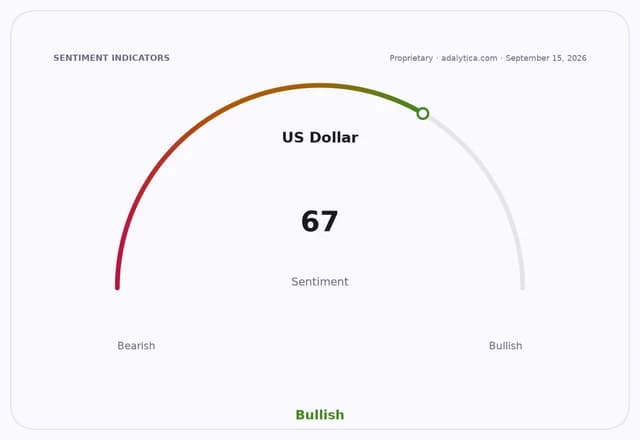
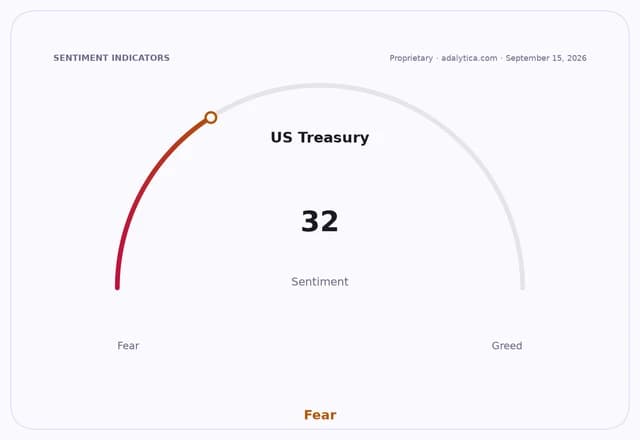
Adalytica’s trade-signal snapshot on the U.S. dollar also points to firmer underlying demand, with sentiment at 67 and awareness at 41, while U.S. Treasury bond sentiment fell sharply to 32. More important for markets, Adalytica’s liquidity gauge for the financial system has dropped to 11, an “Extreme Fear” reading, underscoring how sensitive funding conditions remain to any further rise in global yields.
That backdrop helps explain why credit is under pressure. Higher Treasury yields raise the discount rate for everything from sovereign debt to bank lending, and in Chile they can quickly translate into a tighter domestic curve. Bank of Chile’s recent bond placement at an average rate of 2.86% shows funding remains open, but at a cost that is unlikely to stay benign if U.S. yields keep pushing higher.
For investors, the key question is not just whether Treasury yields can extend gains, but whether they stay elevated long enough to force a broader repricing of Chilean rates and the peso. Bulls argue that if U.S. inflation cools or growth softens, Treasury yields could stabilize and give Chilean assets room to recover. Bears see a more durable repricing risk: a firmer dollar, slower local credit creation and higher refinancing costs for borrowers across the corporate and banking sectors.
The next catalyst will be whether U.S. yields break higher through 5% on the 10-year and whether Chile’s currency can hold above its recent support. If not, the strain on rates and credit is likely to spread from markets into the real economy.
| Entity | Gains | Losses |
|---|---|---|
| U.S. Treasury holders | ▲Higher yields | ▼Price-sensitive borrowers |
| Dollar bulls | ▲Firmer greenback | ▼Emerging-market currencies |
| Chilean savers in pesos | ▲Potential carry returns | ▼Importers and debtors |
| Chilean banks and corporates | ▲Access to funding | ▼Refinancing costs |