Chile Right Turn and Milei's Santiago Remarks

Javier Milei used a high-profile appearance in Santiago to argue that Chile’s political shift back to the right marks a broader regional rebound for market-friendly economics — a narrative that matters because it speaks directly to investment rules, regulatory risk and the pace of capital formation in two of South America’s most important economies.
The Argentine president’s remarks at the Foro Madrid framed Chile’s recent election outcome as a rejection of the left that he blamed for unrest and institutional drift, and cast his own austerity-and-deregulation agenda as part of a wider ideological realignment in Latin America. For investors, the message is less about rhetoric than about the policy direction implied by stronger support for property rights, fiscal restraint and a more open stance toward private investment, especially in mining, energy and infrastructure.

That matters economically because Chile and Argentina sit at different points of the same regional cycle. Chile remains one of Latin America’s more developed capital markets, while Argentina is still trying to stabilize after years of capital controls, inflation and sovereign stress. Milei’s argument is that a more pro-market Chile and a reforming Argentina could anchor a new investment corridor in the southern cone, where mining, lithium, copper and transport links depend heavily on political predictability. The seed headline’s emphasis on Chile “betting” again on freedom reflects that policy premium: when governments lean toward market liberalization, discount rates on future cash flows tend to fall, and foreign capital becomes easier to attract.
Milei also tied the political shift to regional security and immigration, arguing that the right must organize against what he called a resurgent left. That broader framing matters for markets because ideological polarization can either unlock reform coalitions or trigger backlash that reverses policy gains. In Chile’s case, the opportunity for investors is a government more willing to court business and cross-border investment; the risk is that social tensions, if not managed, can still constrain execution.
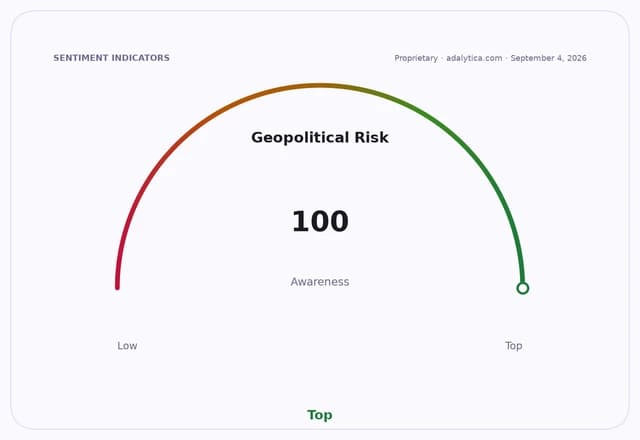
The market backdrop suggests investors are already treating the region with caution rather than conviction. A proprietary Adalytica global stability gauge sits at neutral, while U.S. risk sentiment is in extreme fear, a combination that typically rewards countries and companies able to offer clearer policy paths. For Chilean and Argentine assets, that means the upside from reform is real, but so is the need for delivery: lower inflation, stronger fiscal credibility and a steadier rulebook.
For now, Milei’s intervention is another signal that the ideological battle over South America’s economic model is far from over. If Chile’s rightward turn translates into faster approvals, more mining investment and firmer support for market institutions, it could strengthen the case for regional capital flows. If not, the rhetoric will remain louder than the investment response.
| Entity | Gains | Losses |
|---|---|---|
| Chile’s pro-market bloc | ▲Policy credibility | ▼Left-wing opposition |
| Argentine reform agenda | ▲Regional validation | ▼Anti-austerity critics |
| Mining and infrastructure investors | ▲Lower policy risk | ▼Regulatory uncertainty |
| State interventionists | ▲Political momentum | ▼Market liberalizers |