China's ABC and ICBC to Raise 260 Billion Yuan

China’s two biggest state lenders are set to raise 260 billion yuan, a fresh sign that Beijing is still willing to use the balance sheet of its banking system to keep growth and credit flowing.
Agricultural Bank of China said it plans to raise as much as 160 billion yuan through a share issue, while Industrial and Commercial Bank of China outlined a separate plan to collect up to 100 billion yuan. In both cases, the money will be used to replenish core tier 1 capital, the most important buffer banks hold against losses and loan stress.
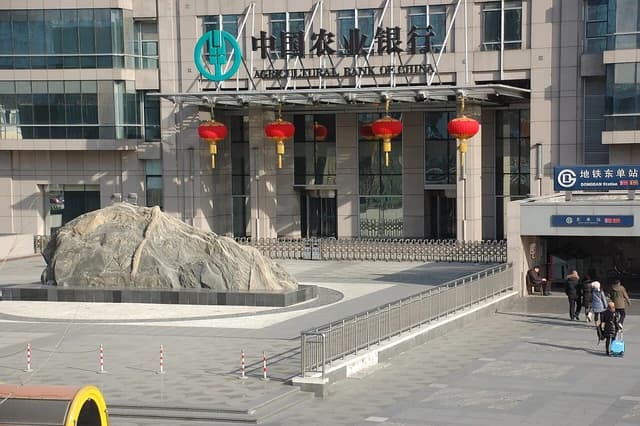
That matters because capital is what allows large lenders to keep extending credit even when the economy is under strain. For China, the timing is telling: policymakers are trying to stabilize a property-hit economy, support businesses and households, and preserve confidence in the financial system without letting banks become too thinly capitalized.
For investors, the immediate takeaway is mixed. The capital raises should strengthen the long-term resilience of ABC and ICBC, which is good for depositors, bondholders and the wider system. But shareholders face dilution, and the need for repeated support underlines how much pressure still sits beneath the surface of China’s banking sector.
The details also point to how Beijing manages its financial priorities. ABC said the final size of the raise will depend on regulatory approval, while ICBC said its plan still needs internal and external approvals before execution. The fact that the Ministry of Finance, China Tobacco and related entities are named as subscribers shows these are state-backed recapitalizations, not market tests of demand.
Investors should read this as part of a broader policy pattern: China is not just pushing stimulus through loans and infrastructure, it is also reinforcing the institutions that make that stimulus possible. That can help keep credit channels open, but it also suggests the country’s banks remain central to the government’s growth strategy and risk management plan.
For long-term investors, the big question is whether these recapitalizations come before broader improvements in asset quality and profitability. If Beijing can stabilize loan books and support the economy without recurring capital calls, the sector could eventually offer steadier returns. For now, though, this is a reminder that China’s biggest banks remain instruments of policy as much as profit machines — worth watching, but best approached with patience.
| Entity | Gains | Losses |
|---|---|---|
| ABC and ICBC | ▲stronger capital buffers | ▼dilution for shareholders |
| Beijing and regulators | ▲financial stability | ▼fewer market-based constraints |
| Depositors and bondholders | ▲lower systemic risk | ▼none material |
| Existing equity investors | ▲long-term solvency support | ▼near-term dilution |