China Africa Trade Ties and Market Implications
China is using its Africa outreach to reinforce a growth model built on trade, industrial upgrading and overseas demand, with officials signaling that the continent remains central to Beijing’s economic and geopolitical strategy.
That message matters because China’s exports and domestic industrial policy are increasingly being tied to external markets at a time when global growth is uneven and trade tensions remain a live risk for investors. The framing from Song Tao, head of the Chinese Communist Party’s International Department, suggests Beijing wants Africa to be seen not just as a diplomatic partner but as a market and a source of long-term economic alignment.

The backdrop is China’s effort to project stability in the face of slower global demand and persistent pressure on the world economy. Recent data cited in the market context point to continued growth momentum in China’s trade, while the broader “three new” economy — innovation, green development and high-tech manufacturing — has become a larger part of the country’s expansion story.
For investors, the key implication is that China’s Africa policy is not separate from markets. It feeds into demand expectations for commodities, infrastructure, industrial equipment and consumer goods, while also shaping the outlook for Chinese companies with overseas exposure and for Africa-linked ETFs and resource names.
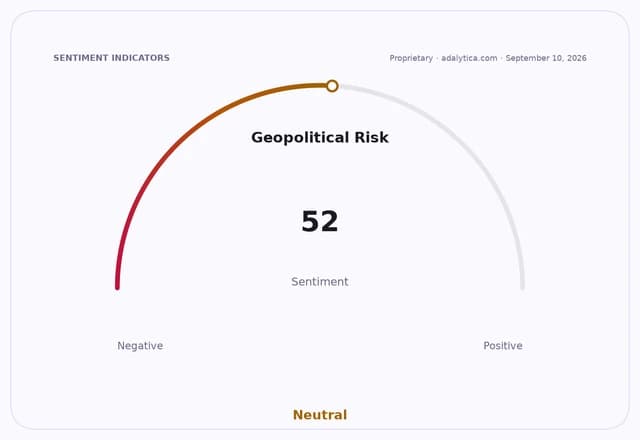
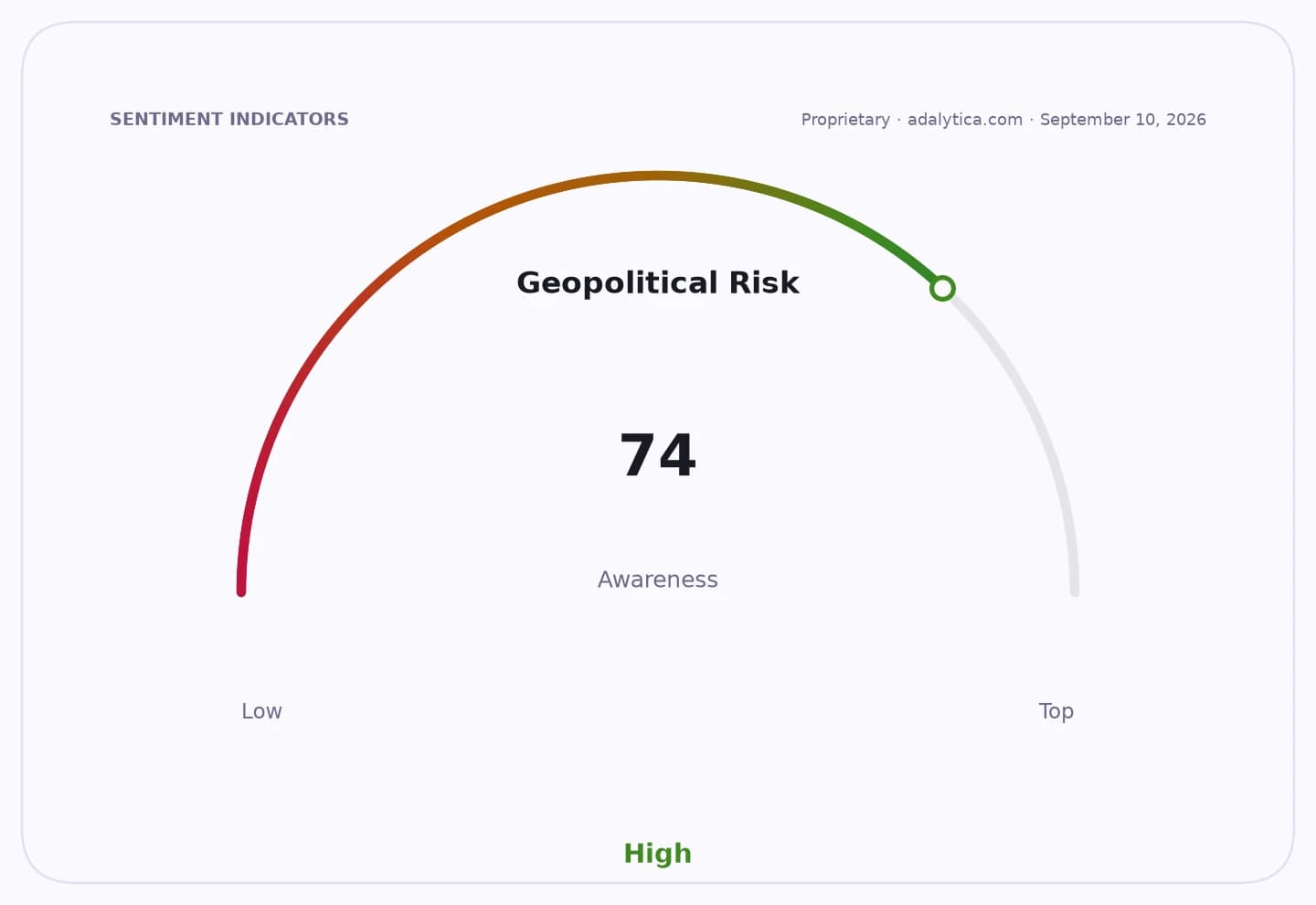
The move also lands against a mixed risk backdrop. Adalytica’s Global Stability Sentiment gauge is neutral at 52, but awareness remains elevated at 74, underscoring a market environment where geopolitical headlines can still move capital flows quickly. The U.S. dollar’s trade-signal snapshot is also firm, which keeps pressure on emerging-market assets and dollar-sensitive borrowers.
China-focused funds have held up better than broader emerging markets in recent sessions, but the technical picture remains uneven. FXI closed at $34.55 on Sept. 9, below its 200-day moving average of $36.43 and with a 14-day RSI of 34.1, a level that points to oversold conditions. EEM ended at $68.48, above its 200-day average of $61.61, with RSI at 67.1, while South Africa’s EZA closed at $71.31, also above its 200-day average, reflecting a stronger trend in resource- and emerging-market exposure.
The next catalyst is whether China turns the diplomatic language into concrete financing, trade and project commitments with African partners. Investors will be watching for any signs that Beijing’s push into Africa translates into commodity demand, infrastructure spending and a steadier external market for Chinese exporters.
| Entity | Gains | Losses |
|---|---|---|
| China | ▲Deeper Africa trade ties | ▼Higher external exposure |
| African exporters | ▲More China demand | ▼Dependence on Beijing |
| Chinese exporters | ▲New overseas markets | ▼Trade friction risk |
| Emerging market investors | ▲Growth support | ▼FX and geopolitics risk |