China aluminium inventories fall for 10th straight week
China’s aluminium market is tightening just as the metal is becoming more strategically important to industry and defense, a combination that is supporting prices and sharpening the case for producers with exposure to higher realized selling prices.
Cast aluminum alloy ingot inventories in China have fallen for a tenth straight week, suggesting destocking is easing after a prolonged drawdown. That matters because aluminium is no longer just a cyclical industrial metal: it is increasingly tied to energy transition demand, transport light-weighting and, more recently, the geopolitics of critical materials. At the same time, U.S. companies are accelerating efforts to cut dependence on China for minerals and metals used in weapons systems, underscoring how supply security is becoming as important as cost.
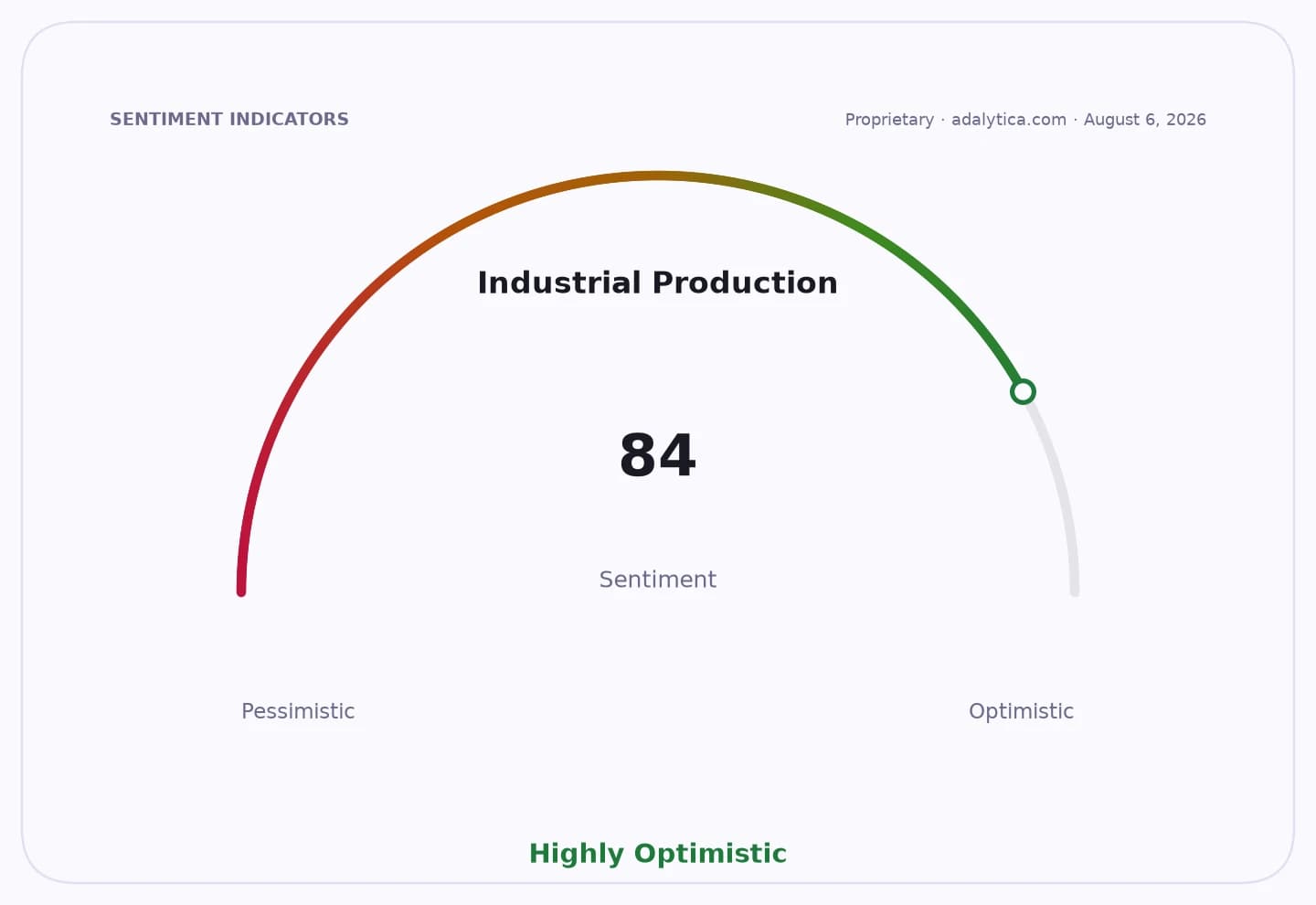
The result is a more valuable aluminium chain in China even as broader industrial data point to a modestly firmer manufacturing backdrop. U.S. industrial production has been edging higher, and oil prices remain elevated enough to keep pressure on input costs across heavy industry. In China, the growth-target sentiment gauge from Adalytica has moved to “Extreme Greed,” reflecting stronger policy optimism around activity, while industrial-production sentiment has also climbed, a sign that market participants see better factory demand ahead.
For producers, the implication is straightforward: higher physical aluminium prices improve margins, especially for companies that can push through regional premiums and capture stronger LME-linked pricing. Alcoa and Century Aluminum have both recently cited stronger aluminium pricing in their filings, and the stocks have reflected that shift, with Alcoa still well above its autumn levels despite a recent pullback, while Century Aluminum has also retained a sizable premium to last year’s trading range. Nucor, which is more leveraged to steel than aluminium, has likewise shown how fast industrial-metals sentiment can reprice earnings expectations when demand assumptions shift.
The bull case is that China’s inventory draw and the metal’s growing strategic role will keep support under prices and premiums, helping producers and suppliers of semi-finished products. The bear case is that any slowdown in Chinese manufacturing or a renewed drop in oil and broader commodity prices could unwind the rally quickly, especially if destocking resumes. For investors, the key question is whether aluminium’s rising policy importance can turn a cyclical upswing into a more durable valuation re-rating for miners and smelters with exposure to China’s supply chain.
| Entity | Gains | Losses |
|---|---|---|
| China aluminium producers | ▲Stronger pricing power | ▼Input-cost volatility |
| Aluminium bulls | ▲Tighter inventories | ▼Demand reversal risk |
| U.S. buyers seeking diversification | ▲Less China dependence | ▼Higher sourcing costs |
| Short sellers in aluminium-linked stocks | ▲— | ▼Margin and price upside |