China’s new five-year blueprint to lift retail sales to about 60 trillion yuan by 2030 is the clearest signal yet that Beijing wants consumption, not exports or property, to become the economy’s main engine — and that shift could rewire which assets win in the world’s second-largest market.
China pivots toward consumption-led growth
That matters because consumption-led growth is not just a policy slogan. It is a macro rebalancing with direct implications for corporate earnings, capital flows and sector leadership. If Beijing can engineer a larger, more resilient domestic demand base, China becomes less vulnerable to tariff shocks, softer factory activity and external demand swings. For investors, that changes the investable story from cyclical recovery to a multi-year structural rotation toward consumer discretionary, online retail, travel, healthcare, premium services and the logistics and payments systems that sit behind them.
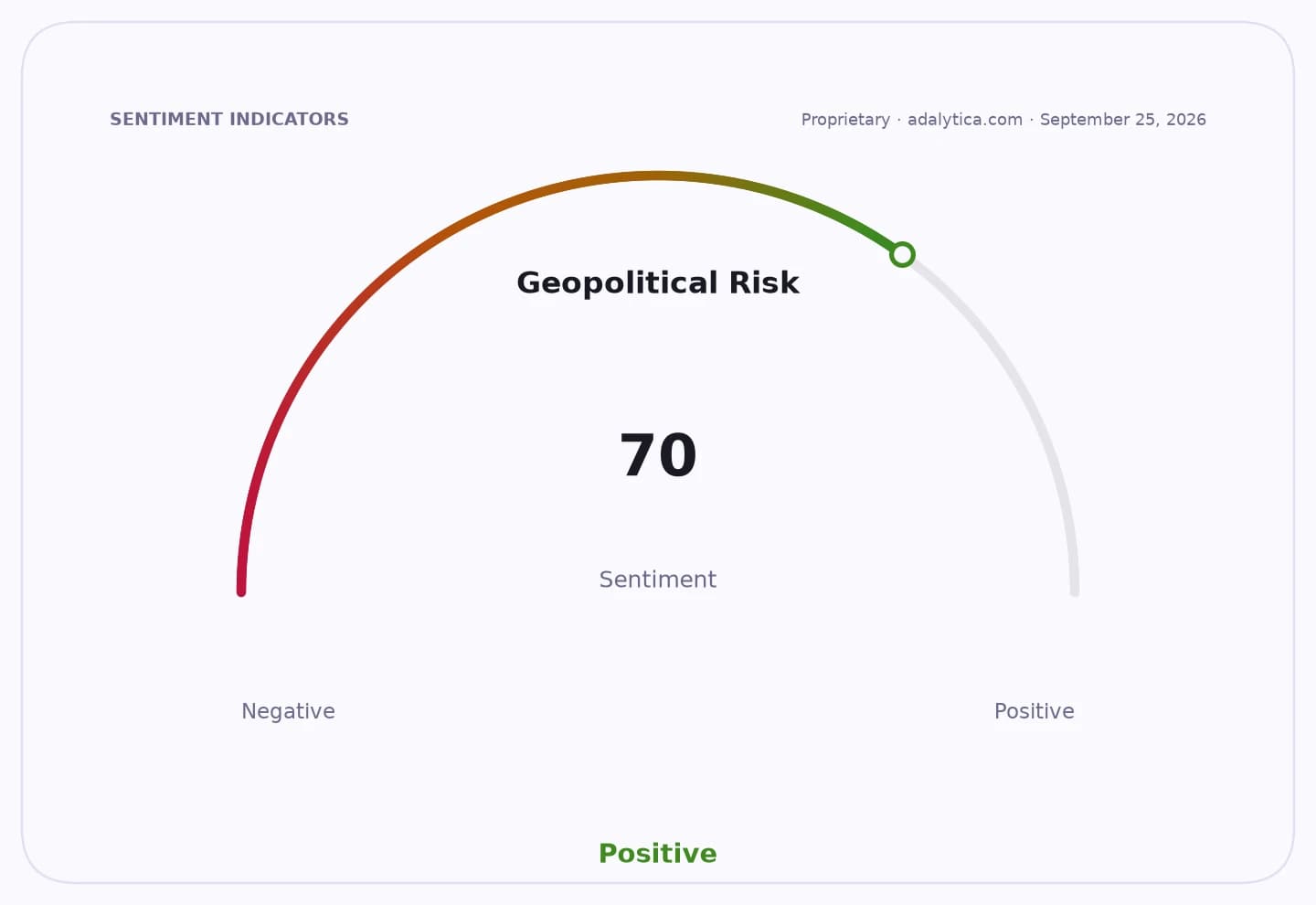
Sentiment IndicatorsⓘProprietary · adalytica.com · July 14, 2026
This is a snapshot — live sentiment, awareness and momentum for 130+ markets update continuously in the dashboard.Open AlphaPulse
The size of the target is what makes this more than another policy headline. Sixty trillion yuan in retail sales by 2030 would mark a huge expansion in the spending pool Chinese companies can tap, especially in categories tied to urbanization, middle-class upgrading and services consumption. The government’s timing is also telling: Beijing is leaning harder on domestic demand as global trade frictions intensify and export momentum faces pressure from new tariffs and tighter customs regimes. In other words, China is trying to replace an increasingly unreliable external growth model with one built on household spending at home.
That is why the market underestimates the second-order effects. A stronger consumption agenda should support domestic listed companies more than multinational exporters, and it could gradually redirect equity interest toward consumer platforms, food and beverage, leisure, education, healthcare and select financials. It also helps explain why investors are watching Chinese equity funds through a different lens. FXI, the large-cap China ETF, remains below its 200-day moving average, a sign the broader market has not yet fully priced in a sustained policy-led rebound. MCHI has also slipped back from earlier highs. By contrast, the China bear ETF YANG has been volatile, underscoring how quickly positioning can reverse when policy expectations shift.
The broader macro backdrop reinforces the thesis. China still faces soft factory activity and weak confidence in parts of the private sector, which means incremental policy support is likely to keep flowing toward household demand, tax relief and consumption incentives rather than another broad-based credit binge. Adalytica’s China Economic Growth Target sentiment gauge has collapsed to “Extreme Fear,” a reminder that skepticism remains deep just as Beijing is signaling a more durable pivot. That kind of mismatch between policy direction and market sentiment is often where the best asymmetric opportunities emerge.
For investors, the takeaway is straightforward: this is not a trade in one week or one quarter, but a positioning change for the next five years. The winners are likely to be the companies and ETFs exposed to Chinese consumers, domestic services and the infrastructure that monetizes spending. The losers are the old guard of export-heavy, externally dependent growth. If Beijing stays the course, the market’s next big move in China may come from the register, not the factory.
| Entity | Gains | Losses |
|---|---|---|
| Chinese consumer and services stocks | ▲Higher domestic demand | ▼Less policy support for exports |
| Retail, travel, healthcare, payments platforms | ▲Bigger spending pool | ▼Weak confidence if stimulus fades |
| FXI / MCHI buyers | ▲Re-rating on consumption pivot | ▼Late longs if growth disappoints |
| Exporters and tariff-hit manufacturers | ▲Limited direct benefit | ▼Slower external demand |