China’s willingness to “support multilateralism and international cooperation” matters now because Europe is looking for predictable partners at a time when geopolitical risk is rising sharply and confidence in the global order is deteriorating. German Foreign Minister Annalena Baerbock’s comments underscore a pragmatic push to keep channels open with Beijing even as Brussels and Washington remain wary of China’s strategic ambitions.
China Signals Cooperation as Europe Seeks Stability

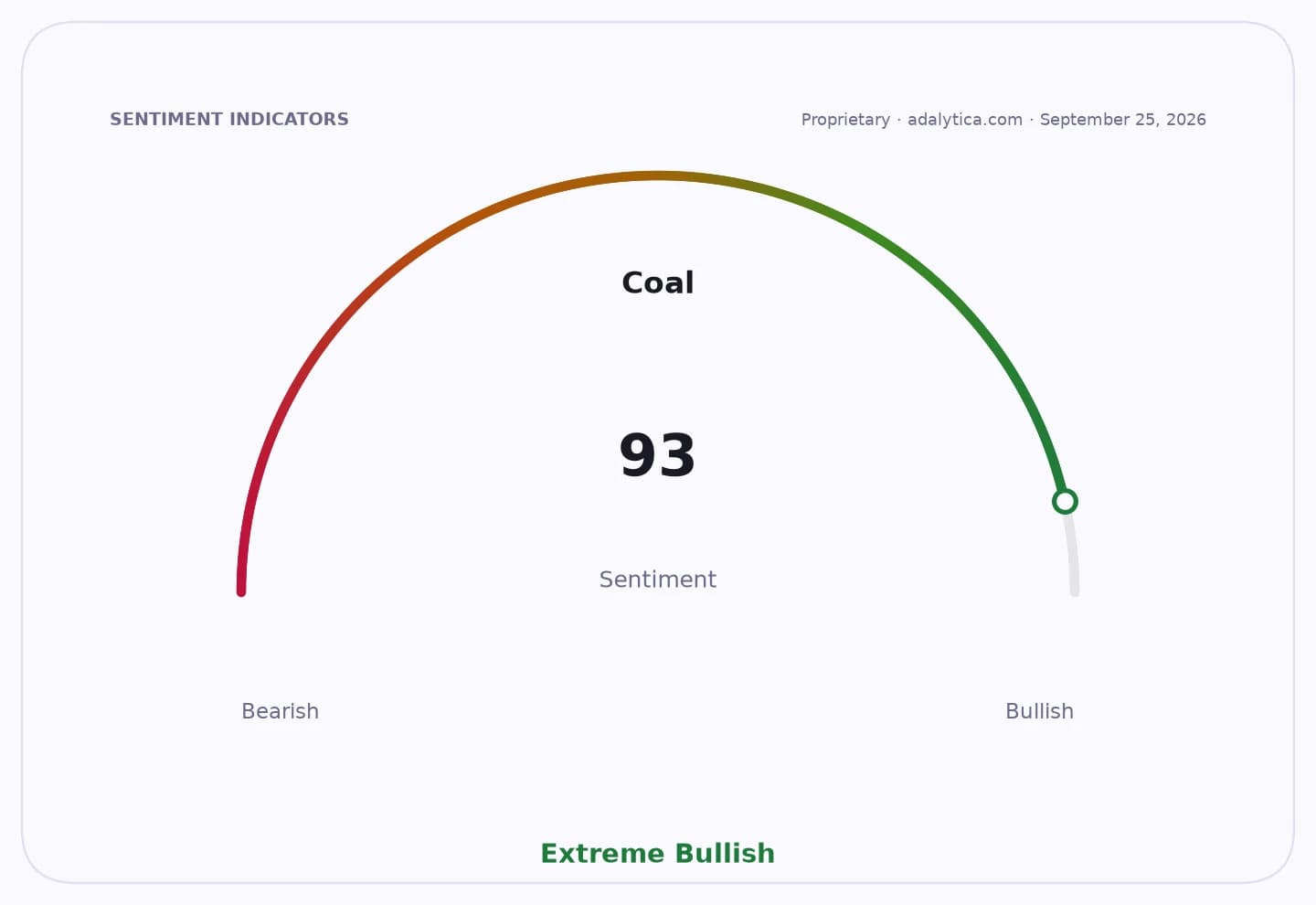
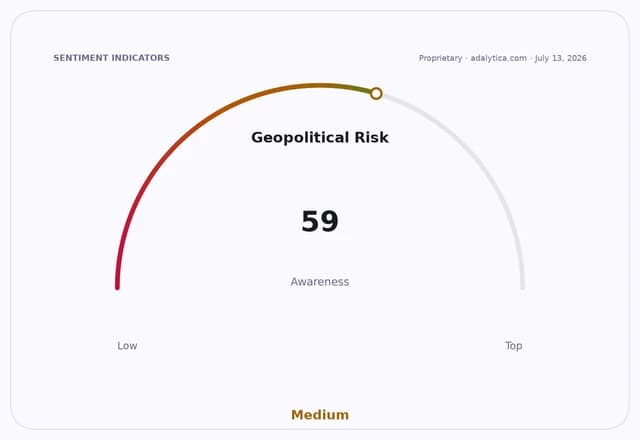
The timing is significant. Adalytica’s Global Stability Sentiment gauge has plunged to 15, deep in “Extreme Fear,” after a 77% drop over the past month, while its China policy-direction sentiment sits at 11, also in “Extreme Fear,” and has fallen 81% over the same period. Those readings reflect how quickly markets and policymakers are reassessing the durability of international cooperation as trade frictions, security tensions and bloc politics intensify. In that environment, any signal that China may still back multilateral institutions carries weight for diplomacy, supply chains and the wider investment climate.
Sentiment IndicatorsⓘProprietary · adalytica.com · July 13, 2026
This is a snapshot — live sentiment, awareness and momentum for 130+ markets update continuously in the dashboard.Open AlphaPulse
For Europe, the appeal is obvious. The EU remains heavily exposed to China in trade, industrial inputs and clean-tech supply chains, yet it also wants to reduce strategic dependence and protect critical sectors. A public commitment to cooperation gives Berlin and Brussels room to argue that engagement remains possible without abandoning de-risking. For Beijing, the message is equally clear: positioning itself as a defender of multilateralism helps offset criticism over industrial overcapacity, export controls and security concerns, and can improve China’s standing with countries that want to avoid a hard split between major powers.
Investors should read this less as a diplomatic flourish than as a signal about policy risk. If China can sustain a cooperative tone with European capitals, that could reduce the odds of a sharper escalation in tariffs, investment restrictions or retaliation that would hit exporters, luxury goods makers, autos, industrials and commodities names with China exposure. The bullish case is that Europe and China keep commercial ties sufficiently open to support trade flows and stabilize earnings expectations. The bearish case is that rhetoric on multilateralism masks continuing pressure on key sectors, meaning any thaw could prove temporary and tactical rather than structural.
The broader narrative is that the world’s second-largest economy is trying to present itself as a stabilizer just as trust in global institutions weakens. Sweden’s willingness to deepen cooperation with Beijing fits that pattern, but it does not erase the underlying tensions with the U.S. or the EU. For markets, the key question is whether this diplomatic language evolves into fewer trade frictions and more policy predictability, or whether it remains a low-cost signal in a far more fragmented global order.
| Entity | Gains | Losses |
|---|---|---|
| China | ▲Better diplomatic standing | ▼Pressure over strategic distrust |
| Germany/EU | ▲More room for engagement | ▼Less leverage on de-risking |
| Exporters with China exposure | ▲Lower tariff risk | ▼— |
| U.S.-aligned hawks | ▲— | ▼Narrative of tighter blocs |