China Tightens Drone Export Controls Before Xi Visit
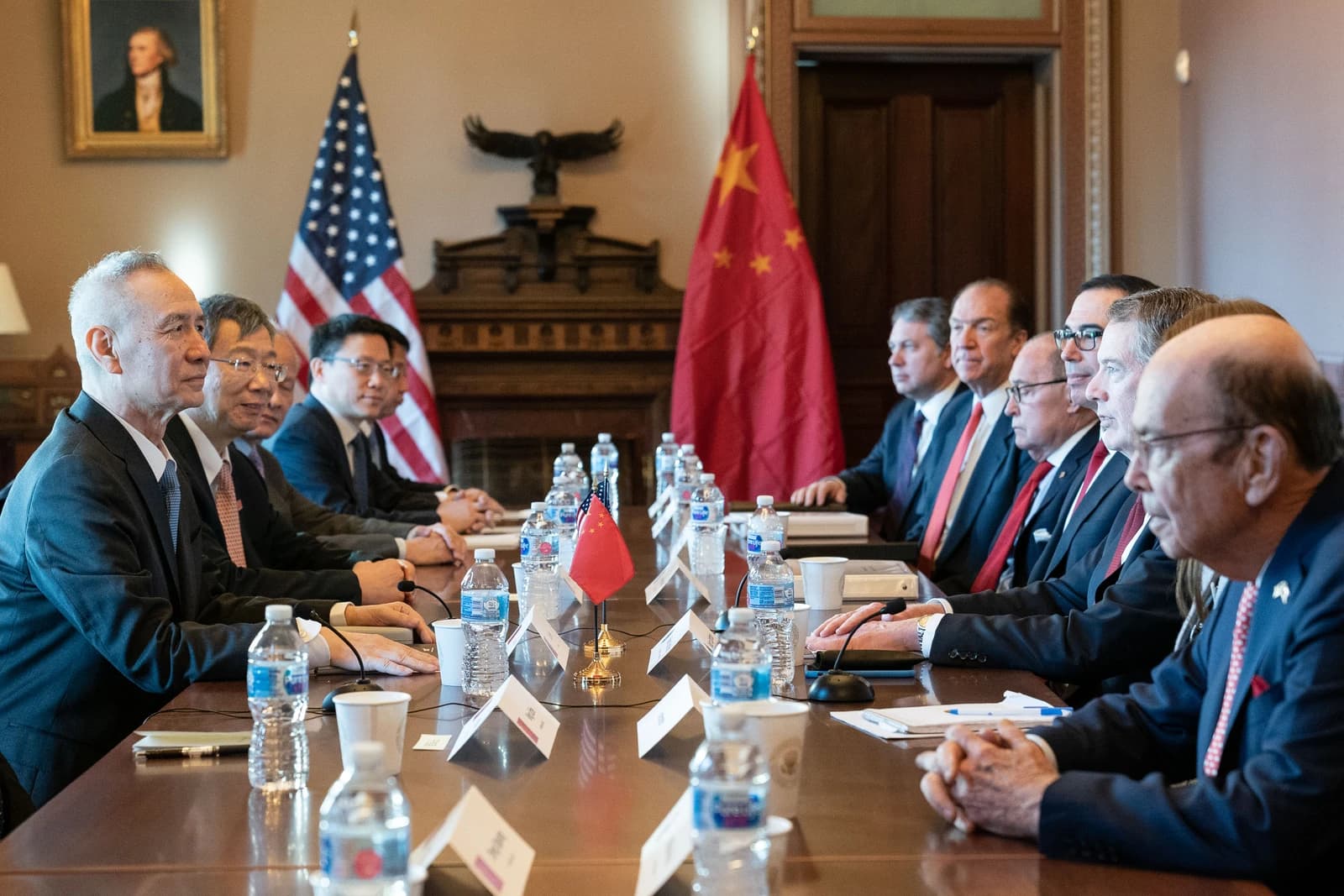
China is widening its economic retaliation against the U.S., moving to tighten export controls on drones and related technologies just weeks before Xi Jinping’s expected visit to Washington, a step that raises the odds of a deeper and longer-lasting trade confrontation.
The new rules matter because drones sit at the intersection of commercial logistics, industrial automation and defense supply chains. By treating exports of drones, components and associated technology as dual-use goods subject to case-by-case approval, Beijing is signaling it is willing to use one of its more sensitive industrial advantages as leverage. That is a meaningful escalation from rhetoric: it can disrupt shipments, slow cross-border sourcing and complicate planning for U.S. buyers that rely on Chinese hardware and software inputs.
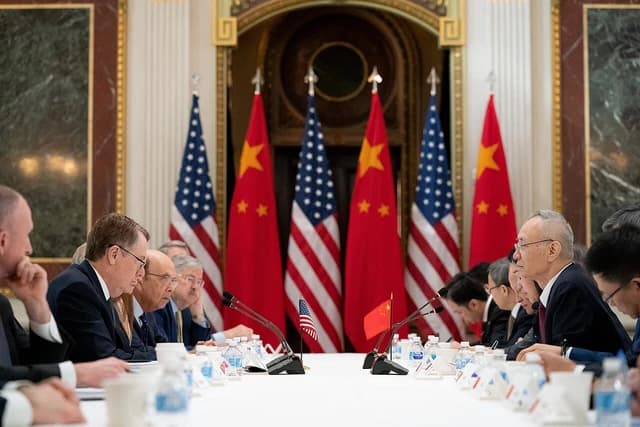
China also barred business with six U.S. entities, including Applied DNA Sciences and Human Rights in China, and said U.S. firms would no longer be allowed to conduct inspections tied to the compulsory CCC safety certification. Taken together, the measures widen the front beyond tariffs and blacklists into compliance and certification, which can be just as damaging to trade flows because they delay market access and raise operational costs. Beijing framed the moves as a response to U.S. restrictions on Chinese technology and import curbs on certain Chinese drones, saying Washington had violated understandings reached between Xi and Donald Trump.
For investors, the immediate read-through is clear: trade friction is no longer confined to semiconductors and advanced chips. It is bleeding into the industrial hardware that supports robotics, surveillance, logistics and defense-adjacent applications. That argues for more volatility in China-sensitive equities and a stronger bid for companies that can benefit from supply-chain localization, alternative sourcing and domestic industrial substitution. U.S. firms with exposure to Chinese certification, testing and manufacturing channels face a rising risk premium, while Chinese exporters may see more value trapped at home if approvals become slower and more selective.
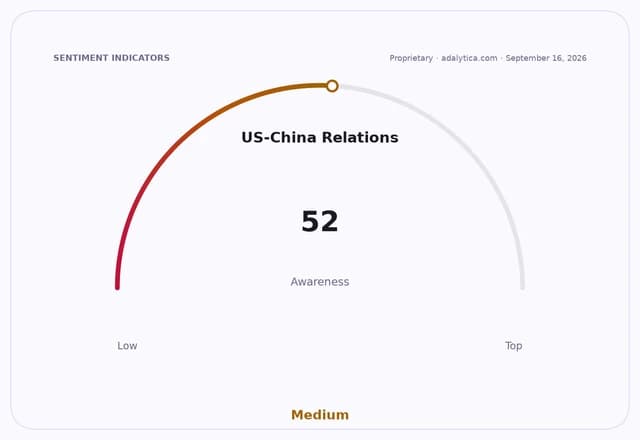
Markets are already treating the geopolitical backdrop as fragile. Adalytica’s US–China relations sentiment gauge has dropped sharply to 41, while its global stability reading sits at 11, both in extreme fear territory, underscoring how quickly policy shocks can overwhelm otherwise calm trading conditions. Chinese equity products have also weakened, with the FXI ETF falling to $33.94, below its 50-day moving average of $35.11, while leveraged bullish exposure via YINN has slumped to $25.49, well under its 50-day and 200-day averages. That is the kind of tape that tells you investors are not paying up for de-escalation.
Oil’s firmness adds another layer. USO is still trading near $156.72, far above its 50-day and 200-day averages, showing how geopolitical risk is keeping commodities bid even as trade tensions worsen. If the standoff broadens, the market may begin to price not just tariff pain but a wider risk to global industrial throughput, capital spending and cross-border technology transfer.
The bigger narrative is that China is shifting from reactive defense to calibrated retaliation ahead of a high-stakes diplomatic meeting. That creates an asymmetric setup for investors: the downside is concentrated in trade-exposed hardware, compliance and China-linked industrial supply chains, while the upside sits with defense, domestic manufacturing, automation substitutes and other beneficiaries of deglobalization. I believe this is the wrong moment to treat U.S.-China friction as background noise. It is becoming the trade regime itself.
| Entity | Gains | Losses |
|---|---|---|
| China | ▲Retaliation leverage | ▼Export optionality |
| US tech exporters | ▲Supply-chain alternatives | ▼China market access |
| Chinese drone makers | ▲Domestic protection | ▼U.S. orders |
| Compliance/testing firms | ▲Reshoring demand | ▼CCC inspection roles |