China export controls on drone components lift defense shares
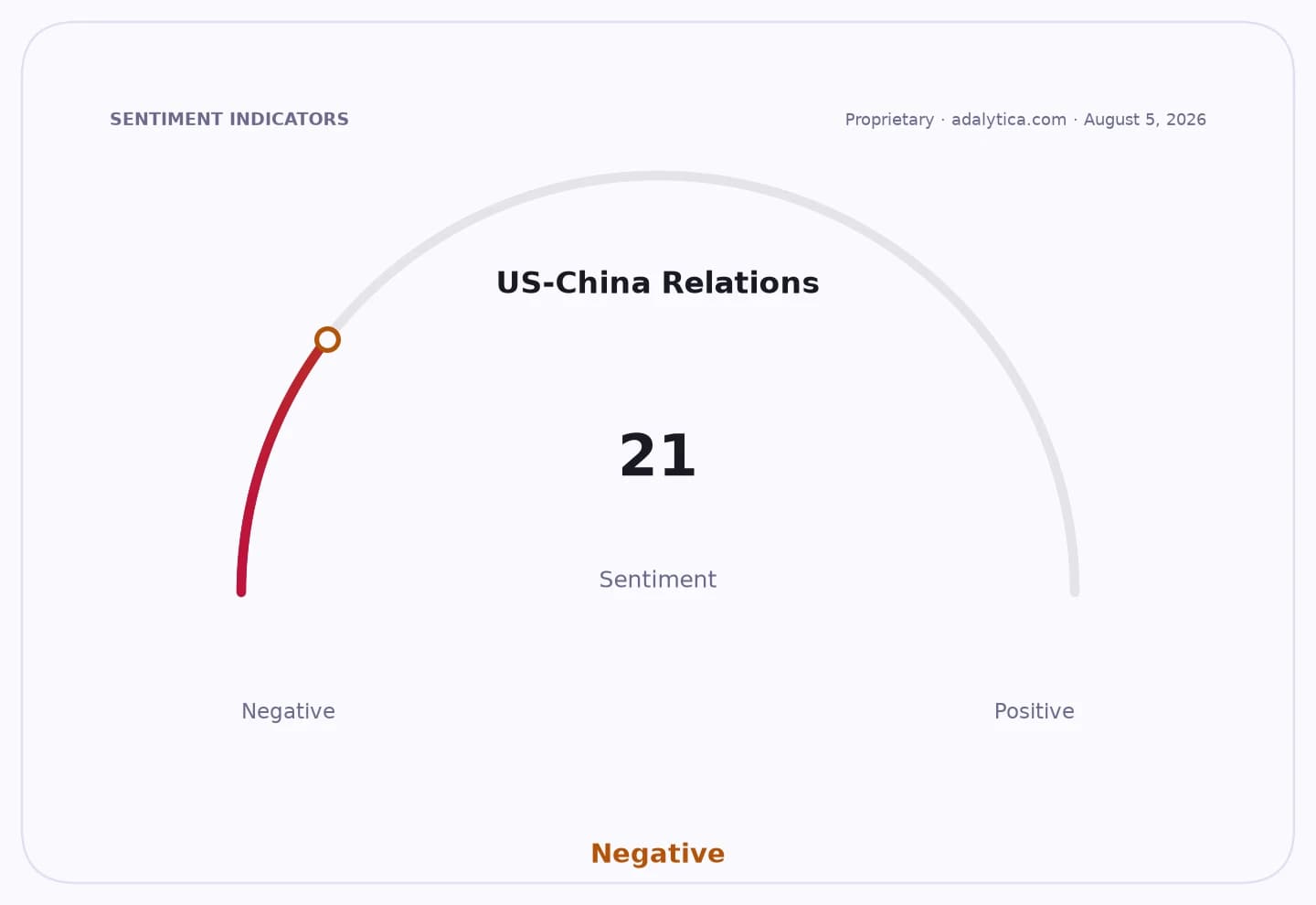
China’s new export controls on drone components put another choke point into the U.S.-China technology rivalry, and the market is underestimating how quickly that can ripple through defense, surveillance and robotics supply chains.
Beijing’s move matters because drones are no longer a niche consumer product; they are core hardware for military reconnaissance, critical infrastructure monitoring, border security and an expanding industrial automation market. By tightening exports of key parts to the United States, China is showing it can still use industrial policy as leverage even as it loosens some other trade curbs elsewhere. That makes the latest restriction less about one product line than about the willingness of both powers to weaponize the flow of advanced components.
For investors, the immediate message is that supply risk and domestic substitution just became more valuable. U.S. buyers that rely on Chinese-made motors, batteries, sensors and flight-control parts face higher procurement costs, longer lead times and more pressure to diversify vendors. That should favor American defense primes, domestic component makers and non-China supply chains tied to autonomous systems, while complicating margin assumptions for firms exposed to imported drone hardware and commercial robotics.
The market already appears to be pricing in a broader security premium. Northrop Grumman shares have climbed to about $551, well above their 50-day moving average of roughly $535, with the stock sitting near the upper end of its recent Bollinger Band range and RSI readings pointing to strong momentum. RTX has also surged to about $218, far above its 50-day and 200-day moving averages, as investors continue to favor defense names with exposure to missile defense, sensors and battle-management systems. The signal is clear: capital is rotating toward companies that sit on the protected side of geopolitical fragmentation.
That fits the bigger narrative. China’s restrictions on drone exports are not just retaliation; they are another reminder that the new investment cycle is being shaped by supply-chain security, not just by growth. In this environment, the best positioning is in the picks-and-shovels of defense, aerospace, autonomy and resilient manufacturing, where pricing power and government demand can outlast the next round of trade headlines. The near-term noise may hit importers and assemblers, but the secular winners are the firms that help the U.S. reduce dependence on Chinese critical components.
| Entity | Gains | Losses |
|---|---|---|
| U.S. defense contractors | ▲Higher demand for domestic systems | ▼Limited near-term supplier flexibility |
| Chinese component exporters | ▲Leverage in trade talks | ▼Lost U.S. sales |
| U.S. drone makers | ▲Long-term localization push | ▼Higher input costs |
| Investors in RTX/NOC | ▲Geopolitical tailwind | ▼Overbought risk remains |