China Tells Citizens to Leave Eswatini
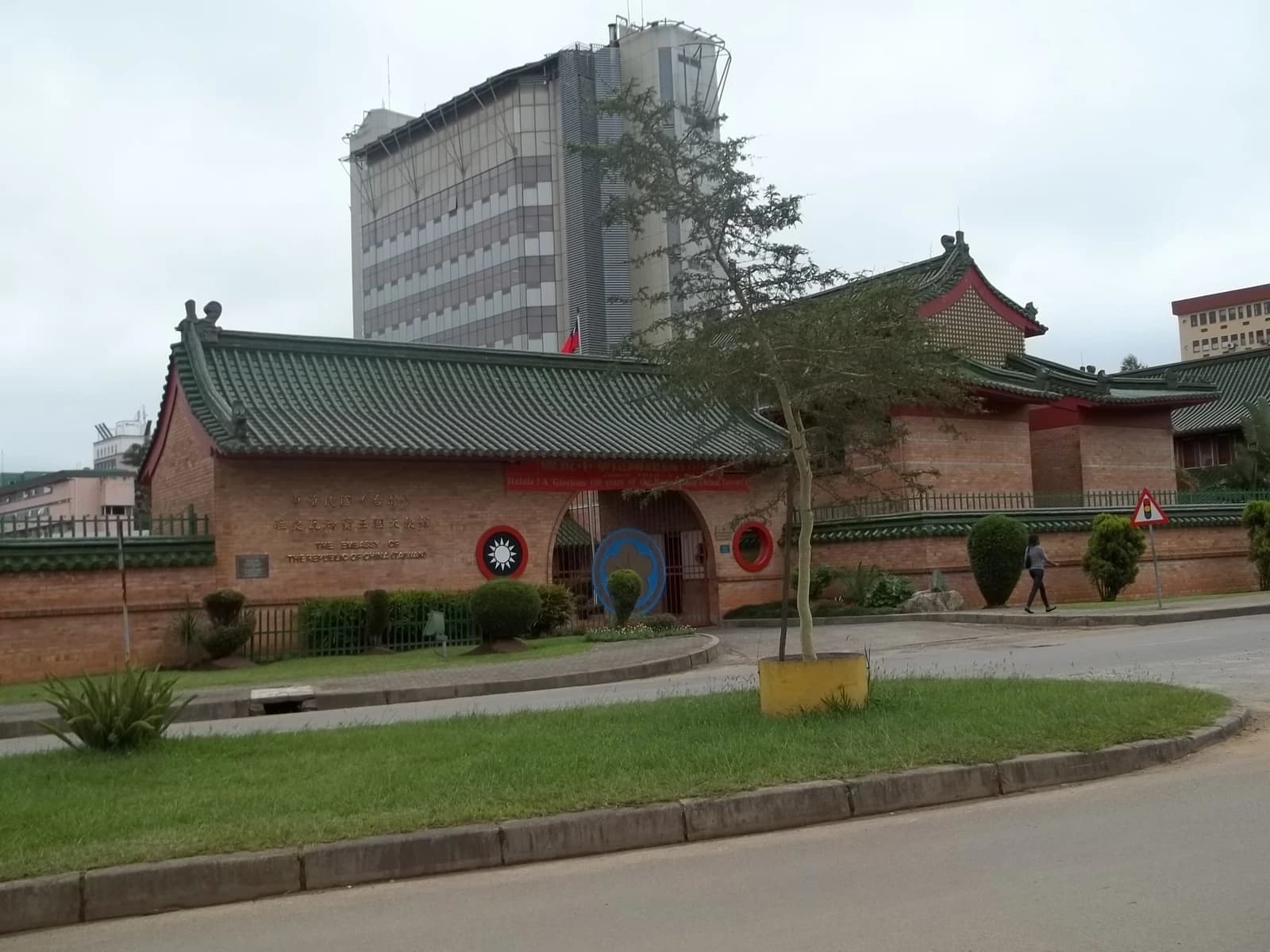
China has told its citizens to leave Eswatini, sharpening pressure on Africa’s last Taiwan ally and underscoring how Beijing is using diplomacy, travel advisories and economic leverage to isolate Taipei.
The move matters because Eswatini remains the only African state with formal ties to Taiwan, making it a symbolic and strategic outlier in China’s campaign to strip the island of diplomatic recognition. Any step that raises the cost of staying aligned with Taipei can reverberate through aid flows, trade ties and investment plans in southern Africa.
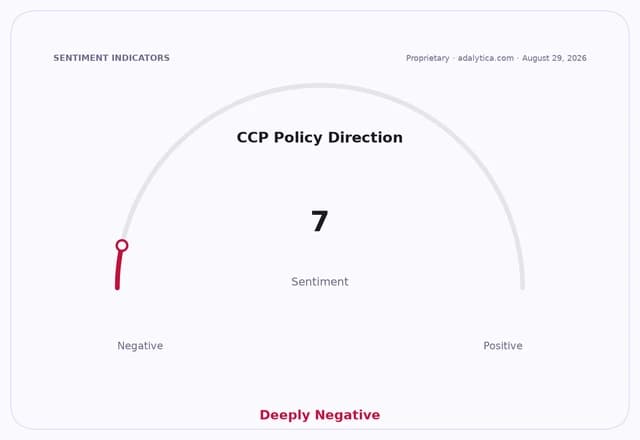
For investors, the immediate market read-through is limited, but the geopolitical risk premium around Taiwan-related assets remains elevated. China’s policy stance toward Taiwan has hardened across multiple fronts, from military pressure to trade and customs measures, and that keeps semiconductors, Asian equities and emerging-market risk sentiment vulnerable to fresh headlines.
The broader backdrop is a deteriorating Taiwan-China relationship. Taiwan President Lai has repeatedly emphasized “peace through strength” as Beijing expands its playbook beyond invasion threats to include blockade scenarios and quarantine-style pressure, while rejecting Taiwan’s efforts to widen its diplomatic space.
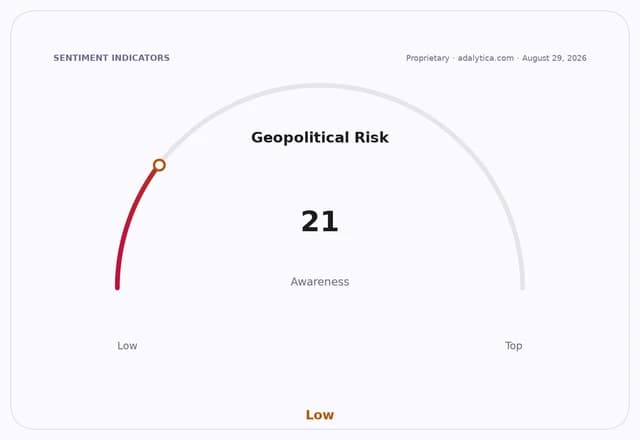
That helps explain the tone of China’s policy sentiment measures, which show extreme fear on the Beijing side in Adalytica’s China CCP Policy Direction gauge, even as global stability sentiment sits at “Extreme Greed,” a sign that markets may still be underpricing headline risk.
The clearest market proxy in the data, the iShares China Large-Cap ETF, or FXI, closed at $35.24 on Aug. 27, below its 200-day moving average of $36.60, while the iShares MSCI Taiwan ETF, EWT, traded at $108.63, above both its 50-day and 200-day moving averages. The KraneShares MSCI Brazil Small-Cap ETF, EWZS, was less relevant to the diplomatic story but also sat below its 200-day average, reflecting a weaker risk tone in some emerging-market corners.
With no immediate sanctions or trade restrictions announced, the biggest investor question is whether Beijing’s pressure on Taiwan’s remaining partners escalates into a wider campaign that touches trade, shipping or supply chains. Markets will be watching for any follow-up from Beijing, Taipei or Eswatini that suggests the dispute is moving beyond symbolism and into economic consequence.
| Entity | Gains | Losses |
|---|---|---|
| China | ▲Diplomatic pressure on Taiwan | ▼International criticism |
| Taiwan | ▲None immediately | ▼One of its last allies under pressure |
| Eswatini | ▲Short-term attention | ▼Higher diplomatic and economic risk |
| FXI / China equities | ▲Possible policy leverage narrative | ▼Geopolitical uncertainty premium |