China, Eswatini Dam Project Continues Despite Pressure
China’s pressure campaign against Eswatini is colliding with a hard reality: Beijing can squeeze the kingdom diplomatically, but it has not stopped Chinese firms from building a $136 million dam there.
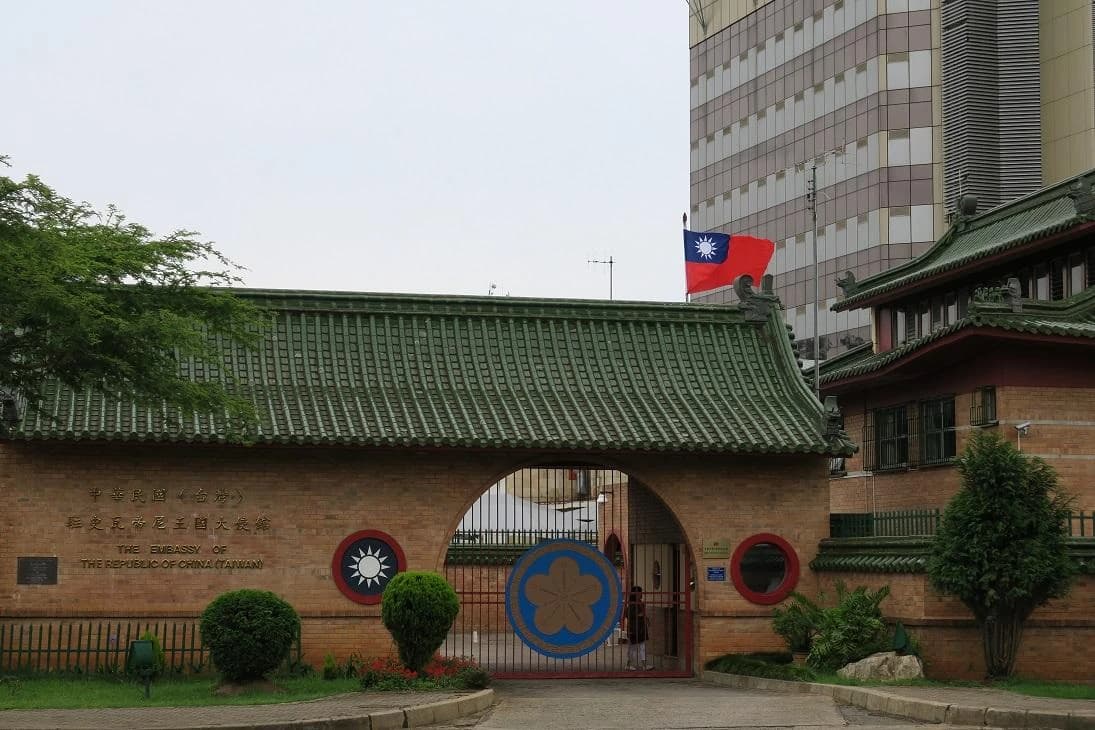
That matters because Eswatini is Taiwan’s last formal ally in Africa, making the kingdom a symbolic prize in Beijing’s long-running effort to erode Taipei’s international space. The latest flashpoint — a Chinese consortium’s vow to continue work on the Mpakeni Dam even as Beijing told its citizens to leave Eswatini over security concerns — shows how far China is willing to push politically without fully severing the commercial ties that still give it influence.
The dam sits inside the Mkhondvo-Ngwavuma Water Augmentation Programme, one of Eswatini’s biggest infrastructure projects, designed to support irrigation across about 4,600 hectares of farmland. That gives the project economic weight well beyond diplomacy. For a country of roughly 1.2 million people with high unemployment, widespread poverty and tight fiscal room, infrastructure that can create jobs and improve water access is not just a symbol of development but a practical lever for growth.
Beijing has made its preferences unmistakable. In May, China extended zero-tariff treatment to imports from 53 African countries with which it maintains diplomatic relations, leaving out Eswatini alone. The tariff move may not transform trade flows on its own, but it reinforces the message that recognition of Taiwan carries a cost. Analysts at the South Africa-based Institute for Security Studies have called it a geostrategic signal, and for Mbabane the exclusion is pointed: it is the only African country denied the benefit for one explicit political reason.
Yet China’s leverage is still more carrot than stick. Eswatini’s trade is overwhelmingly tied to South Africa, not China, with South Africa taking about 68% of exports and supplying roughly 72% of imports, according to US Commerce Department data. That limits the immediate economic pain from Beijing’s pressure. More importantly, Chinese contractors can still pursue projects on the ground even while the government escalates rhetoric. The Mpakeni Dam demonstrates that Beijing’s political isolation of Eswatini does not automatically extend to Chinese corporates or state-linked engineering groups.
Taiwan’s position is economically smaller but strategically deeper. Bilateral merchandise trade with Eswatini was just $6.47 million in 2025, down 21% from a year earlier, but Taiwan says around 20 of its companies operate in the kingdom with about $110 million in cumulative investment. Those firms are embedded in garments, textiles and packaging, and Taipei is still pushing new projects, including an industrial park and energy cooperation. For King Mswati III’s government, that is a relationship built on decades of personal, political and development ties — not just trade.
The economic backdrop makes the choice more sensitive. The World Bank says Eswatini’s fiscal deficit widened to 6.3% of GDP in 2025 as customs revenues fell, while the IMF sees the gap rising to about 6.9% of GDP in 2026 and debt reaching around 50% of GDP. Foreign-exchange reserves are only about 2.7 months of import cover, and youth unemployment is estimated near 58%. In that setting, Beijing’s promise of market access, financing and a much larger diplomatic patron is inherently attractive, even if the gains are difficult to quantify and the risks of antagonizing Taiwan’s long-standing investment footprint are real.
For investors and policymakers, the message is that Beijing’s campaign against Taiwan’s remaining partners in Africa is becoming more sophisticated, but not all-powerful. China can penalize Eswatini at the margin, deny it preferential access and intensify diplomatic pressure, yet still allow business to proceed where it suits Chinese interests. That makes the contest less about an abrupt switch in recognition than about whether economic inducements eventually outweigh the value of a durable relationship with Taipei. For now, the dam suggests Eswatini is still resisting — and that Beijing’s influence stops short of total control.
| Entity | Gains | Losses |
|---|---|---|
| China | ▲Geopolitical pressure | ▼Taiwan’s diplomatic space |
| Eswatini | ▲Chinese investment options | ▼Preferential China trade access |
| Taiwan | ▲Long-standing investment ties | ▼African diplomatic recognition |
| Chinese contractors | ▲Ongoing dam project | ▼None from immediate project continuation |