AI Demand Softens China Export Slowdown
China’s export growth is expected to ease in June, but demand tied to artificial intelligence is still propping up trade momentum and preventing a sharper slowdown in the world’s second-largest economy. For investors, that means China’s factory sector remains split between weak broad-based external demand and a powerful AI-led cycle that continues to support semiconductors, advanced manufacturing and related supply chains.
The economic significance is that Beijing’s export machine is still growing, just at a slower pace, even as tariff uncertainty, softer global demand and geopolitical frictions weigh on the broader goods cycle. BNP Paribas is anchored to June export growth of 1.22% in the context data, up from 1.04% in May, pointing to a modest continuation rather than a renewed surge.

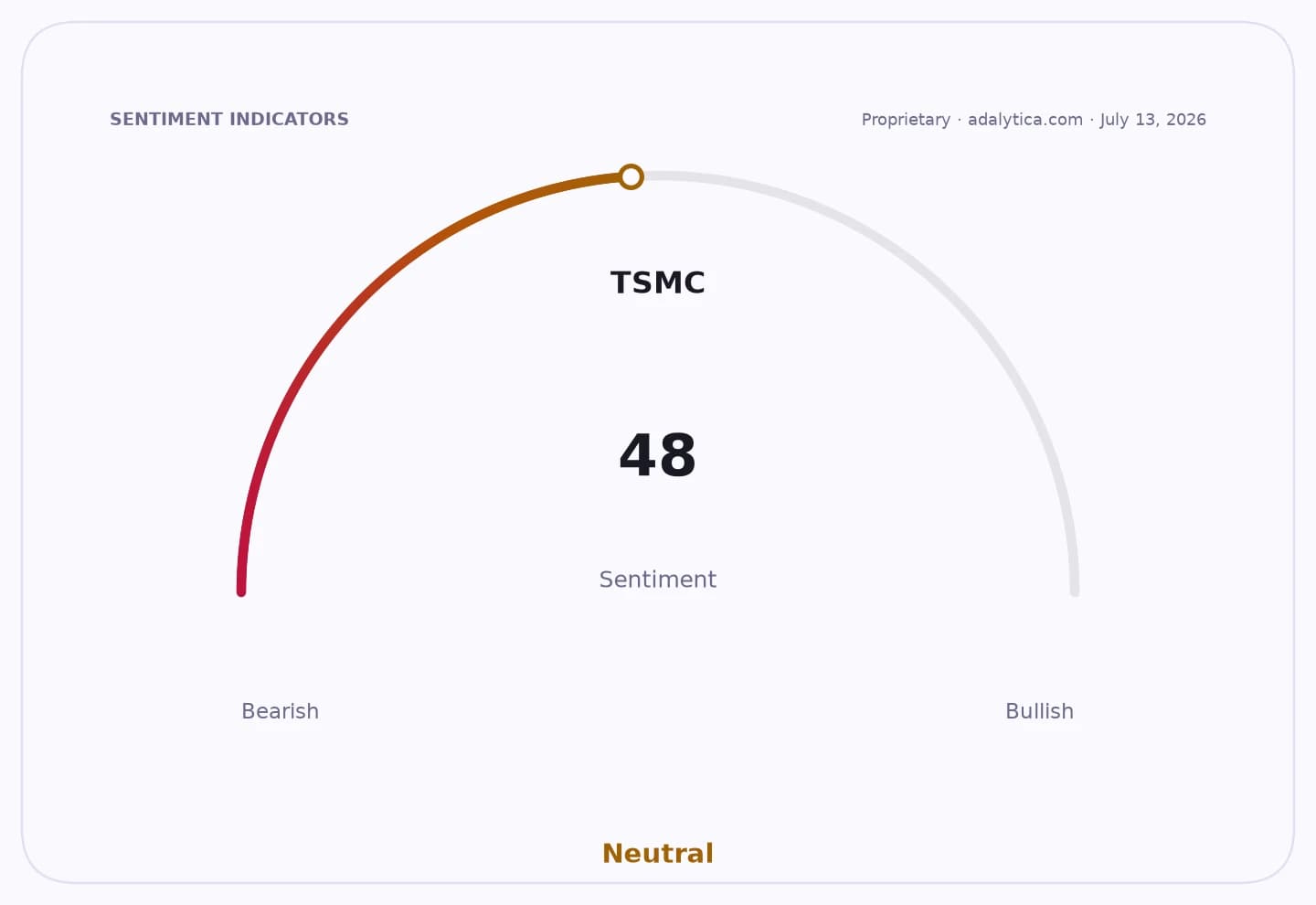
What is keeping the picture from deteriorating faster is AI-related demand, which continues to funnel orders into advanced chips, servers and high-end electronics. That has helped keep momentum in sectors tied to Taiwan Semiconductor Manufacturing Co and other suppliers to the AI buildout, even as other Chinese export categories face more conventional cyclical pressure.
TSMC’s stock has reflected that divide. The shares closed at $434.11 on July 10, below the recent peak of $477.57 on June 30, but still well above the 50-day moving average of $423.37 and the 200-day moving average of $346.87. RSI readings near 42 suggest the stock has cooled from overbought levels, but the longer-term trend remains elevated as investors continue to price in AI demand.
Alibaba, another proxy for China’s tech and consumption mix, has also been volatile. The stock ended at $112.33 on July 10, above its March lows but still below the 200-day moving average of $144.41, underscoring how uneven the China recovery remains outside the AI supply chain.
The macro backdrop is not helping. The 10-year U.S. Treasury yield was around 4.54%-4.56% in the latest readings, while U.S. crude traded near $69.60 a barrel, a mix that keeps global financing conditions tight and leaves China exposed to slower external demand. That makes the AI segment disproportionately important as a source of export resilience.
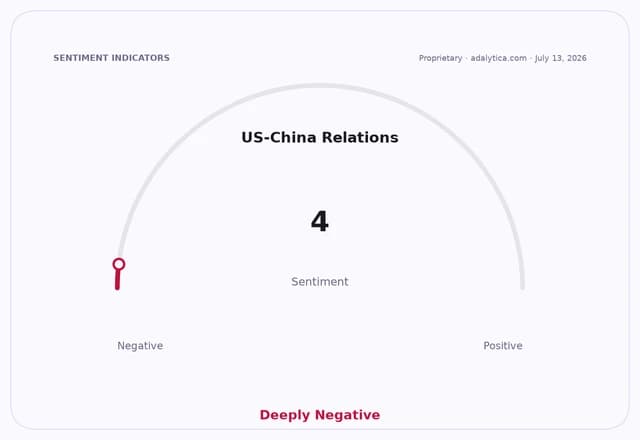
Adalytica’s U.S.-China Relations Sentiment gauge is flashing “Extreme Fear,” even though awareness is extremely high, signaling that investors are still treating the trade relationship as a volatility risk rather than a constructive catalyst. That caution is especially relevant after reports of China’s sudden temporary helium export ban, which adds another layer of supply-chain strain for semiconductor manufacturing and medical equipment.
For investors, the message is simple: China’s export numbers are likely to show moderation, not collapse, and the AI cycle remains the key offset. The next read on trade will determine whether that support is strong enough to keep industrial momentum intact or whether broader weakness starts to overpower the chip-driven demand story.
| Entity | Gains | Losses |
|---|---|---|
| TSMC and chip suppliers | ▲AI-related order growth | ▼Broad cyclical export slowdown |
| China exporters tied to AI | ▲Stronger demand | ▼Weak non-AI goods demand |
| Non-tech Chinese manufacturers | ▲Limited benefit | ▼Softer external demand |
| Investors in China tech | ▲AI earnings support | ▼Geopolitical and trade volatility |