China Humanoid Robots Face Commercial Proof Test
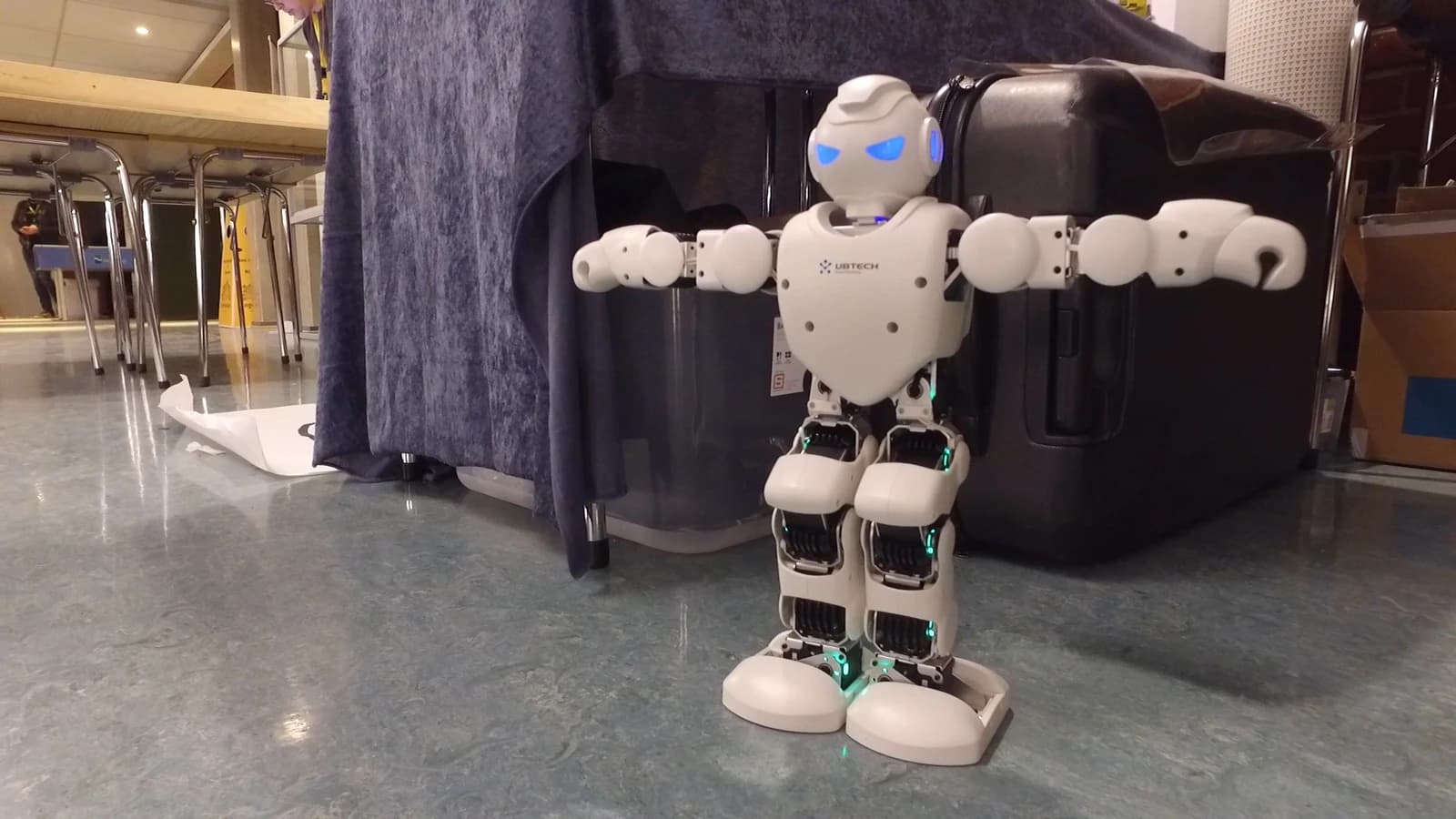
Chinese humanoid robots are drawing fresh attention for their acrobatics and demos, but the bigger investment question is whether the sector can turn spectacle into orders, production and margins.
That matters because China is pushing robotics as a strategic industry at the same time that investors are looking for the next hardware winner in the AI buildout. The market is already rewarding companies tied to advanced manufacturing and compute, while small robotics names are swinging wildly on little more than narrative and prototype milestones.
Taiwan Semiconductor Manufacturing Co. is one of the clearest beneficiaries of that broader AI and automation push. Its shares closed at $430.97, up in recent sessions and well above the 50-day moving average of $424.80, while the 200-day moving average sits at $362.98, showing the stock remains in a powerful uptrend despite a recent pullback. RSI readings near 71 suggest momentum is stretched, but not yet broken.
That backdrop underscores why humanoid robots matter economically beyond the showroom floor. If Chinese developers can move from viral movement tests to mass deployment in factories, logistics and services, the payoff would flow through chips, sensors, batteries, motion-control systems and contract manufacturing. If they cannot, the sector risks remaining a policy-backed novelty with limited revenue visibility.
Policy support is still a major tailwind. Adalytica’s China CCP policy direction sentiment has risen to 75, labelled “Greed,” while its 30-day change shows a sharp increase in attention and confidence around Beijing’s industrial priorities. That supports the idea that robotics remains a favored theme for capital, even as U.S.-China relations stay only neutral and uneven.
The trade, however, is unevenly priced. Micropolis AI Robotics, a smaller robotics name, has been volatile, rising and then slumping to $1.16 after a year of sharp swings, with its stock still below both the 50-day moving average of $1.51 and the 200-day moving average of $2.19. That gap highlights a familiar pattern in the sector: investor enthusiasm runs ahead of commercial proof.
For investors, the key catalyst is not another stunt but evidence of repeatable demand — factory contracts, unit economics and production scaling. Until humanoid robots can show they are more than acrobats, the market is likely to keep favoring the picks-and-shovels suppliers over the robot makers themselves.
| Entity | Gains | Losses |
|---|---|---|
| TSMC | ▲AI and robotics chip demand | ▼Slower hardware adoption |
| Chinese humanoid robot makers | ▲Policy backing, investor attention | ▼Credibility without sales |
| Micropolis AI Robotics | ▲Speculative trading interest | ▼Valuation if execution lags |
| Industrial automation suppliers | ▲More prototype-to-production demand | ▼Pure-play robot hopefuls |