China IP Strategy for Growth
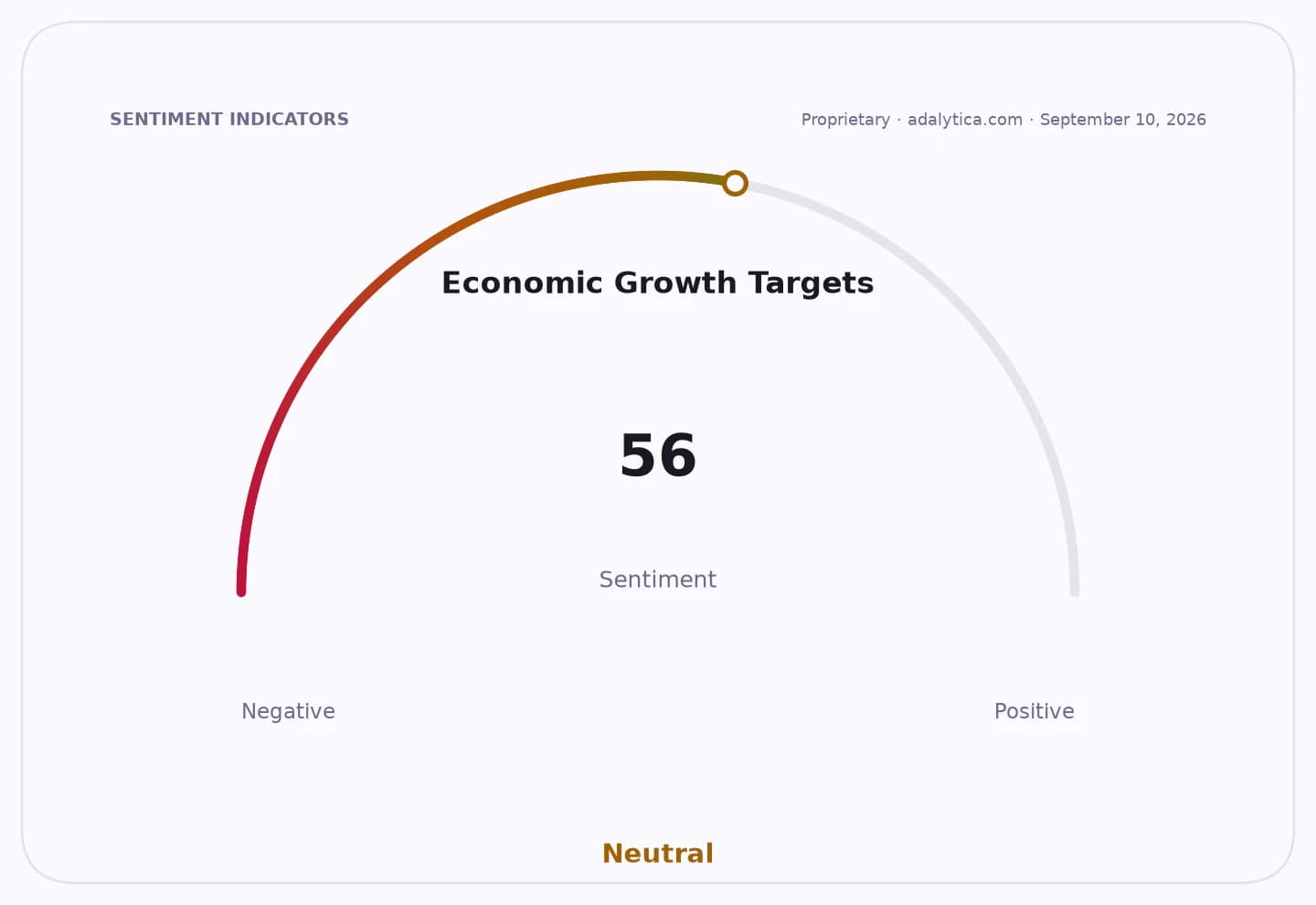
China is preparing to use intellectual property as a more direct engine for economic growth, signaling that patents, trademarks and science policy will sit at the center of its next five-year development push.
That matters because Beijing is no longer treating IP as a legal back-office function. The country’s top IP regulator says the 15th five-year plan will align with the national development blueprint and focus on “the front lines of economic construction and the very frontier of scientific discovery.” In plain terms, China wants to turn inventions into commercial output faster, and it wants that process to support both manufacturing competitiveness and future industries such as AI, clean energy and advanced materials.
For investors, that is a useful reminder that China’s innovation story is not only about chip design or headline-grabbing startups. It is also about the infrastructure that lets ideas become products, exports and profits. Carsten Fink, the World Intellectual Property Organization’s chief economist, said China’s sustained investment in science, technology and innovation has built the research base, human capital and institutions needed to convert new knowledge into new products and technologies. He pointed to renewable energy as proof: Chinese innovation helped make solar panels, batteries and electric vehicles cheaper and more available worldwide.
The scale is already enormous. CNIPA says China now has 5.39 million valid domestic invention patents and 50.82 million registered trademarks. That is the raw material of a large innovation economy, and it gives Beijing a powerful lever as it tries to move up the value chain, reduce dependence on foreign know-how and protect domestic champions in strategic sectors.
This also helps explain why Chinese equity exposure has continued to draw attention even in a choppy market. The broader China market ETFs have been under pressure, with the iShares China Large-Cap ETF trading at 34.42 and the KraneShares CSI China Internet ETF at 24.50 in recent trading, while the iShares MSCI China ETF held at 33.79. Those prices do not tell a simple story of optimism, but they do show that investors are still waiting for a stronger translation of policy ambition into earnings power.
The long-term case is straightforward. If China tightens IP protection, improves commercialization and keeps channeling capital toward scientific frontiers, it can support faster productivity growth and better margins for companies that own valuable technology. That is good for exporters, platform companies and industrial leaders that can defend pricing power. It is less friendly to firms that rely on weak enforcement, copying or easy access to outside technology.
There are risks, of course. More patents do not automatically produce higher returns on capital, and a policy push can still run into sluggish demand, regulatory uncertainty or geopolitical frictions. But the direction is clear: Beijing wants innovation to do more of the heavy lifting for growth.
For long-term investors, that means China’s IP strategy is worth watching as a structural theme, not a one-day headline. If the country can keep turning scientific scale into commercial scale, the payoff could be measured in years, not quarters.
| Entity | Gains | Losses |
|---|---|---|
| China innovators | ▲Stronger commercialization | ▼Slower imitation-based gains |
| IP-heavy companies | ▲Better pricing power | ▼Weak enforcement models |
| Global clean-tech buyers | ▲Cheaper solar and batteries | ▼Higher-cost alternatives |
| China ETF investors | ▲Possible long-term re-rating | ▼Near-term policy disappointment |