China Urges Iran to Keep Hormuz Open
China pressed Iran to prevent the region’s conflict from spreading further toward Yemen and the Red Sea, underscoring how one of the world’s biggest oil buyers is trying to contain a shipping-risk shock that could tighten energy supplies and rattle markets.
Foreign Minister Wang Yi told Iranian counterpart Abbas Araqchi that Beijing did not want tensions to broaden toward the Red Sea and called on all sides to take effective steps to reopen the Strait of Hormuz, according to Reuters. The message matters because Hormuz remains the most sensitive chokepoint in global energy trade, while the Red Sea and Bab el-Mandeb route are already under strain from Houthi attacks and fighting in Yemen.
Beijing’s intervention reflects a basic economic interest. China is the main buyer of Iranian oil and a major stakeholder in uninterrupted maritime flows, so it has an incentive to keep crude moving and avoid a spillover that could raise freight, insurance and replacement costs across Asia and Europe. It has repeatedly called for safe navigation through Hormuz, but has largely avoided directly condemning Tehran’s threats to shipping, a balancing act that shows how exposed it is to both energy security and wider Middle East instability.
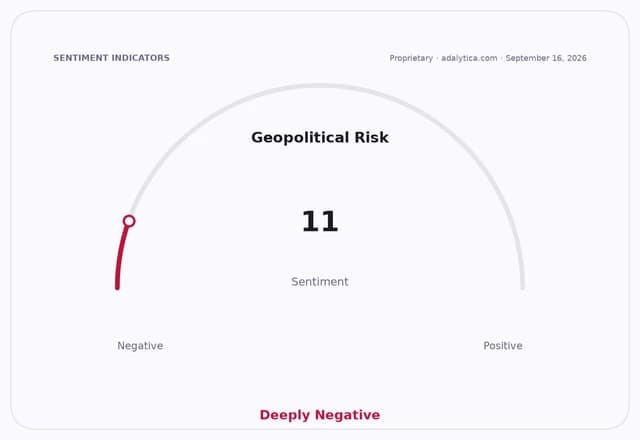
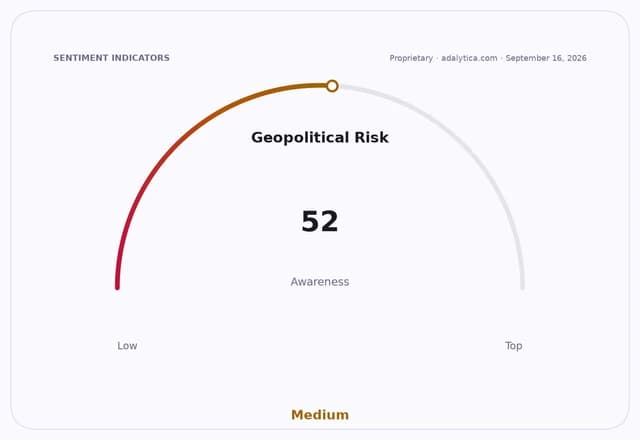
The market backdrop helps explain why the warning carries weight. Front-month Brent and WTI have been sensitive to every sign of disruption around the Strait of Hormuz and the Red Sea, with traders pricing a higher geopolitical premium whenever supply routes look vulnerable. Adalytica’s global stability gauge is at 11, marked “Extreme Fear,” while its WTI trade-signal snapshot shows sentiment in “Extreme Fear” even as awareness of the issue stays elevated, suggesting investors are alert to tail risks but not yet fully positioned for a sustained supply shock.
That caution is already visible in shipping names. Black Sky’s BDRY, a dry-bulk ETF often used as a proxy for freight stress, has climbed to $15.19 from $12.19 in late July, while Star Bulk Carriers has rallied to $31.02 from $24.15 over the same period. The move suggests traders are willing to pay for exposure to tighter maritime conditions, even though the broader response remains orderly and far from panic.
The diplomatic angle also matters for energy policy. Wang urged both Tehran and Washington to act with restraint and said China supports dialogue between Iran and Gulf states based on mutual respect for sovereignty and security. That leaves open the possibility of de-escalation, but it also highlights the fragility of the current setup: the longer fighting continues, the more likely insurers, shipowners and commodity traders are to demand a higher risk premium for routes through Hormuz and the Red Sea.
For investors, the key question is whether this stays a contained geopolitical warning or becomes a broader trade-and-energy shock. Oil producers, tanker operators and defense-related assets could benefit if tensions persist, while refiners, airlines, import-dependent Asian economies and shippers exposed to longer rerouting times would face higher costs. The immediate takeaway is that Beijing is signaling concern not just about regional stability, but about the functioning of the world’s most important energy corridors.
| Entity | Gains | Losses |
|---|---|---|
| Oil producers | ▲Higher risk premium | ▼Demand destruction risk |
| Tanker and shipping firms | ▲Tighter freight rates | ▼War-risk exposure |
| China and Gulf importers | ▲Lower chance of escalation | ▼Supply disruption risk |
| Refiners and airlines | ▲Stable routes | ▼Higher fuel and insurance costs |