China warns Japan over Takaichi defense policy
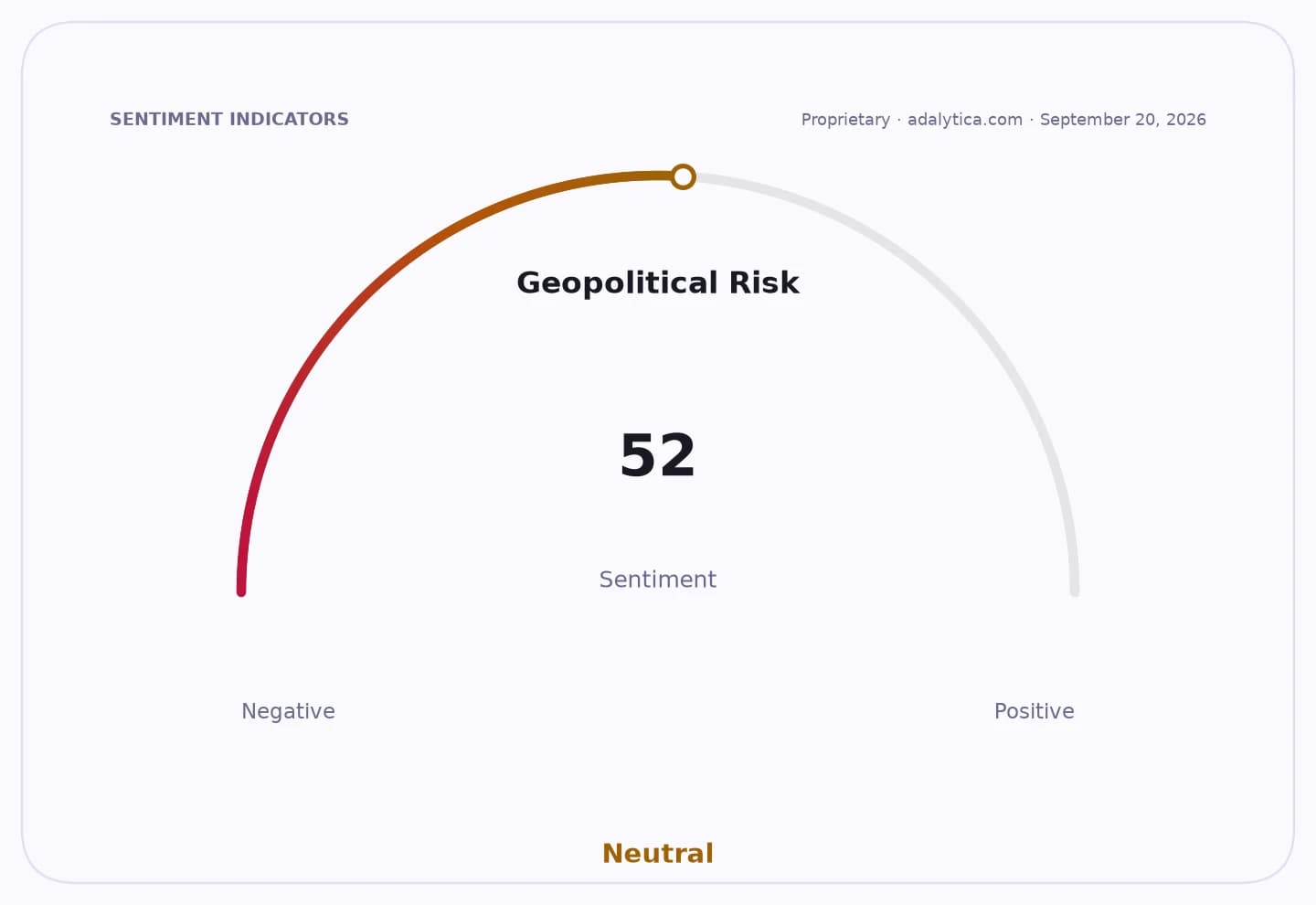
China escalated its campaign against Japan on the 95th anniversary of the Mukden Incident, warning that Prime Minister Sanae Takaichi’s security policies amount to a slide toward “new militarism” and raising the risk of deeper diplomatic damage between Asia’s two largest economies.
That matters because this is no longer just history politics. Beijing is using a deeply symbolic date to reinforce pressure on Tokyo over Taiwan-related remarks, defense exports and broader security normalization, a combination that can spill into trade, travel, corporate confidence and regional risk pricing. For investors, the immediate concern is not a battlefield shock but a slower burn of policy friction that can hit Japanese exporters, tourism flows and sentiment toward Japan-linked assets.
The trigger is highly specific. At a ceremony in Shenyang, China’s political leadership marked the anniversary of the 1931 incident that led to the Manchurian campaign, with senior Communist Party official Li Hongzhong saying Japan’s invasion had “shocked China and the world.” Foreign ministry spokesman Guo Jiakun then said “negative tendencies” on historical issues were spreading in Japan and urged countries not to allow a revival of Japanese militarism.
The sharpest rhetoric came from the People’s Daily, which accused the Takaichi government of pushing ahead with security changes including the loosening of defense equipment export restrictions and said Japan was “gradually sliding down the dangerous wrong path of new militarism.” That language is not incidental. Beijing is framing Japan’s defense buildup not as deterrence but as revanchism, setting up a political narrative that can justify more pressure if Tokyo moves further on Taiwan, weapons exports or alliance integration with the United States.
The economic angle is straightforward: when the world’s second- and fourth-largest economies harden positions, the costs show up in confidence, tourism and bilateral business planning long before they hit trade volumes. Japan’s embassy in Beijing warned citizens days earlier to be especially careful around historically sensitive dates, citing the risk of anti-Japanese sentiment. That warning followed the 2023 killing of a Japanese schoolboy in Shenzhen, underscoring how quickly rhetoric can become a security and consumer-confidence issue for companies operating in China.
Markets are treating the risk as real, but not yet as a full-blown shock. The iShares MSCI Japan ETF, EWJ, closed at 97.00 on Sept. 18, above its 50-day moving average of 94.95 and 200-day average of 89.23, with RSI at 55.0 — a sign the broader Japan trade is still constructive even as diplomacy deteriorates. The China ETF FXI, by contrast, closed at 34.32, below both its 50-day average of 35.15 and 200-day average of 36.28, reflecting a market that remains skeptical of China’s own growth and policy backdrop. The VanEck Japan ETF, JPXN, ended at 103.24, also above its 50-day and 200-day averages, showing that investors have not yet priced a major bilateral rupture.
Still, the market underestimates second-order effects. Every round of China-Japan friction nudges global capital toward beneficiaries of regional diversification: Southeast Asian supply chains, defense contractors, cyber-security names, and companies exposed to friend-shoring and Japan’s domestic security buildup. Within Japan, the strongest relative winners are likely to be firms tied to defense procurement, resilient industrial automation and infrastructure spending, while the losers are the usual cross-border suspects: airlines, travel operators, consumer brands reliant on Chinese tourists, and manufacturers with heavy exposure to Chinese demand and regulatory goodwill.
The bigger thesis is that this is part of a secular re-rating of Asia’s security architecture. Japan is moving further from postwar restraint, China is responding with historical nationalism, and Taiwan sits at the center of the confrontation. That creates a persistent geopolitical risk premium that investors can no longer treat as episodic. I believe the right way to position is to own the toll roads of this new era — defense, surveillance, secure communications and supply-chain redundancy — rather than the exposed names that depend on stable China-Japan relations.
The next catalyst will come from how far Beijing takes its pressure campaign and whether Tokyo doubles down on defense normalization. If the rhetoric spills into travel advisories, import scrutiny or corporate retaliation, the market will have to reprice Japan exposure more aggressively. For now, the message is clear: China’s anniversary-driven escalation is a reminder that geopolitics is becoming a cash-flow issue, and investors who wait for the headlines to calm may miss the opportunity to own the beneficiaries of a more militarized Asia.
| Entity | Gains | Losses |
|---|---|---|
| Japan defense firms | ▲Higher procurement demand | ▼— |
| China travel/tourism to Japan | ▲— | ▼Weaker sentiment |
| Japanese exporters to China | ▲— | ▼Policy risk premium |
| EWJ / JPXN holders | ▲Relative resilience | ▼Geopolitical volatility |