China-Kazakhstan-Azerbaijan Corridor Gains Strategic Role
The China-Kazakhstan-Azerbaijan corridor is moving from an alternative route to a strategic asset as higher oil prices, geopolitical strain and fading confidence in traditional shipping lanes push investors and shippers to prize the overland Trans-Caspian route.
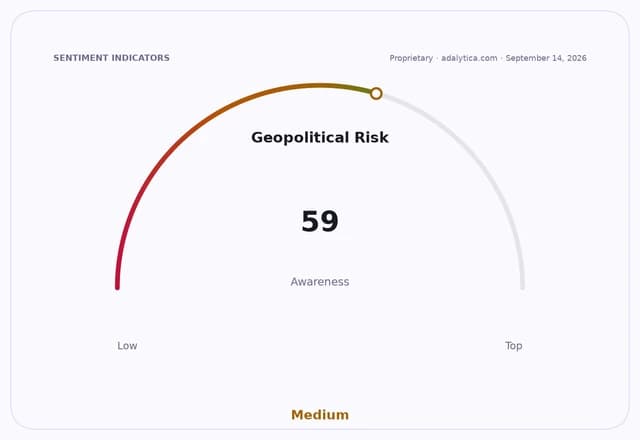
That matters because the triangle linking China, Kazakhstan and Azerbaijan sits at the center of the Middle Corridor, a freight network that can shorten delivery times between Asia and Europe while reducing exposure to disrupted sea lanes and sanctioned chokepoints. In a market where crude has pushed above $100 a barrel and global stability sentiment has slumped into “fear” on Adalytica’s gauge, route security is becoming an economic variable, not just a logistics issue.
The investment case is straightforward: when the cost of uncertainty rises, capital flows toward infrastructure, rail, ports, energy transit and the toll roads of global commerce. That is why the market should pay closer attention to Kazakhstan’s railways, Caspian port capacity, Azerbaijani logistics links and the Chinese exporters that can use the corridor to preserve access to Europe. The winners are not only the operators moving freight; they are also the equipment, energy and industrial suppliers that benefit as governments spend to de-risk supply chains.
The broader backdrop strengthens the thesis. Global trade remains resilient even as investors fret about West Asia, and BRICS commerce has topped $1 trillion, underscoring that trade is not contracting so much as rerouting. The triangle between China, Kazakhstan and Azerbaijan offers a concrete answer to that rerouting: an overland bridge that can absorb more cargo if maritime insurance, shipping lanes or sanctions make ocean freight less attractive.
Markets are already showing how sensitive they are to these shifts. Oil-linked equities have stayed bid even after sharp gains, while China-focused assets remain technically under pressure, with FXI trading below its 200-day moving average and its RSI readings still weak enough to suggest investors are waiting for a clearer macro catalyst. That divergence is exactly where the opportunity lies: the market is pricing the risk, but not yet fully pricing the infrastructure buildout and trade realignment that geopolitical stress can accelerate.
If this corridor keeps gaining political support and commercial throughput, the next winners could be the rail operators, port developers, shippers and industrial names tied to Central Asian and Caspian logistics. For investors, the message is to look past the noise and toward the assets that collect fees every time trade shifts east-west through a safer lane.
| Entity | Gains | Losses |
|---|---|---|
| Kazakhstan rail and ports | ▲Transit fees, strategic relevance | ▼Legacy sea-route dependence |
| Azerbaijan logistics hubs | ▲Caspian gateway demand | ▼Marginal role in old routes |
| China exporters | ▲Faster Europe access | ▼Exposure to disrupted sea lanes |
| Oil-linked shippers and insurers | ▲Higher demand for secure routing | ▼Traditional maritime volumes |