China's Manufacturing Depends on Foreign Chips

China’s reputation as the world’s manufacturing superpower is built on a foundation the market still underestimates: its most advanced exports are assembled in China, but they are not truly Chinese. That matters because the country’s high-tech edge — in smartphones, electric vehicles and medical equipment — still depends on foreign chips, sensors, lithography tools and software, leaving Beijing exposed to sanctions, export controls and supply-chain bottlenecks that could bite far harder than most investors expect.
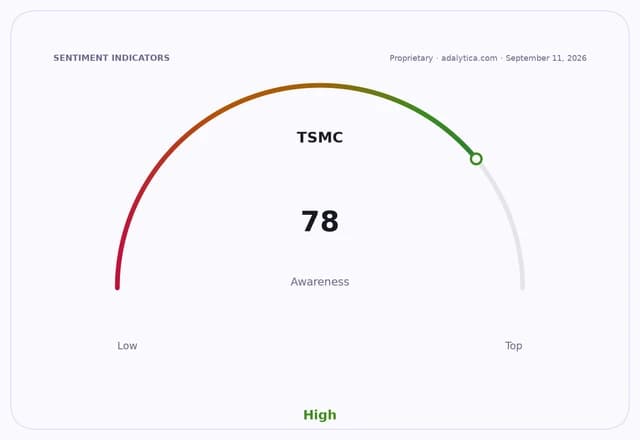
The key economic point is that China has scale, but not sovereignty, in the industries that matter most for future growth. It can churn out more than 1.4 billion mobile phones a year and dominate EV production, yet the highest-value inputs come from Taiwan, the US, South Korea, Japan, Germany and the Netherlands. TSMC still supplies the most advanced 3-nanometer processors, Samsung and SK Hynix control most memory, Sony dominates premium camera sensors and Qualcomm remains central to 5G modems. In autos, more than 97% of Chinese EVs use chips from five foreign companies, while Bosch, Samsung, LG, Hitachi and Manz remain embedded in the sector’s electronics and factory equipment.

That dependency is where the investment case gets interesting. The market has spent years treating China as the finished-product winner in global manufacturing, but the real toll roads sit upstream, with the companies that own the hardest-to-replicate technology. ASML’s EUV machines, which can cost as much as $380 million apiece, remain the single biggest choke point in advanced chipmaking, and China cannot buy them freely or service installed systems under tightening US and Dutch restrictions. That means the “Made in China” label obscures a global profit pool that still flows disproportionately to foreign semiconductor, equipment and component leaders.
For investors, this supports a more durable thesis than a simple China-vs.-West trade. The beneficiaries are not just the obvious chip names, but also the suppliers of precision tools, inspection systems, memory, sensors and automotive electronics that gain when China’s ambitions collide with technological bottlenecks. It also helps explain why Chinese champions such as Tencent, Alibaba and the FXI China ETF can rally on domestic stimulus or sentiment but remain structurally capped by imported know-how and geopolitical risk. FXI’s recent weakness — with its price below both the 50-day and 200-day moving averages and RSI readings in weak territory — fits a market that is still pricing China as cyclical, not strategically constrained.
The broader narrative is that globalization did not disappear; it became more selective. China still provides the labor, assembly and scale, but the highest-margin layers of the stack remain distributed across allies and rivals in Asia, Europe and the US. That fragmentation is now a feature, not a bug, for investors willing to own the picks-and-shovels of the AI, semiconductor and industrial-tech buildout rather than the low-margin assembly layer. The next catalyst is more export controls, more onshoring and more capex into alternate supply chains — and that is exactly where the asymmetric upside sits.
| Entity | Gains | Losses |
|---|---|---|
| TSMC, ASML, Samsung, SK Hynix | ▲Pricing power; choke-point status | ▼None from China assembly growth |
| Qualcomm, Sony, Bosch, NXP, Infineon | ▲Export demand for critical components | ▼Risk of China substitution over time |
| China OEMs and FXI constituents | ▲Volume growth; manufacturing scale | ▼Margin pressure; tech dependence |
| US/EU industrial-tech investors | ▲Onshoring and capex tailwinds | ▼Short-term valuation risk from trade tension |