China Patrols Keep Taiwan Risk Premium Elevated
Taiwan said it detected five Chinese naval vessels and 10 official ships operating around its territory, a reminder that Beijing is sustaining pressure in the Taiwan Strait even as cross-strait ties remain a key geopolitical risk for global markets.
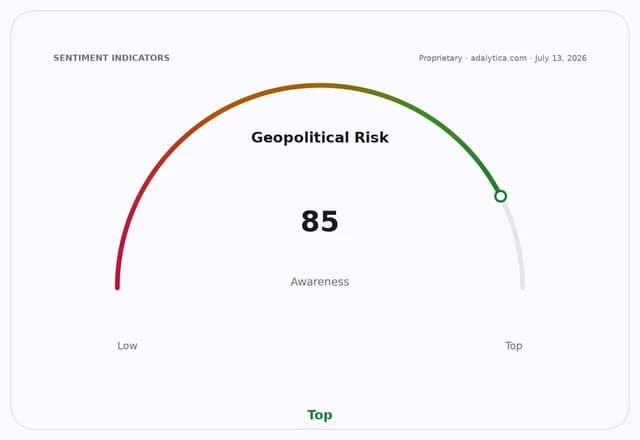
The latest patrol activity matters because the strait is one of the world’s most important shipping lanes and a focal point for any escalation between China and the United States. Persistent military and coast guard presence raises the odds of miscalculation, keeps defense risks elevated and reinforces Taiwan’s role as a flashpoint for supply chains that run through semiconductors, shipping and broader Asian trade.
For investors, the immediate implication is not a direct market shock but a higher geopolitical risk premium around Taiwan-linked assets. Taiwan Semiconductor Manufacturing Co. shares ended the latest session at $434.11, still well above both its 50-day moving average of $423.37 and 200-day average of $346.87, while the island’s iShares MSCI Taiwan ETF, EWT, closed at $106.19, above its 50-day average of $100.31 and far over its 200-day average of $75.78, showing that Taiwan exposure has remained supported even as tension rises.
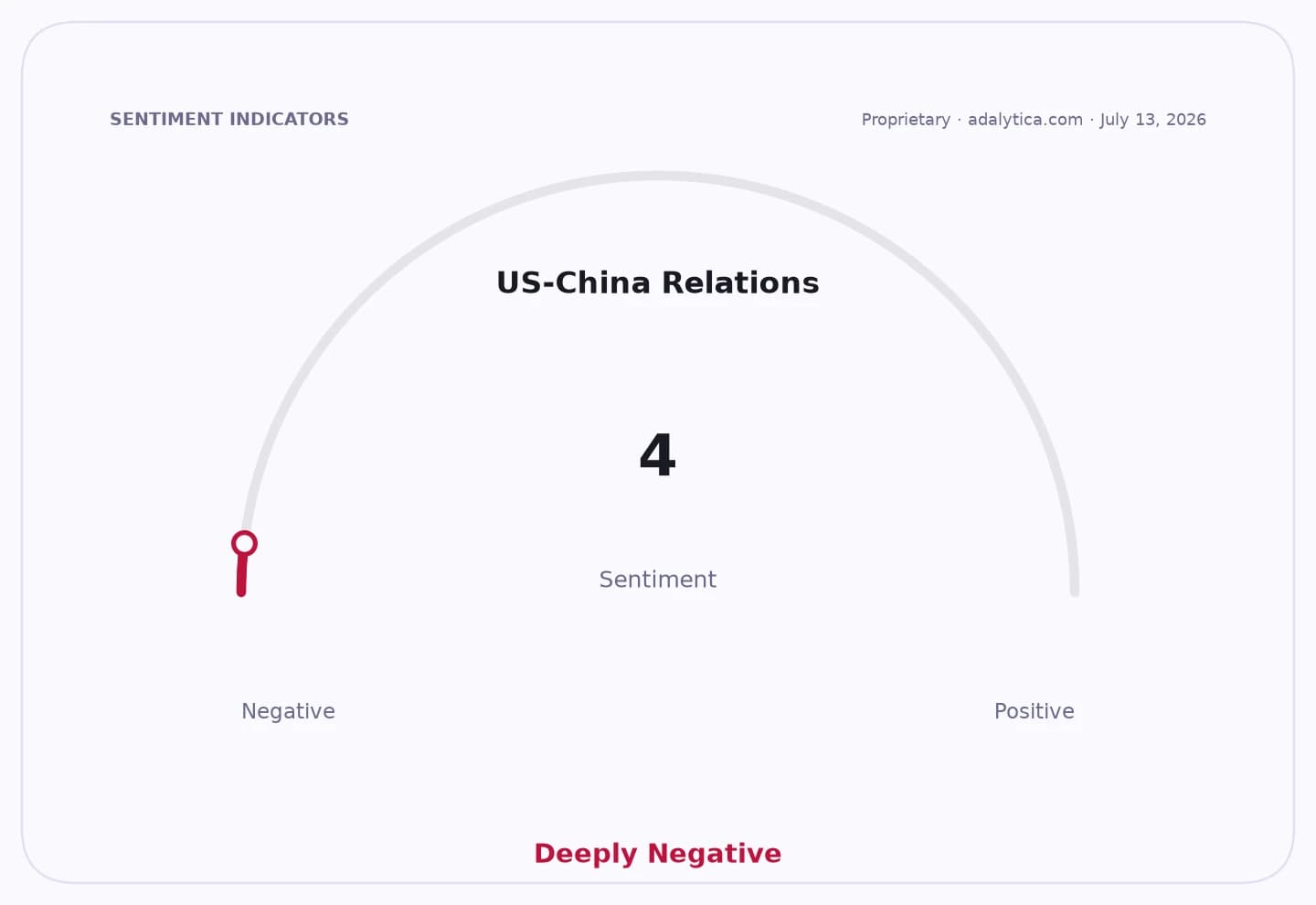
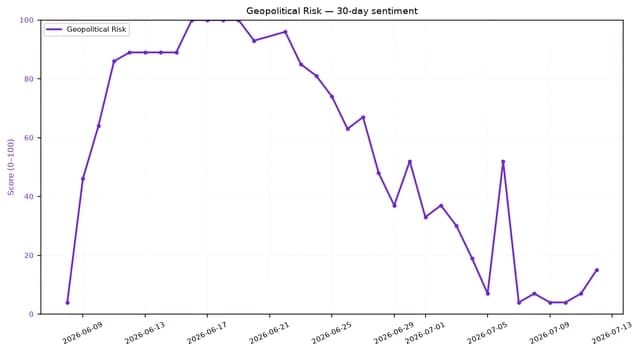
The backdrop is increasingly fragile. Adalytica’s Global Stability Sentiment stands at 15, labeled “Extreme Fear,” while its U.S.-China Relations Sentiment is at 4, also “Extreme Fear,” underscoring how quickly markets are pricing in stress around major-power relations. That dovetails with Treasury and oil data that show a market environment still sensitive to geopolitical shocks, even if the broader U.S. economy is not in recession.
Taipei has been trying to balance openness with deterrence, easing some restrictions on Chinese tourists even as it conducts large-scale crisis drills and warns about cyber and military pressure from China. Beijing continues to reject Taiwan’s diplomatic outreach, keeping the dispute politically frozen and militarily active at the same time.
The next catalyst is whether China increases the frequency or scale of its operations around the island, or whether Taipei responds with more drills, alerts or diplomatic complaints that could further rattle Taiwan equities and semiconductor supply-chain names.
| Entity | Gains | Losses |
|---|---|---|
| Taiwan defense establishment | ▲Stronger deterrence case | ▼Higher readiness burden |
| China’s military and coast guard | ▲Sustained pressure on Taipei | ▼More international scrutiny |
| TSMC and Taiwan equities | ▲Safe-haven strategic relevance | ▼Geopolitical risk premium |
| Global shippers and chip buyers | ▲Status quo preserved for now | ▼Escalation risk and disruption fears |