China, Philippines Raise South China Sea Tensions
China and the Philippines are hardening their military posture in the South China Sea, with Beijing deepening its presence on disputed features and Manila leaning more heavily on U.S. support as the rivalry over one of Asia’s most strategic waterways intensifies.
The stakes are economic as much as military. The South China Sea carries trillions of dollars of trade each year, making any escalation a direct threat to shipping lanes, regional supply chains and insurance costs for vessels moving between the Middle East, China and the wider Pacific. For investors, that keeps a geopolitical risk premium attached to Asian trade, energy flows and dry bulk freight even if no shots are fired.

China’s push is centered on consolidating control over reefs and islands it claims, part of a broader strategy to deter U.S. intervention and strengthen its hand around Taiwan. The Philippines, meanwhile, has responded with more visible patrols, closer coordination with allies and a willingness to publicize confrontations at sea, from water-cannon incidents to live-fire drills.
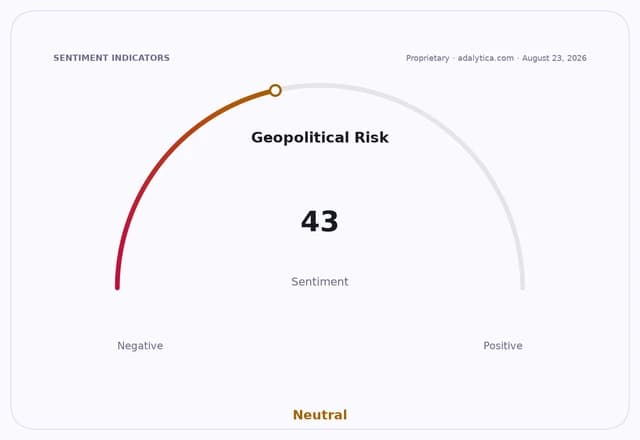
The latest tension comes as broader U.S.-China relations remain highly charged. Adalytica’s US–China Relations Sentiment gauge is in “Greed” territory at 79, with awareness also elevated at 71, indicating heightened market attention to the dispute. Its Global Stability Sentiment reading stands at 43, still neutral but up 18 points in a day, underscoring how quickly geopolitical pressure can shift market mood.
Shipping investors are watching the dispute closely because any prolonged flare-up can ripple through charter rates, voyage times and vessel routing. New checkpoints, military exercises or a miscalculation at sea could disrupt traffic through a corridor that is essential for commodity imports into China and exports from Southeast Asia.
That matters for names tied to seaborne trade, including dry bulk owners such as Navios Maritime Partners and Genco Shipping, which depend on stable regional routes and freight demand. For now, the market is treating the confrontation as a live but contained risk; a serious incident involving naval assets or commercial shipping would force a much sharper reassessment.
With China continuing to expand its physical footprint and the Philippines signaling it will resist more aggressively, the near-term catalyst is any further naval standoff, U.S. military deployment or new diplomatic move by ASEAN partners. For investors, the key question is not whether tensions stay elevated, but whether they spill from signaling into disruption.
| Entity | Gains | Losses |
|---|---|---|
| China | ▲stronger territorial leverage | ▼regional trust |
| Philippines | ▲U.S. alliance backing | ▼operating freedom in disputed waters |
| Shipping lines | ▲none | ▼higher insurance and rerouting costs |
| Dry bulk shippers | ▲elevated freight risk premium | ▼volatility in voyage planning |