China-Russia drills bolster defense spending case
China and Russia have concluded joint naval exercises, reinforcing a security partnership that keeps pressure on Western strategists and supports the case for sustained defense spending in the U.S. and Europe.
The drills matter because they come as the war in Ukraine grinds on and Norway is urging Beijing to use its relationship with Moscow to push for peace talks. Instead, the naval cooperation underscores that China is not moving away from Russia in any meaningful way, complicating diplomatic efforts and raising the risk of a longer period of military alignment between the two powers.
For investors, that means geopolitics remains a live catalyst for aerospace and defense stocks, from shipbuilders to missile and surveillance contractors. Lockheed Martin, Northrop Grumman and RTX have all traded above their 50-day moving averages in recent sessions, with RTX closing at $195.93 on Friday and Lockheed at $523.22, both reflecting a market still willing to price in durable military demand.
The broader backdrop is a global security environment that remains unstable, with tensions in Europe and the Western Pacific keeping procurement budgets elevated and export controls, sanctions and supply-chain restrictions in focus. Northrop Grumman ended Friday at $539.63, well above its 50-day average of $542.04 but far below its 200-day average of $608.13, while the stock’s recent rebound suggests investors are still sorting winners and losers within the sector rather than abandoning it.
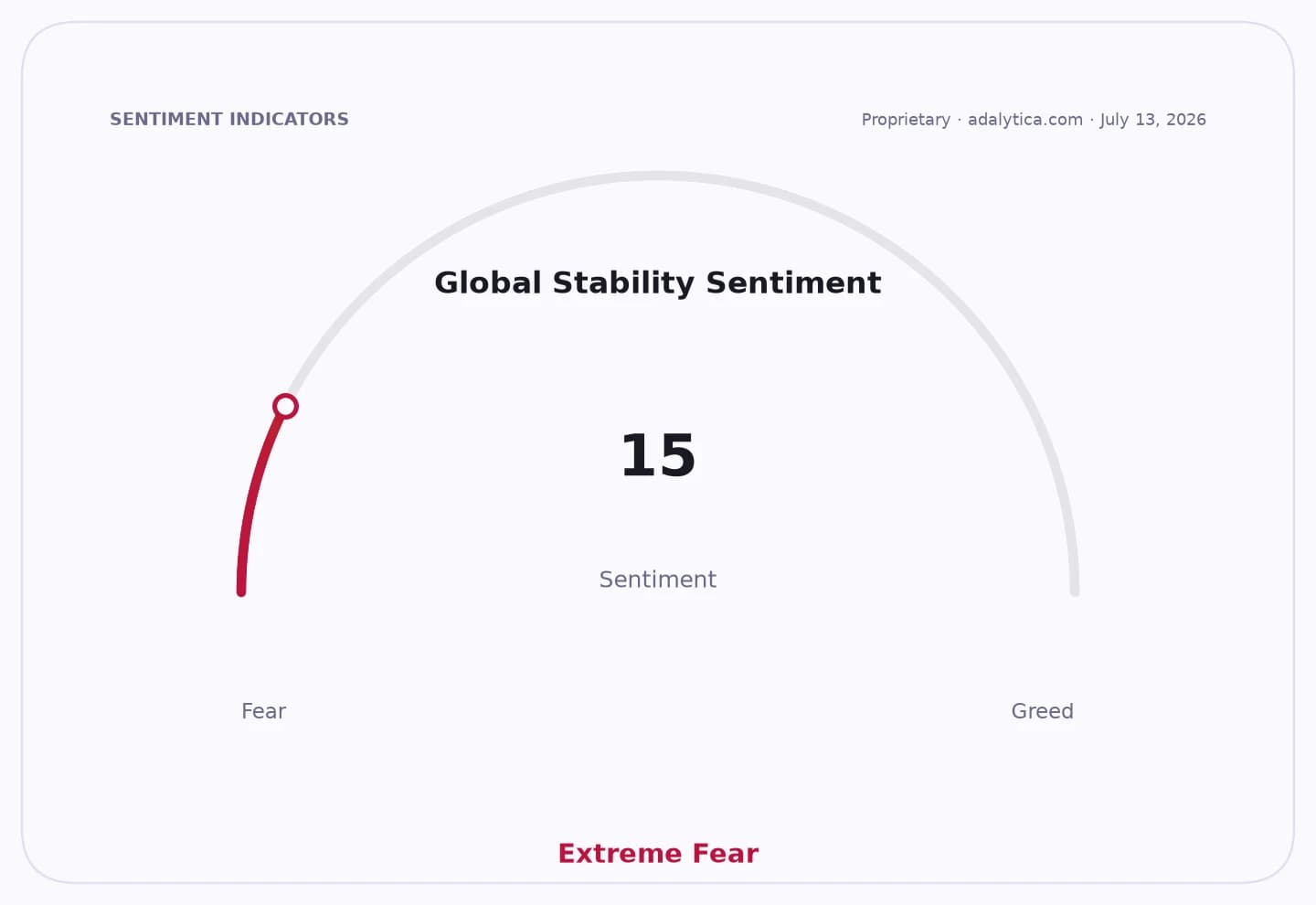
The moves also fit a wider market mood of rising geopolitical caution. Adalytica’s Global Stability Sentiment gauge sits at 15, marked “Extreme Fear,” while its awareness reading is 85, suggesting investors are highly attuned to flashpoints even as overall confidence deteriorates.
The next catalyst is whether the exercises trigger any fresh Western response, including sanctions, defense procurement comments or new NATO warnings, and whether China’s diplomatic posture on Ukraine hardens further or shifts under renewed pressure from Europe.
| Entity | Gains | Losses |
|---|---|---|
| U.S. defense contractors | ▲Higher security spending | ▼Less urgency if tensions ease |
| China and Russia | ▲Military coordination | ▼Diplomatic trust with West |
| NATO and Europe | ▲Stronger case for readiness spending | ▼Lower room for de-escalation |
| Ukraine peace efforts | ▲More pressure on Beijing | ▼Momentum from joint drills |