China’s Solar Storage Push Redefines Firm Power
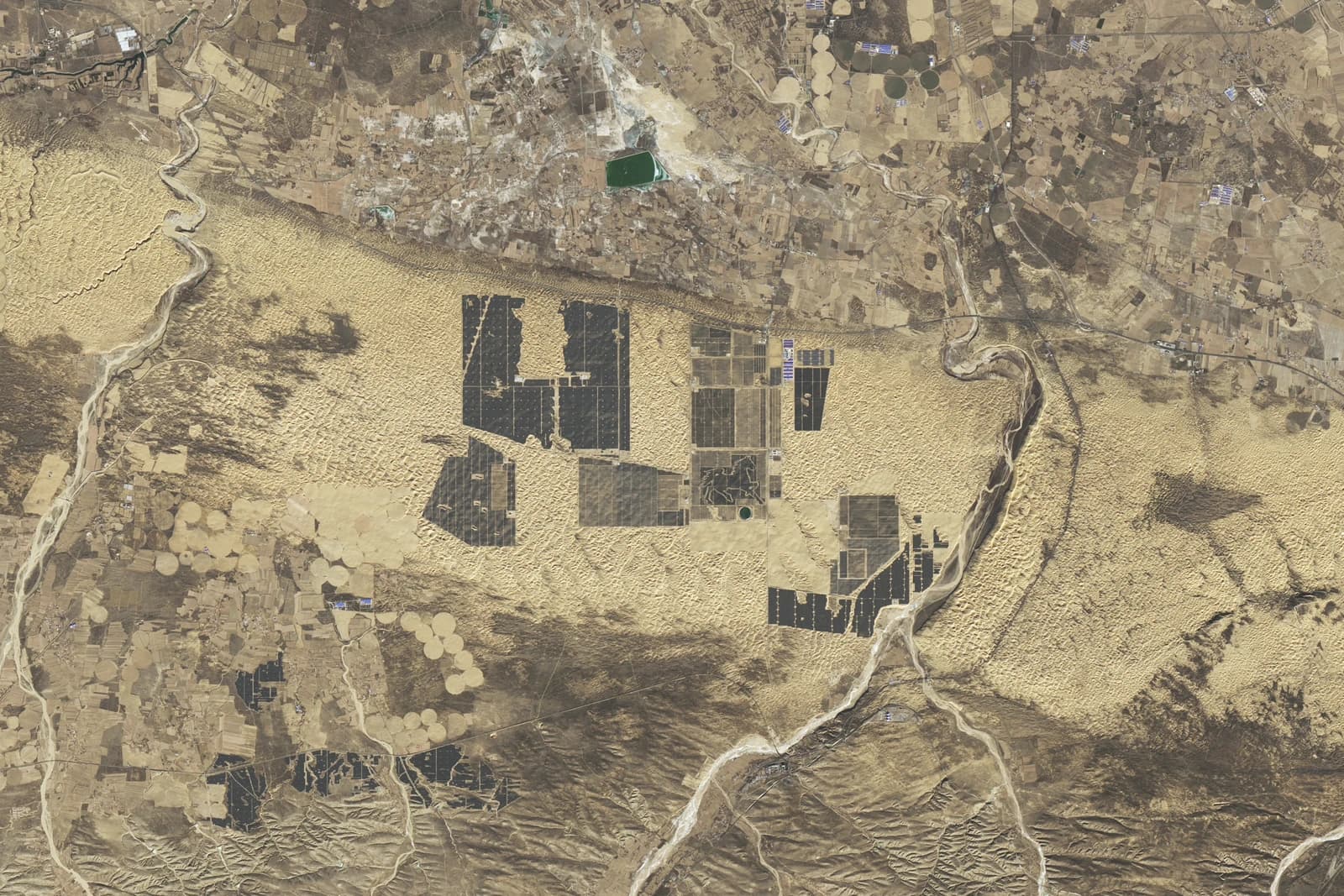
China’s latest utility-scale solar project is notable not just for its size, but for what it says about the economics of renewable power: solar can now be paired with thermal storage at a scale that makes it dispatchable after sunset. That matters for the power system because it reduces one of the industry’s biggest constraints — the mismatch between daytime generation and evening demand.
The project, described as a record 1-gigawatt solar power plant that can keep operating through the night, underscores Beijing’s push to turn intermittent renewables into round-the-clock assets. For utilities, grid operators and heavy industry, the appeal is obvious: more predictable output, less reliance on coal peakers and a better fit for baseload-style consumption. For investors, it strengthens the case that the next phase of solar competition is no longer just about panel costs, but about storage integration, project economics and who can deliver firm power at scale.
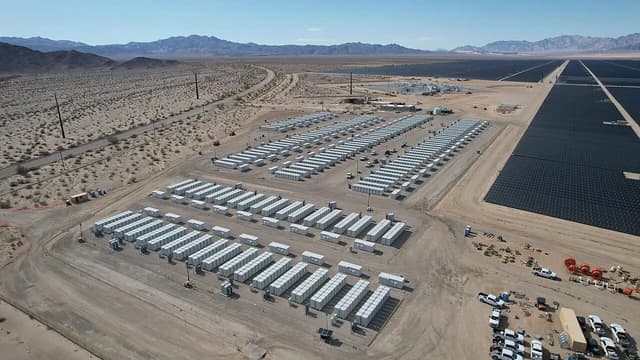
That shift has broad implications for the clean-energy value chain. Developers that can combine generation with storage may be able to secure higher-quality power purchase agreements, while equipment suppliers tied to thermal storage, grid balancing and high-voltage infrastructure could see demand rise. The flip side is that traditional solar-only models may face pricing pressure if buyers increasingly pay for reliability rather than raw megawatts. The move also reinforces China’s strategic advantage in industrial execution, where it has already dominated manufacturing and is now pushing deeper into system-level integration.
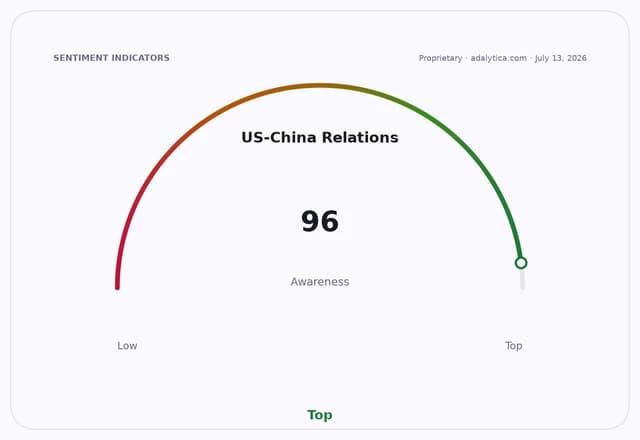
The development lands against a backdrop of mounting geopolitical and market stress around energy transition supply chains. Adalytica’s U.S.-China relations gauge shows “Extreme Fear,” while global stability sentiment is also in “Extreme Fear,” a reminder that energy technology is being advanced in a more contested policy environment. In that setting, Beijing’s ability to build a record-size project that delivers power beyond daylight hours is both an industrial statement and a policy message: China wants to define the next generation of renewable infrastructure on its own terms.
The investor question is whether this becomes a one-off showcase or the template for future projects. If thermal storage proves scalable and cost-competitive, it could extend the addressable market for solar well beyond conventional daytime use and improve returns for integrated developers. If not, the economics may remain confined to regions with strong state backing and favorable grid economics. Either way, the line between solar and firm power is narrowing, and that is likely to shape procurement, valuations and capital allocation across the sector.
| Entity | Gains | Losses |
|---|---|---|
| Chinese grid operators | ▲More dispatchable clean power | ▼Less reliance on peakers |
| Solar-plus-storage developers | ▲Higher-value contracts | ▼Pure-play solar pricing power |
| Coal generators | ▲— | ▼Dispatch and capacity share |
| Investors in storage equipment | ▲Larger addressable market | ▼Commodity panel-only models |