China Taiwan Vessel Surge Raises Market Risk
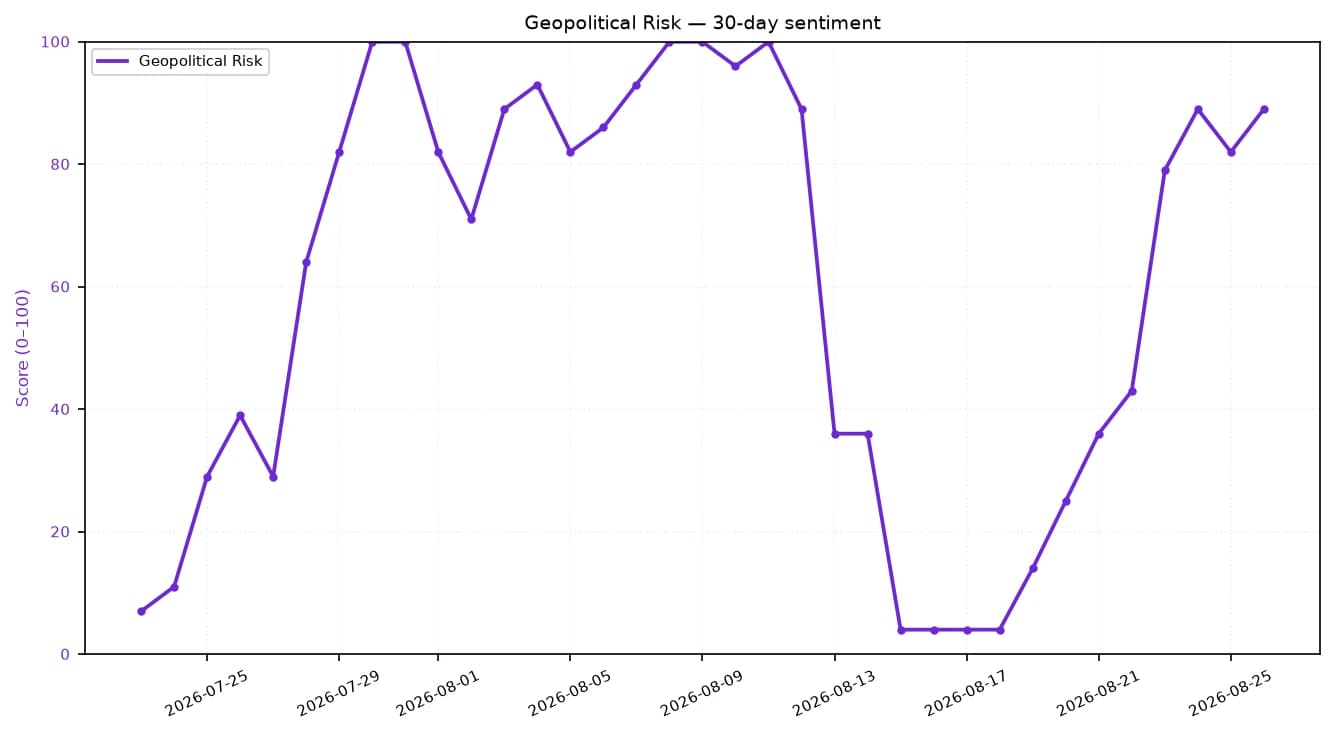
China’s deployment of a record number of vessels around Taiwan in a 15-minute window underscores how quickly Beijing can convert pressure into a market-moving geopolitical shock, and investors should treat it as more than theater. The immediate economic risk is not just to Taiwan’s security posture but to the shipping lanes, insurance costs and supply-chain confidence that underpin one of the world’s most strategically important trade corridors.
That matters because Taiwan sits at the center of the global semiconductor and electronics chain, and any sustained escalation would ripple through freight, energy and technology markets before it shows up in official data. When tensions rise in the Taiwan Strait, capital tends to flow toward defense, energy security and logistics resilience, while importers, regional equities and China-exposed cyclicals face higher risk premia. The latest flare-up fits a broader pattern of Beijing using maritime coercion to test deterrence without crossing into open conflict, a strategy that keeps markets off balance and policymakers on alert.
The repricing is already visible in Taiwan-linked assets. EWY, the iShares MSCI South Korea ETF, has been oscillating sharply as investors weigh regional spillover risk, while FXI, the large-cap China ETF, remains stuck well below its longer-term trend even after brief rallies, reflecting persistent caution on China exposure. Neither fund is a direct Taiwan proxy, but both are sensitive to the same geopolitics-driven capital rotation: any serious deterioration in cross-strait stability is likely to favor defensive positioning and higher-quality exporters over broad Asia risk.
Oil is another channel investors cannot ignore. USO has surged from far below its 50-day moving average earlier this year to well above it, and the recent move in crude reflects a market that is already pricing in geopolitical fragility across major supply routes. A Taiwan shock would not necessarily hit barrels first, but it would reinforce a world in which traders demand a larger premium for disruption, whether from the Middle East, the South China Sea or the Strait itself. That is exactly the kind of second-order effect the market tends to underestimate until it is forced to reprice.
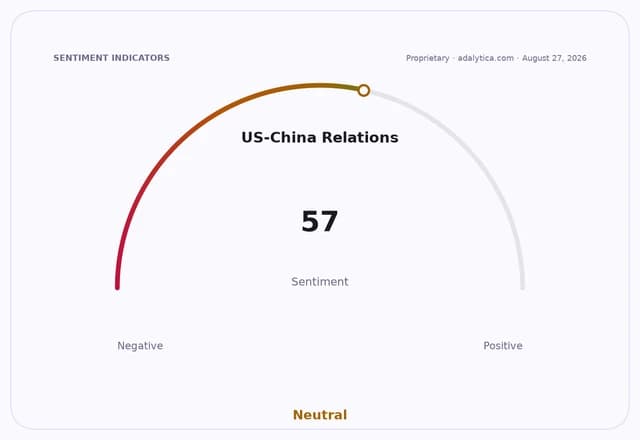
The broader narrative is simple: the Taiwan Strait is becoming a recurring stress test for global risk assets, and each new record in Chinese activity narrows the gap between a manageable standoff and a disorderly escalation. Adalytica’s Global Stability Sentiment remains in “Extreme Greed” even as awareness stays low, a combination that often leaves investors complacent about tail risks until volatility arrives. For portfolios, the takeaway is to own the beneficiaries of prolonged strategic competition — defense, energy security, select infrastructure and supply-chain hardening — while staying cautious on assets most exposed to an abrupt jump in regional risk.
| Entity | Gains | Losses |
|---|---|---|
| Defense contractors | ▲Higher budget demand | ▼- |
| Energy and oil producers | ▲Geopolitical risk premium | ▼- |
| Taiwan-linked exporters | ▲- | ▼Higher shipping/insurance costs |
| Asia risk assets | ▲- | ▼Elevated volatility and valuation pressure |