China Transshipment Risks Keep Tariff Pressure High
China’s ability to route goods into the U.S. through third countries has become the new fault line in the trade war, and that matters because it keeps tariff pressure alive even when headline flows look less direct. For investors, the real issue is not just another round of tariff threats — it is the widening uncertainty around supply chains, margins and the durability of China-exposed market bets.
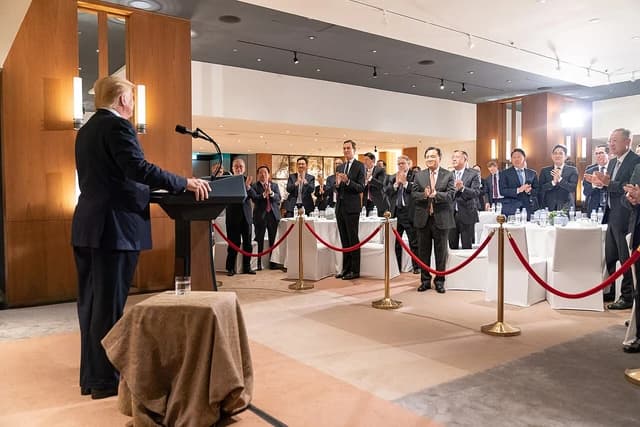
President Donald Trump accused China of trade fraud and said Chinese products are being brought into America through more than 40 countries, including India and Israel, in an effort to avoid tariffs. The allegation underscores how trade barriers rarely stop commerce so much as redirect it, pushing exporters, shippers and multinationals to adapt through transshipment, rerouting and costly supply-chain workarounds.
That has real economic consequences. When goods detour through third countries, governments lose tariff revenue, customs enforcement gets harder, and companies face more compliance risk and longer lead times. It also raises the odds that the U.S. responds with broader enforcement, higher duties or tougher rules of origin — all of which can lift costs for importers and keep inflation pressures sticky in specific categories.
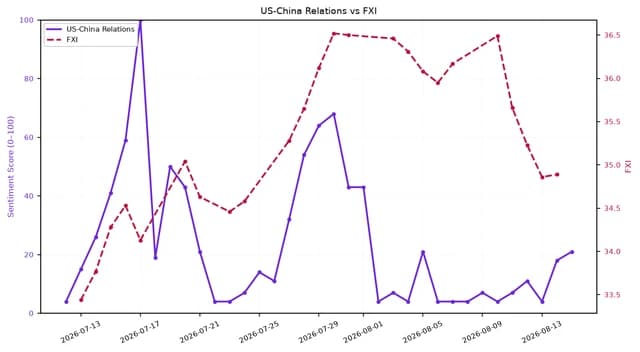
The market is already telling a cautious story. FXI, the iShares China Large-Cap ETF, has slipped to about 34.9 from above 40 in September, while KWEB, the KraneShares CSI China Internet ETF, is down to roughly 27.0 from a recent high near 40. Both sit below their 200-day moving averages, a conventional technical sign that investors are still demanding a risk premium for China exposure. Even Hong Kong-linked EWH has been choppy, reflecting how quickly tariff headlines can spill into regional assets.
The bigger picture is that trade policy is no longer just about bilateral tariffs between Washington and Beijing. It is becoming a global compliance and routing problem, pulling in countries such as India, Israel and others that may be caught in the middle of the effort to move Chinese goods into the U.S. For companies with heavy import exposure — from retailers to consumer brands and industrials — that means more uncertainty around sourcing, pricing and inventory planning.
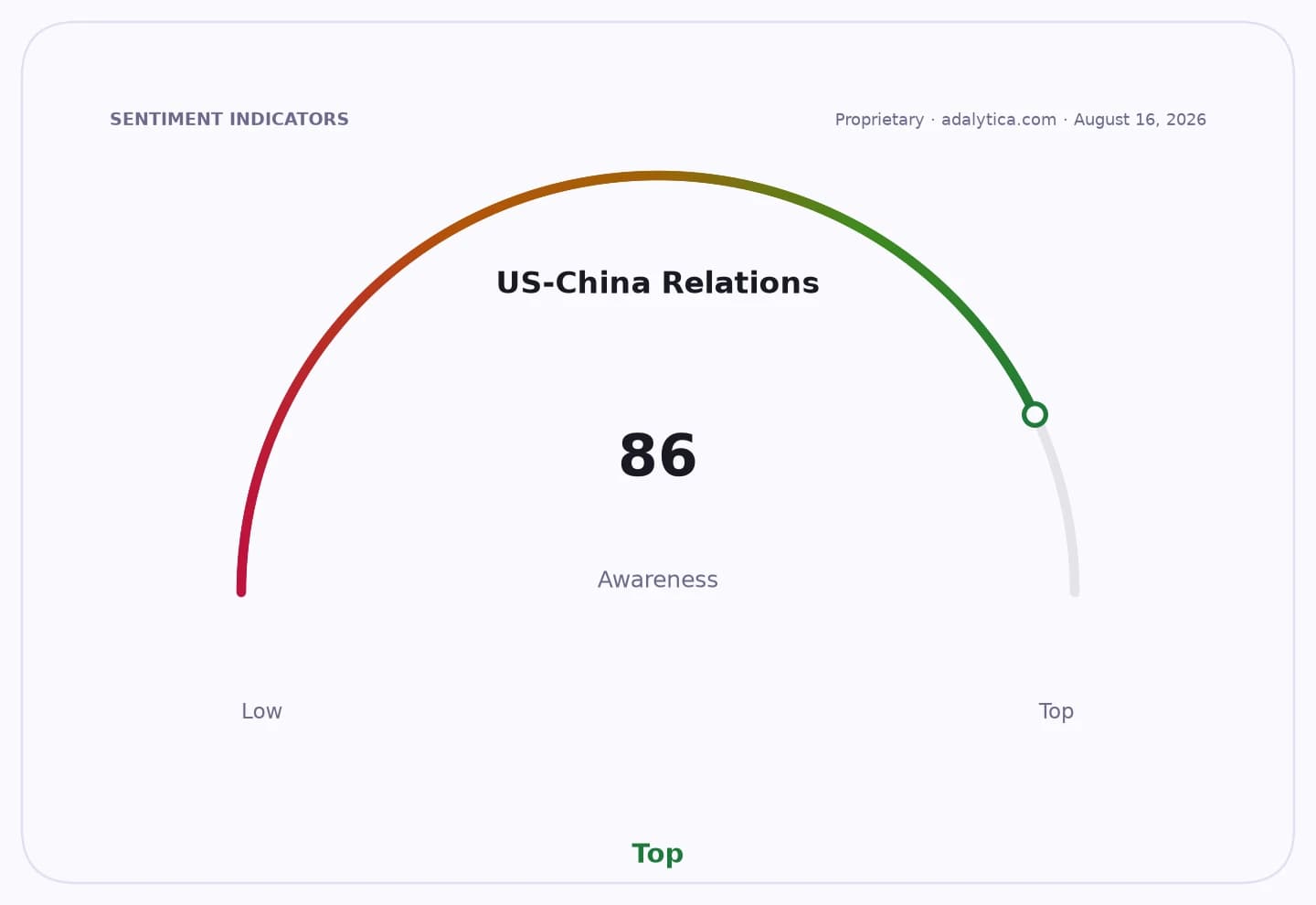
Adalytica’s U.S.-China Relations Sentiment gauge shows the relationship under heavy strain, with sentiment in fear territory even as awareness of the issue remains extreme. That helps explain why investors keep treating each new tariff headline as more than political theater: it can change the economics of sourcing and the earnings power of companies across the supply chain.
The long-term takeaway for investors is simple. Trade friction is becoming structural, not episodic, and the winners will be businesses with flexible sourcing, pricing power and low reliance on any single country. China-linked ETFs may still offer upside if negotiations improve, but for now the safer approach is to stay diversified, think in years rather than weeks, and watch which companies can keep growing free cash flow despite a more fragmented global trading system.
| Entity | Gains | Losses |
|---|---|---|
| U.S. tariff enforcers | ▲More leverage | ▼More policing burden |
| China exporters using transshipment | ▲Short-term market access | ▼Higher scrutiny and costs |
| U.S. importers and retailers | ▲Little, unless tariffs ease | ▼Margin pressure and delays |
| China-exposed ETFs like FXI and KWEB | ▲Potential rebound on diplomacy | ▼Near-term risk premium |